
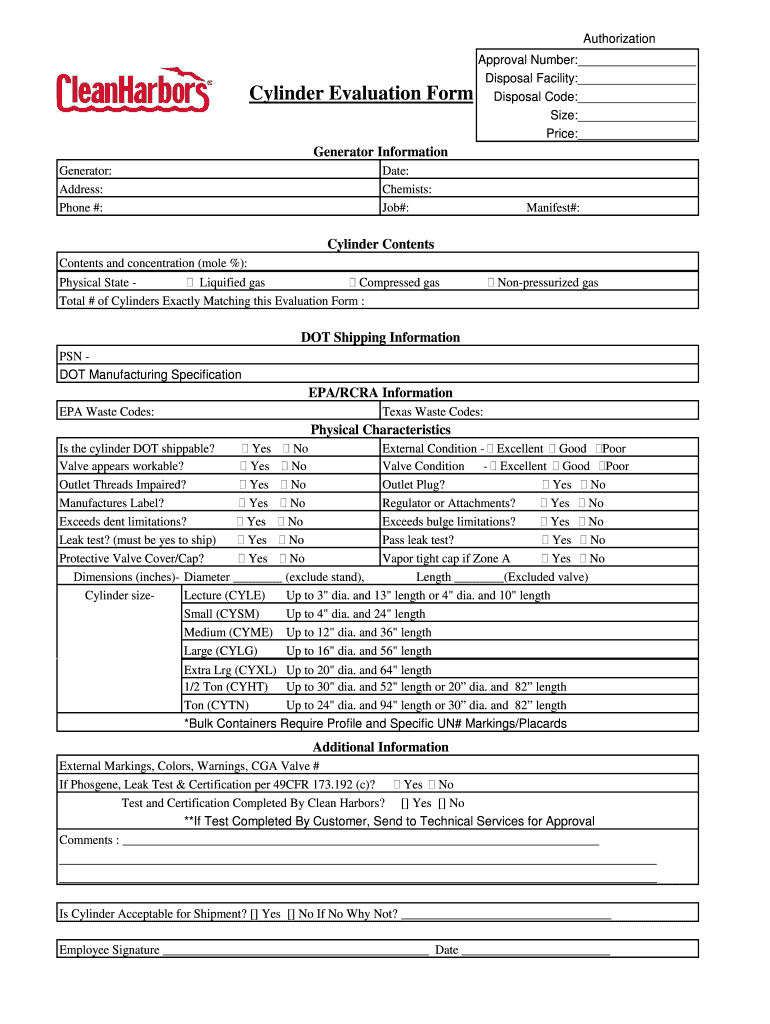







Definition & Purpose of the Cylinder Evaluation Form
The Cylinder Evaluation Form is a specialized document designed to assess the condition and compliance of gas cylinders before they are disposed of or shipped. It serves as a critical tool for ensuring the safety and regulatory compliance of gas cylinders, which are often used in various industries, including manufacturing, laboratories, and transportation. By reviewing key attributes of the cylinders, such as their physical condition, contents, and safety compliance, this form helps to mitigate the risks associated with handling and transporting potentially hazardous materials.
Key Components
- Generator Information: This section captures details about the entity responsible for the cylinder, including contact information and location. Accurate data here is crucial for traceability and accountability.
- Cylinder Contents: Clearly indicates the specific substances contained within the cylinder, essential for proper handling and disposal.
- DOT Shipping Details: Covers Department of Transportation standards and requirements, ensuring safe and compliant transport.
- EPA/RCRA Information: Involves Environmental Protection Agency and Resource Conservation and Recovery Act regulations to guarantee environmentally sound handling.
- Physical Characteristics: Provides a detailed assessment of the cylinder's condition, including size, material, and any visible damage.
- Additional Remarks: Offers space for any extra observations or instructions related to the cylinder handling process.
How to Use the Cylinder Evaluation Form
Using the Cylinder Evaluation Form effectively requires a step-by-step approach:
- Gather Necessary Information: Before filling out the form, collect all relevant data regarding the cylinder in question, including labels and safety data sheets.
- Complete Each Section Thoroughly: Ensure that every part of the form is filled in with accurate and detailed information. Pay particular attention to the sections requiring technical data, such as the contents and DOT shipping details.
- Verify Compliance: Cross-check that all information aligns with federal and state regulations to ensure legality and safety.
- Review and Sign: Once completed, review the form for any errors or omissions. A responsible party should sign off to confirm the accuracy of the information.
Importance
Filling out the Cylinder Evaluation Form correctly ensures that the cylinders comply with relevant safety and environmental standards, reducing the risk of accidents and legal liabilities.
Steps to Obtain the Cylinder Evaluation Form
Obtaining a Cylinder Evaluation Form typically involves the following steps:
- Contact the Issuing Agency: This might be a government entity, an industry association, or a specific company that manages hazardous materials.
- Request the Form via Official Channels: The form can often be requested online, by phone, or in person, depending on the issuing organization's procedures.
- Download or Receive by Mail: Once requested, the form may be available for download in digital format or sent through traditional mail.
Considerations
Check if the form is subject to updates or variations depending on jurisdictional requirements or changes in regulatory standards.
Key Elements of the Cylinder Evaluation Form
Understanding the core elements of the Cylinder Evaluation Form helps ensure all necessary data is accurately captured:
- Generator Information: Identifies the source or owner of the cylinder, crucial for tracking and accountability.
- Cylinder Contents: Describe what the cylinder holds to inform safe handling and disposal.
- Safety Compliance Details: Includes DOT and environmental compliance information to ensure adherence to safety and legal standards.
Examples of Details Captured
- Cylinder identification numbers and labeling codes.
- Specific gas or chemical compositions and any relevant hazard classifications.
- Inspection dates and certification status.
Who Typically Uses the Cylinder Evaluation Form
This form is predominantly used by entities involved in the handling, shipping, or disposal of gas cylinders:
- Industrial Companies: Manufacturers and producers that generate and transport cylinders daily.
- Environmental Services: Firms specialized in waste management and compliance checks.
- Logistics and Shipping Companies: Businesses responsible for the safe and compliant transportation of hazardous materials.

Professional Roles Involved
- Safety inspectors and compliance officers.
- Environmental health and safety managers.
- Logistics and operations managers.
Legal Use of the Cylinder Evaluation Form
The Cylinder Evaluation Form serves as a legal document to demonstrate compliance with federal and state safety regulations. It plays an integral role in:
- Regulatory Compliance: Ensures adherence to laws governing hazardous materials, such as the EPA's guidelines and DOT standards.
- Liability Protection: Serves as evidence of due diligence in the safe handling and transport of gas cylinders.
Signing and Certification
The form must be completed and certified by a competent authority, providing a legal safeguard and a record of compliance.
State-Specific Rules for the Cylinder Evaluation Form
Regulations surrounding the handling and documentation of gas cylinders can vary significantly between states. Key considerations include:
- State Environmental Regulations: Compliance with local environmental laws that may impose additional reporting or documentation requirements.
- Transport and Disposal Restrictions: Some states might have specific rules on how gas cylinders must be disposed of or shipped.
Variation Examples
- California may require additional environmental disclosures for air quality protection.
- New York might have specific requirements for the documentation of flammable gas transport.
Penalties for Non-Compliance
Failing to complete or improperly handling the Cylinder Evaluation Form can result in significant penalties such as:
- Fines: Substantial monetary penalties from regulatory bodies like the EPA or DOT.
- Operational Shutdowns: Orders to cease operations until compliance is achieved.
- Legal Actions: Potential lawsuits from accidents or environmental damage caused by non-compliance.
Impact on Businesses
Non-compliance can result not only in financial burdens but also in damage to a company's reputation and trust with customers and partners.




