






Definition & Meaning
The Form 990-EZ is the short form version of the IRS Form 990, utilized by tax-exempt organizations to provide the IRS with required annual financial information. The 2014 version of this form was specifically designed for reporting in the fiscal year 2014. Organizations eligible to use the 990-EZ typically include small non-profits with gross receipts of less than $200,000 and total assets less than $500,000 at the end of the tax year. This form facilitates transparency and accountability, ensuring that these organizations disclose critical financial data and operational activities to the IRS.
How to Use the 990-EZ 2014 Form
Using the 990-EZ 2014 form involves collecting detailed financial information and accurately reporting it to the IRS. This includes recording revenue, expenses, and other financial activities of the organization for the specified fiscal year. The form is structured to capture the organization's financial status, sources of income, and areas of expenditure comprehensively. Familiarizing oneself with the IRS instructions specific to the 2014 version ensures compliance and accuracy in filing.
- Gather Financial Records: Collect comprehensive financial data, including receipts, expenses, assets, and liabilities.
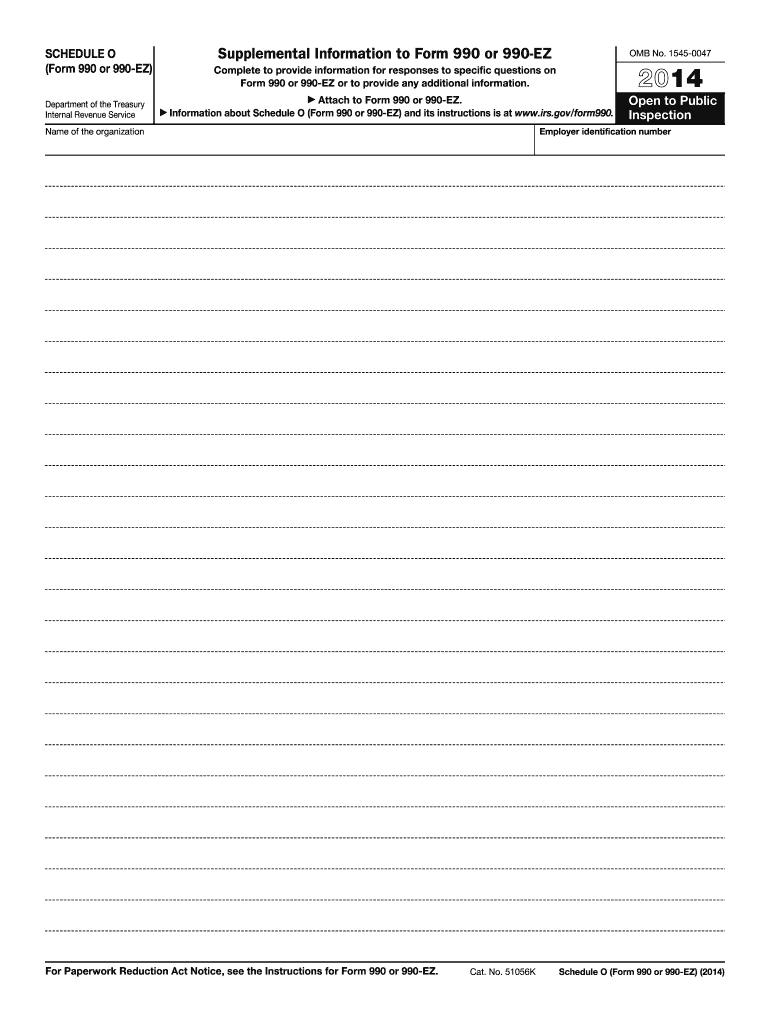
- Identify Schedules: Determine which additional schedules, like Schedule O for supplemental information, are necessary.
- Complete the Form: Carefully fill out each section, ensuring that all figures and responses are accurate.
- Review and Submit: Review for errors, ensure all necessary schedules are attached, and submit by the IRS deadline.
Steps to Complete the 990-EZ 2014 Form
Completing the 990-EZ 2014 form involves several critical steps to ensure accurate and timely filing:
-
Pre-fill Information:
- Enter the organization’s name, address, and EIN.
- Identify the tax year in question.
-
Part I - Revenue, Expenses, and Changes in Net Assets:
- Report gross receipts, including contributions, program service revenue, and investment income.
- Detail functional expenses, subtracting them from total revenue to obtain net asset changes.
-
Part II - Balance Sheets:
- Itemize assets, liabilities, and net assets at the beginning and end of the year.
-
Part III - Statement of Program Service Accomplishments:
- Describe significant program services, including their purpose and achievements.
-
Part IV - List of Officers, Directors, Trustees, and Key Employees:
- List individuals holding these positions, providing applicable compensation details.
-
Part V - Other Information:
- Address inquiries regarding jeopardized investments and formal revenue procedures.
Key Elements of the 990-EZ 2014 Form
The 990-EZ 2014 form consists of several important components:
- Revenue and Expenses: This section captures financial activities, distinguishing between earned and contributed income.
- Balance Sheet: Provides a snapshot of financial health through assets, liabilities, and net assets.
- Program Service Accomplishments: Offers insights into the organization's mission-driven activities.
- Governance: Disclosure of governance and financial oversight structures.
Important Considerations
- Accuracy: Ensure that all reported figures are accurate and sourced from verifiable records.
- Attachments: Attach pertinent schedules and supporting documents where necessary.
- Consistency: Maintain consistency in financial reporting with past filings for coherent year-over-year analysis.
Filing Deadlines / Important Dates
The Form 990-EZ 2014 had specific deadlines set for filing:
- Standard Filing Deadline: The standard deadline was the 15th day of the 5th month after the close of the fiscal year. For organizations following a calendar fiscal year, this would have been May 15, 2015.
- Extensions: Organizations could request a 6-month extension using IRS Form 8868, pending IRS approval.
Consequences of Missing Deadlines
- Late Fees: Penalties for late submissions could accrue fines starting at $20 per day a filing is late.
- Risk of Losing Exempt Status: Failure to file for three consecutive years could result in automatic revocation of tax-exempt status.
Legal Use of the 990-EZ 2014 Form
Legal compliance when filing the 990-EZ involves strict adherence to IRS guidelines:
- Disclosure Requirements: Full transparency in financial reporting is mandatory, avoiding any omissions or false reporting.
- Recordkeeping: Maintain detailed records backing the figures reported, minimum for three years as per IRS requirements.
- Adherence to IRS Instructions: Follow IRS instructions meticulously for the 2014 form to ensure lawful compliance.
Penalties for Non-Compliance
Non-compliance with IRS Form 990-EZ filing requirements can result in severe penalties:
- Monetary Penalties: Daily fines are imposed for late filings without reasonable cause, potentially reaching thousands.
- Loss of Tax-Exempt Status: Repeated failures to file can lead to the revocation of the organization's tax-exempt status.
- Increased Scrutiny: Non-compliance may invite audits and increased scrutiny from the IRS.
IRS Guidelines
The IRS provides comprehensive guidelines for filling out the 990-EZ 2014 form:
- Instructions: Available directly from the IRS website, detailing steps for each section of the form.
- Contact: IRS support should be contacted for clarifications regarding form-specific entries or exemptions.
- Updates: Regularly check for updates or notices related to the form that might affect filing or deadlines.