




01. Edit your policy protocol express download online
Type text, add images, blackout confidential details, add comments, highlights and more.

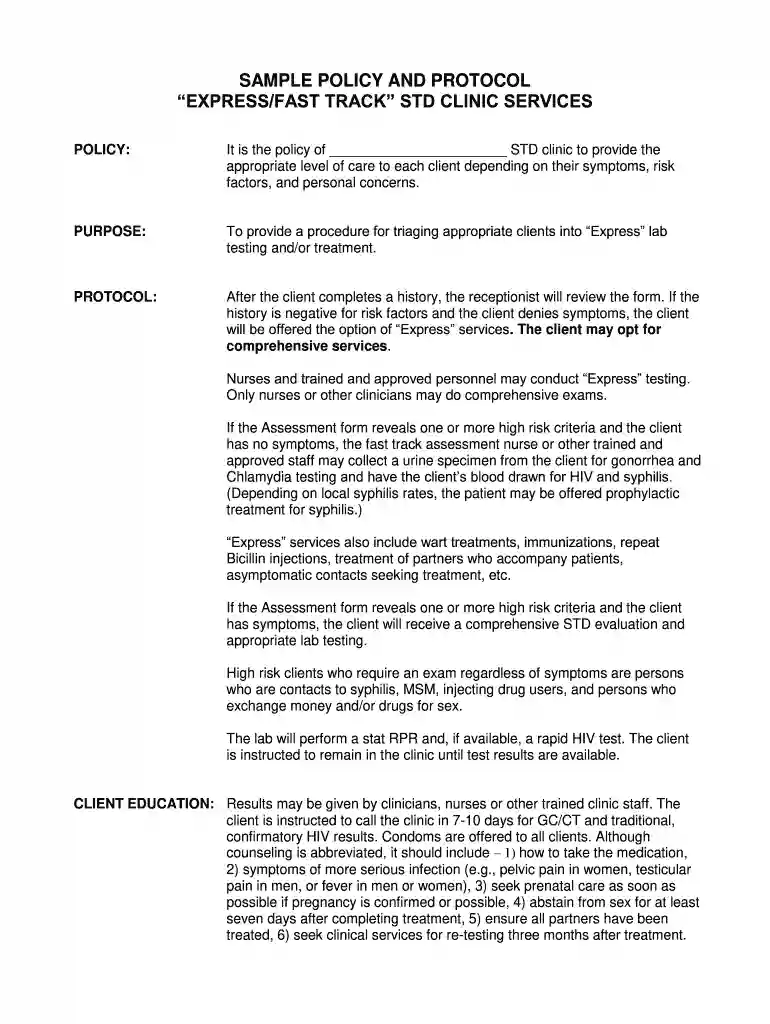
Type text, add images, blackout confidential details, add comments, highlights and more.

Draw your signature, type it, upload its image, or use your mobile device as a signature pad.

Send texas express fast track via email, link, or fax. You can also download it, export it or print it out.
The "Texas Express Fast Track" refers to a streamlined process designed for efficient document processing and management. In contexts like the DocHub platform, it signifies a quick and effective method to handle documentation workflows in high-demand scenarios. It eliminates bottlenecks by prioritizing urgent tasks and facilitating faster handling of documents such as legal agreements, applications, and contracts. This method is particularly beneficial in environments that require quick turnarounds, such as STD clinic services, where timely processing is crucial for effective service delivery.
To effectively utilize the Texas Express Fast Track system, individuals and organizations should follow structured steps that align with their specific documentation needs. Start by identifying documents that require prioritization, ensuring they fit the criteria for express handling. Utilize platforms like DocHub to leverage features such as electronic signatures, real-time collaboration, and form creation to expedite processing. Import documents directly from cloud services or local storage, making use of the platform's seamless integration capabilities to manage workflow efficiently. Adjust permissions and set priorities to ensure critical documents are addressed first.
Document Preparation: Begin by gathering all necessary documents and ensuring they are in the correct format for processing. Platforms like DocHub allow for importing a variety of file types, ensuring flexibility.
Prioritize Criteria: Determine which documents qualify for fast track by assessing urgency and importance. Assign priority levels to ensure time-sensitive documents are processed rapidly.
Platform Utilization: Use DocHub's tools to edit, sign, and annotate documents efficiently. Take advantage of its collaborative features if multiple stakeholders are involved.
Secure and Share: Protect sensitive documents with encryption and select secure sharing options to maintain confidentiality and compliance with legal requirements.
Monitor and Adjust: Continuously monitor the progress of document processing and make adjustments as needed to improve speed and accuracy.
The legal use of the Texas Express Fast Track involves adhering to state-specific regulations and guidelines, ensuring compliance across all documentation processes. For organizations like STD clinics, it involves triaging clients based on symptoms and risk factors. Incorporating express testing and robust evaluation protocols ensures that legal standards for health document management are met. Users should familiarize themselves with relevant legal frameworks and adjust their fast track procedures to align with these regulations, safeguarding against potential legal issues.
While the fast track process is broadly applicable, certain state-specific rules may influence its implementation. In Texas, for instance, medical documentation and legal agreements must comply with unique state laws governing privacy and security. Users should ensure they are familiar with these regulations and consult legal experts if necessary to tailor their document handling processes accordingly. This includes adherence to Texas-specific electronic signature laws and requirements for healthcare document confidentiality.
Consider the scenario of a healthcare clinic implementing the Texas Express Fast Track for patient intake forms. By using platforms like DocHub, clinic staff can streamline the process of collecting and processing patient data. Electronic forms with required fields guide patients to provide complete information, reducing the need for follow-up. In a legal setting, attorneys can manage time-sensitive contracts efficiently, leveraging the platform's real-time collaboration and signature features for quick agreement finalization.
Eligibility for utilizing the Texas Express Fast Track is determined by the nature and urgency of the document. Generally, documents that require expedited review and action, such as legal filings or emergency health records, are prime candidates. Organizations that deal with large volumes of such documents regularly, such as healthcare providers and legal firms, often establish criteria that prioritize documents based on their impact and deadline pressures, ensuring that only the most urgent cases are fast-tracked.


Setting up a Texas Express Fast Track system involves a series of straightforward steps. Users first need to configure their document management system to support fast-tracked documents. This might involve setting up specific workflows within a platform like DocHub, assigning roles, and establishing priority levels. Approval times for documents processed through the fast track depend on the complexity of the document but are generally significantly reduced due to automation and streamlined procedures, often taking hours rather than days.
We've got more versions of the policy protocol express download form. Select the right policy protocol express download version from the list and start editing it straight away!
| Versions | Form popularity | Fillable & printable |
|---|---|---|
| 2015 | 4.8 Satisfied (158 Votes) |
At DocHub, your data security is our priority. We follow HIPAA, SOC2, GDPR, and other standards, so you can work on your documents with confidence.
May 23, 2026 The Engineer has several vocal responses, all of which are listed below (excluding voice commands). Certain voice responses can also be spokenRead more
MCCs ExpressPath offers career‑focused certificates and skills awards completed in one year or less, available online or in person in high‑demand fields.


