







Definition & Meaning
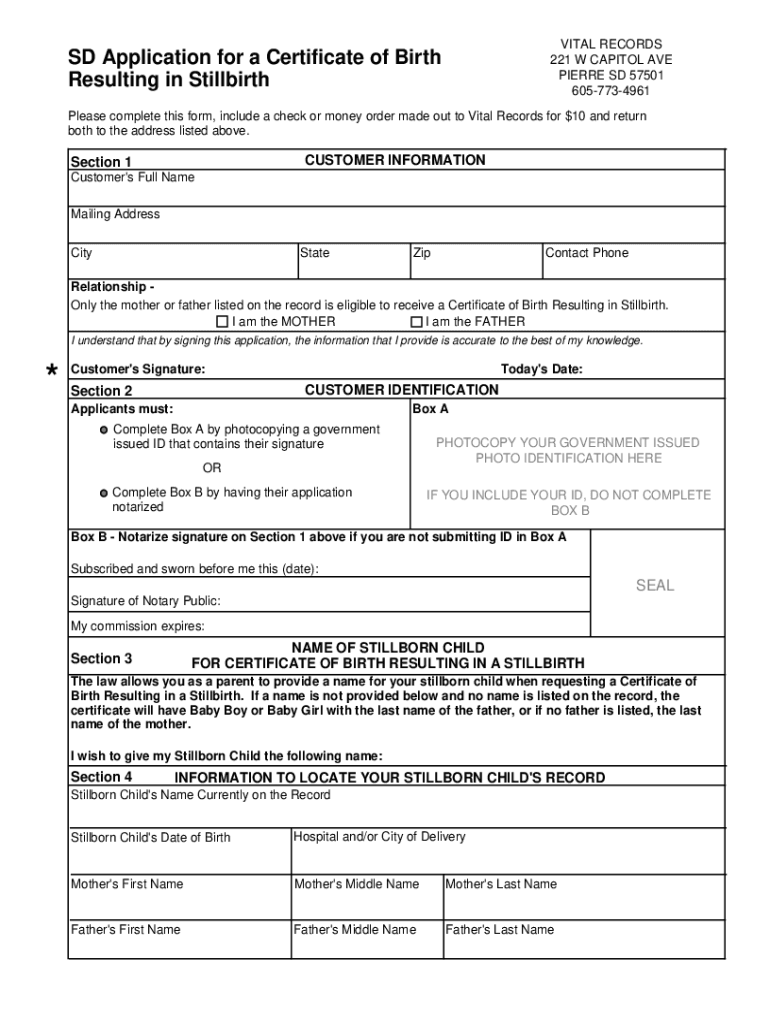
The "DOH SD RecordsState-OfficeContact Vital Records - SD Dept of Health - South Dakota" refers to the specific system and processes set by the South Dakota Department of Health for managing vital records. These records typically include birth and death certificates, marriage licenses, and divorce decrees. This office provides a centralized location for South Dakotans to request, amend, and access these critical documents. Understanding the specific terminologies, such as "vital records" and "official copies," is essential for navigating this system effectively.
Vital records are official documents produced by a governmental authority that record significant life events. Each type of record serves a distinct purpose. Birth certificates, for example, are often required for identification purposes, while death certificates might be needed for settling an estate. It's essential to understand these distinctions when contacting the office for specific records.
How to Use the Form
The form for contacting the South Dakota Vital Records office is structured to simplify making requests for various vital records. To effectively utilize this form, individuals need to select the appropriate type of record they are seeking. Users must input personal information accurately, ensuring that names, dates, and locations match official records.
- Identify the type of record needed (birth, death, or marriage certificate).
- Carefully fill in personal details to prevent processing delays.
- Follow instructions specific to each record type, as different records might require additional documentation or information.
Steps to Complete the Form
-
Gather Required Information: Before starting the form, collect all necessary information, such as personal identification and payment details. This might include a government-issued ID and a credit card for processing fees.
-
Select the Record Type: Clearly indicate whether you are requesting a birth, death, marriage, or divorce record. Each category requires specific information.
-
Fill Out Personal Information: Enter accurate personal details, including full names, dates, and any special instructions or notations pertinent to your request.
-
Attach Identification Verification: Include photocopies of required identification, such as a driver’s license or passport, for identity verification. Check the form instructions for acceptable ID types.
-
Submit Payment: Process the required payment using the accepted forms of payment indicated on the form, which may include checks or electronic payments.
-
Review and Send the Form: Carefully review the completed form for accuracy before submission. Mail it to the designated office address or submit it electronically, as specified.
Why Should You Contact Vital Records in South Dakota?
Contacting the South Dakota Department of Health's Vital Records office is crucial for accessing certified copies of essential documents. These records are often required for legal processes, including visa applications, settling estates, and validating familial relationships.
- Legal Documentation: Many legal processes require certified copies of vital records.
- Historical Research: Vital records can provide valuable insights for genealogical research.
- Personal Identification: Secure official documents for identification purposes, travel, or employment.
Who Typically Uses the Form
The form is primarily used by individuals who need to obtain or amend official records for themselves or family members. This includes parents requesting birth certificates for newborns, individuals applying for marriage licenses, and relatives needing death certificates for estate matters.
- New Parents: To register and obtain birth certificates for their newborns.
- Genealogists: Conducting family history research often require access to historical vital records.
- Legal Representatives: Handling cases involving the estates of deceased individuals or family law matters.

Legal Use of the Form
Using the form legally involves adhering to regulations set by the South Dakota Department of Health. This means providing accurate information and not misusing the records obtained. Legal use cases may include:
- Verification: Using a birth certificate as proof of age or identity.
- Estate Settlement: A death certificate may be required for legal proceedings associated with the deceased's estate.
- Marriage Validation: Applying for spousal benefits or other legal matters.
Key Elements of the Form
The form encompasses several essential elements designed to facilitate the efficient processing of requests.
- Identification Section: To establish the requester's identity and relationship to the subject of the record.
- Record Type Specification: Clear indicators for whether the request is for a birth, death, marriage, or divorce record.
- Payment Details: Instructions for covering any fees associated with processing and issuing records.
State-Specific Rules for Vital Records
South Dakota has specific rules and regulations governing the access and amendment of vital records.
- Privacy Regulations: Access to certain records might be restricted to protect personal privacy.
- Time-Sensitive Requests: There might be specific time frames within which certain records can be requested or amended.
Examples of Using the Form
Consider the scenario of a family moving to a new state: they will need to update identification documents, requiring certified copies of birth certificates for the entire family. Alternatively, a researcher might request historical marriage records to build a family tree.
By understanding these scenarios and leveraging the form appropriately, individuals can successfully navigate the administrative processes involved in securing vital records.




