
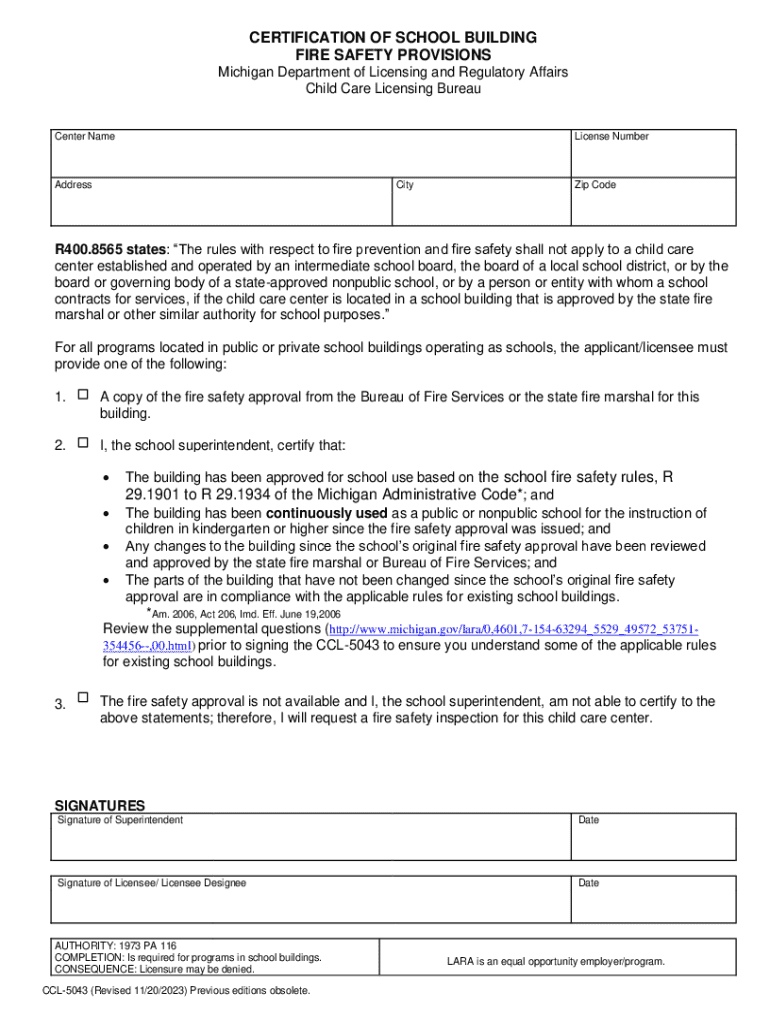







Definition & Meaning
The Certification of School Building Compliance with Fire Safety ensures educational institutions adhere to established fire safety standards. This certification is crucial for safeguarding students, staff, and infrastructure. It signifies that a school building meets the necessary safety regulations set by fire authorities. Compliance involves a thorough inspection and documentation process to verify the adequacy of fire safety measures, such as alarms, extinguishers, and escape routes. Understanding this certification helps school administrators maintain a secure environment while fulfilling legal obligations.
How to Use the Certification of School Building Compliance
Educational administrators typically use this certification to demonstrate regulatory compliance. The document serves as proof during audits and inspections by local fire departments and insurance companies. It is essential for obtaining and renewing operational licenses. Schools display this certification to reassure parents and community members of their commitment to safety. Additionally, it's a crucial document when planning renovations or expansions, as ongoing compliance must be maintained throughout such processes.
How to Obtain the Certification
Obtaining this certification requires coordination with local fire authorities. Schools must arrange for a comprehensive inspection evaluating factors like emergency exits, fire alarms, sprinkler systems, and fire extinguishers. If deficiencies are identified, schools must rectify these issues before a follow-up inspection can occur. Upon passing the inspection, the school receives a compliance certificate. Administrators should maintain ongoing dialogues with local fire departments to keep abreast of any updates in safety standards or inspection protocols.
Steps to Complete the Certification Process
- Schedule an Inspection: Contact the local fire department to set up a safety inspection.
- Prepare Documentation: Gather all relevant safety logs, maintenance records, and previous inspection reports for review.
- Conduct Safety Assessment: Ensure that all fire safety equipment is functional and compliance measures are up-to-date.
- Address Deficiencies: Resolve any identified safety issues promptly to align with regulatory expectations.
- Reinspection: Arrange a secondary inspection to confirm that all issues have been rectified successfully.
- Receive Certification: Obtain the compliance certification upon satisfactory assessment.
Why Certification is Important
Certification of school building compliance is vital for ensuring the safety of all building occupants. It minimizes risks associated with fire hazards, serving as a crucial part of emergency preparedness. Moreover, it legally protects the institution in case of fire incidents by proving due diligence. Achieving this certification can also lower insurance premiums, as it indicates a reduced risk of fire-related claims.
Important Terms Related to Certification
- Fire Code: A set of standards governing fire safety in buildings.
- Egress: Safe passages for occupants to evacuate during emergencies.
- Fire Drill: A practice to ensure orderly evacuation in case of an actual fire event.
- Inspection: An official examination to ensure compliance with fire safety regulations.
Legal Use of the Certification
The certification is a legal requirement for schools to operate safely and compliantly. It can be used in court to demonstrate adherence to fire safety laws and regulations, potentially shielding the institution from liability in case of fire incidents. Compliance certificates support insurance claim processes by confirming adherence to required safety practices.
Key Elements of the Certification
To secure certification, the following elements must be thoroughly evaluated:
- Fire Suppression Systems: Presence and functionality of sprinklers and extinguishers.
- Alarm Systems: Regular testing and maintenance documentation.
- Safety Signage: Clearly marked exits and emergency instructions.
- Escape Plans: Visibility and accessibility of evacuation maps.
State-Specific Rules
While federal regulations provide a framework, each state may have additional specific requirements for fire safety in schools. Administrators must consult state fire marshals to understand these unique regulations. For instance, specific equipment standards or frequency of drills may vary by location. Continuous liaison with state authorities ensures ongoing compliance with all relevant safety mandates.
Examples of Using the Certification
Schools can utilize this certification when applying for grants related to educational safety enhancements. It also plays a role in accreditation processes from state education departments or independent agencies. Furthermore, it can be presented during community meetings or parent orientations to instill confidence in the school’s safety protocols.




