




01. Edit your form online
Type text, add images, blackout confidential details, add comments, highlights and more.

Type text, add images, blackout confidential details, add comments, highlights and more.

Draw your signature, type it, upload its image, or use your mobile device as a signature pad.

Send it via email, link, or fax. You can also download it, export it or print it out.
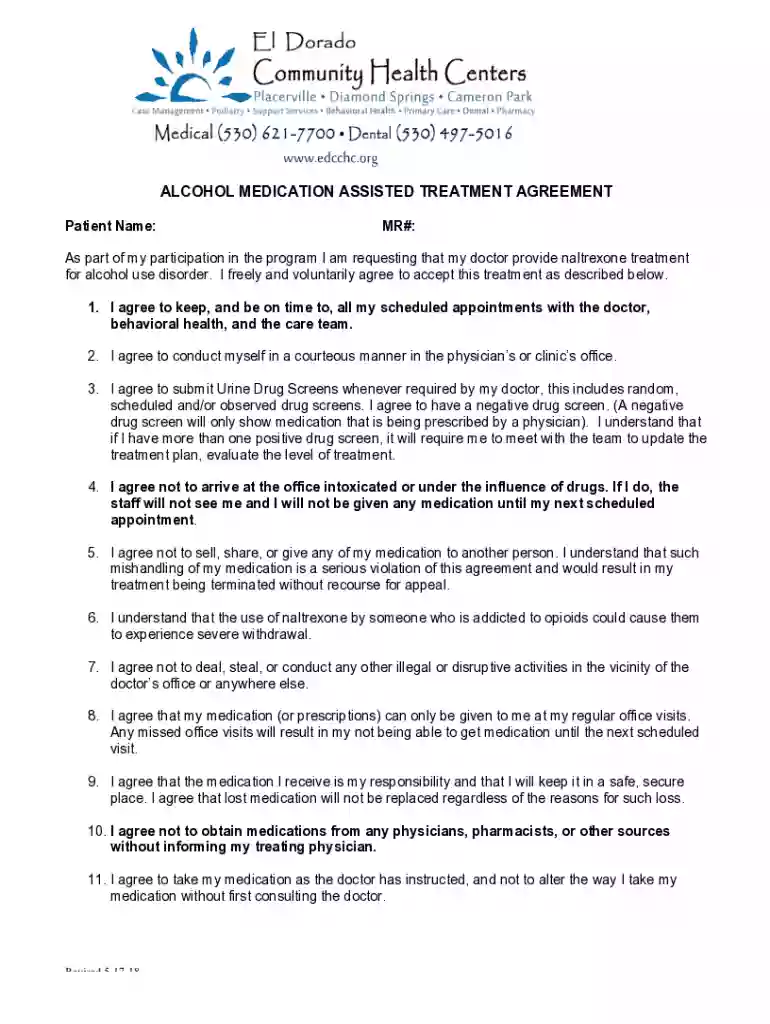
An "Alcohol Treatment Agreement Doc" is a legally binding document between a patient and a healthcare provider, designed to formalize the terms of medication-assisted treatment for alcohol use disorder. Typically, this agreement involves the use of medications like naltrexone that help reduce the urge to consume alcohol. The document serves several purposes: it outlines the responsibilities of both parties, establishes rules for the use of medication, and provides a framework for collaboration in the patient's treatment journey. This type of agreement is crucial for ensuring that the patient commits to the treatment plan and remains compliant with prescribed medical guidelines. Failure to adhere to the agreement can result in the termination of treatment services.
The alcohol treatment agreement doc covers several key elements to ensure clarity and mutual understanding between the patient and healthcare provider:
Patient Responsibilities: These include attending all scheduled appointments and participating in required therapy sessions. Patients are also expected to follow medication guidelines meticulously and avoid substance misuse.
Healthcare Provider Obligations: The provider's role is to monitor the patient's progress, offer support, and adjust the treatment plan as necessary. They are also responsible for maintaining open lines of communication with the patient.
Medication Guidelines: Detailed instructions on how medications like naltrexone should be taken, including dosages and potential side effects, are clearly outlined to ensure patient safety.
Confidentiality Assurances: Both parties agree to maintain confidentiality regarding treatment details, which is protected under U.S. healthcare privacy laws.
To use the alcohol treatment agreement doc effectively, follow these steps to ensure a comprehensive understanding and application of its terms:
Initial Review and Discussion: Both the patient and healthcare provider must review the agreement thoroughly. All terms should be discussed and clarified before signing.
Agree on Treatment Goals: The patient and provider collaboratively establish realistic and attainable treatment goals, framed within the scope of the agreement.
Signatures and Documentation: Once both parties agree on the terms, they should sign the document. The signed agreement should be kept on file by the provider and a copy provided to the patient.
Ongoing Monitoring: Regular follow-ups ensure that the patient adheres to the agreement, allowing for adjustments if necessary. Documentation of these follow-ups should be maintained for accountability.
Familiarity with these terms is helpful when engaging with an alcohol treatment agreement doc:
Medication-Assisted Treatment (MAT): A treatment approach combining the use of medication with counseling and behavioral therapies to treat substance use disorders.
Naltrexone: A medication commonly used in MAT for alcohol use disorder. It works by blocking the euphoric effects of alcohol, reducing cravings.
Adherence: The extent to which a patient follows the terms of the treatment plan and takes medications as prescribed.
Substance Misuse: The use of a substance in a manner, or for purposes, not consistent with legal or medical guidelines.
Completing an alcohol treatment agreement doc involves several careful steps to ensure accuracy and commitment:
Gather Necessary Information: Before filling out the document, collect personal details, medical history, and current substance use patterns.
Complete Patient Information Section: Fill in the patient's name, contact information, and any relevant medical data.
Define Treatment Plan: Detail the medication regimen, including dosages and administration schedules, in addition to other therapeutic interventions.
Review and Clarify Terms: Both the patient and provider should comprehensively review the terms, seeking clarification or adjustments as required.
Sign and Date the Agreement: Affix signatures and dates to confirm commitment to the agreement's terms.
This type of agreement is primarily utilized by:
Healthcare Providers: Physicians, psychiatrists, and addiction specialists who oversee treatment for alcohol use disorders.
Patients: Individuals undergoing treatment for alcohol dependence who need a structured and formalized approach to recovery.
Treatment Facilities: Inpatient and outpatient centers specializing in substance use disorders, which use these agreements as part of their standard patient intake documentation.


Legally, an alcohol treatment agreement doc serves several important functions:
Framework for Treatment: It establishes clear guidelines that are recognized both clinically and legally, providing structured directives for patient care.
Authorization for Treatment: The document acts as a formal contract in which the patient consents to receive healthcare services and agrees to comply with treatment protocols.
Accountability: By signing the agreement, both parties are agreeing to specific responsibilities and terms, which can be referenced in case of disputes or violations.
Real-world scenarios demonstrate the practical applications of the alcohol treatment agreement doc:
Scenario 1: A patient acknowledges their struggle with alcohol dependency and decides to engage in MAT. The agreement outlines the medication plan and required counseling sessions, supporting their recovery journey.
Scenario 2: A treatment center uses the agreement doc during the intake process to develop personalized care plans for each patient, ensuring compliance and facilitating effective communication with healthcare teams.
Legal requirements may vary slightly between states in the U.S. Some considerations include:
State Regulations: Some states may have specific guidelines for MAT programs, requiring particular elements to be included in treatment agreements.
Licensing Requirements: Providers must adhere to state-specific licensure and certification mandates, which may impact how agreements are crafted and implemented.
Adjustments for Legal Compliance: To align with state laws, modifications to standard agreements may be necessary, ensuring all components meet local legal and ethical standards.
We've got more versions of the Alcohol treatment agreement doc form. Select the right Alcohol treatment agreement doc version from the list and start editing it straight away!
| Versions | Form popularity | Fillable & printable |
|---|---|---|
| 2018 | 4.6 Satisfied (36 Votes) |
At DocHub, your data security is our priority. We follow HIPAA, SOC2, GDPR, and other standards, so you can work on your documents with confidence.
This form is provided for educational and informational purposes only. It is not intended to establish a legal or medical standard of care.Read more
Family Agreement Form in English (PDF | 149 KB) create an alcohol- and drug-free environment that is safe for you and your friends.
It is also important that all stakeholders are in agreement as to the methodology used to select sample locations, collect samples, and interpret results.


