Note name speed test a grand staff 100 notes answer key 2026

Get Form
note name speed test grand Preview on Page 1

Here's how it works

01. Edit your note name speed test grand online
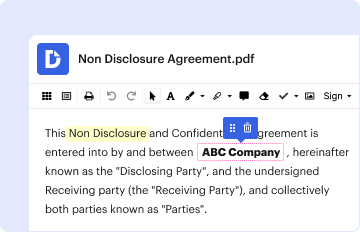
Type text, add images, blackout confidential details, add comments, highlights and more.

02. Sign it in a few clicks
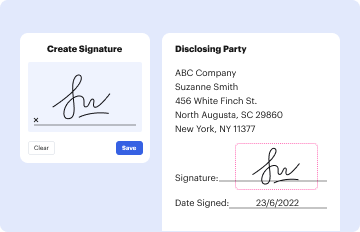
Draw your signature, type it, upload its image, or use your mobile device as a signature pad.

03. Share your form with others
Send note name speed test a grand staff 100 notes answer key via email, link, or fax. You can also download it, export it or print it out.

Definition & Meaning

The "note name speed test a grand staff 100 notes answer key" is a tool used to evaluate an individual's proficiency in identifying musical notes quickly. This test involves naming 100 notes on a grand staff—a music notation system that includes both treble and bass clefs—within a limited time, typically one minute. The answer key is essential for checking the accuracy of the responses, allowing educators and learners to assess musical reading skills effectively.

How to Use the Note Name Speed Test a Grand Staff 100 Notes Answer Key

To use the answer key effectively, follow these steps:

  1. Complete the Test: Have the participant attempt to name all 100 notes within the designated time.
  2. Self-Evaluation: The participant can initially check their answers against the provided answer key to determine accuracy.
  3. Instructor Review: An instructor can provide further feedback by comparing the participant's responses to the answer key, highlighting areas of strength and improvement.
  4. Identify Patterns: Look for consistent errors, such as confusing certain notes, and address these in further practice sessions.

Steps to Complete the Note Name Speed Test a Grand Staff 100 Notes Answer Key

  1. Preparation: Ensure you have a clean copy of the answer sheet and a timing device set to one minute.
  2. Execution: Begin the test, working quickly to name each note as accurately as possible within the time limit.
  3. Immediate Correction: Use the answer key to instantly verify responses and score the test.
  4. Reflect and Adjust: Use insights from the test to refine learning strategies and improve musical note recognition speed.

Key Elements of the Note Name Speed Test a Grand Staff 100 Notes Answer Key

  • Clarity: Each note is clearly labeled to minimize confusion.
  • Comprehensiveness: The key covers all possible notes within the test, ensuring complete evaluation.
  • Accuracy: It provides correct answers that reflect standard music notation conventions.
  • Ease of Use: Designed for straightforward comparison with the test results to facilitate quick grading.

Who Typically Uses the Note Name Speed Test a Grand Staff 100 Notes Answer Key

  • Music Students: To self-assess their knowledge and speed in identifying musical notes.
  • Music Teachers: As a diagnostic tool to evaluate student progress and tailor teaching methods.
  • Professional Musicians: To maintain quick and accurate note reading skills essential for performance.
  • Education Institutions: As part of their music curriculum to measure students' proficiency effectively.
decoration image ratings of Dochub

Important Terms Related to Note Name Speed Test a Grand Staff 100 Notes Answer Key

  • Grand Staff: A set of five horizontal lines and four spaces that represent different musical pitches; includes both treble and bass clefs.
  • Treble Clef: The symbol used to denote higher pitch notes found on the upper staff.
  • Bass Clef: The symbol used to denote lower pitch notes found on the lower staff.
  • Ledger Lines: Short lines added for notes that fall above or below the main staff lines.

Examples of Using the Note Name Speed Test a Grand Staff 100 Notes Answer Key

  • Class Scenario: A music teacher administers the test to a class of students and utilizes the answer key to facilitate group discussions on common errors.
  • Individual Practice: A student takes the test at home, uses the answer key to check answers, and focuses practice on commonly missed notes.
  • Competition Preparation: Music competitors use the test to enhance their sight-reading skills under timed conditions, simulating performance scenarios.

Versions or Alternatives to the Note Name Speed Test a Grand Staff 100 Notes Answer Key

  • Digital Platforms: Online tools and apps offer interactive versions of the speed test with digital answer keys, enabling instant feedback.
  • Paper-Based Variants: Traditional paper tests provide a tactile, non-digital method for practice, preferred in settings without digital access.
  • Customized Tests: Specifically tailor the number of notes or timing to better suit varying skill levels or specific learning objectives.

State-by-State Differences

While the note naming test itself remains consistent in content, states may have different applications within their educational standards or music curricula. Some states might incorporate such tests for grade assessments or as part of certification programs, while others use them purely for extracurricular development.

Digital vs. Paper Version

  • Digital Version: Enhances user interaction through engaging interfaces, instantaneous results, and often includes audio components for auditory learning.
  • Paper Version: Offers simplicity and accessibility, without the need for technology, making it ideal for quick setups in classroom settings.

Application Process & Approval Time

In formal settings, this test might be part of a broader evaluation strategy:

  • Coordination with Music Departments: Institutions often integrate this test into music programs with approval from curriculum overseers.
  • Standard Assessment Periods: Typically conducted as part of regular students' evaluations, tying into assessment timelines set by music education boards.

This structured content offers an in-depth perspective on the "note name speed test a grand staff 100 notes answer key," providing comprehensive guidance and insights for a variety of users such as students, educators, and music professionals.

be ready to get more

Complete this form in 5 minutes or less

Get form

Got questions?

We have answers to the most popular questions from our customers. If you can't find an answer to your question, please contact us.
Contact us
From there it counts up the scale, with F, G, A, B, C, D, E, F, and G. Anything above that and youre getting into ledger lines. You can think of ledger lines as a continuation of the grand staff. A lined note looks just like Middle C, with a line running through the note hanging above the staff. The Grand Staff Demystified (Music Theory) - Pianote Pianote blog piano-music-theory-gr Pianote blog piano-music-theory-gr
You now know that a staff is a graphical system used to read notes with five lines and four spaces. These lines and spaces house the notes of the musical alphabet: A, B, C, D, E, F and G. The treble clef symbol looks like this and signifies medium to high pitches being read on the staff. Treble Clef | Notes Staff - Lesson - Study.com Study.com learn treble-clef-notes-staff-lines Study.com learn treble-clef-notes-staff-lines
The notes on the treble and bass clefs staves all belong to the same giant stave which has 11 lines in total. This is called a grand staff. The middle line is normally invisible, but I have included it here as faint grey line to make it more obvious. The Grand Staff - My Music Theory My Music Theory Pitch My Music Theory Pitch
The notes on a grand staff consisting of one bass staff and one treble clef are (in ascending order) G-A-B-C-D-E-F-G-A on the bass staff and E-F-G-A-B-C-D-E-F on the treble staff.
The musical alphabet includes only 7 letters: A, B, C, D, E, F, G. On the staff, each line or space represents a different letter. The treble clef is also known as the G clef because it indicates that the second line from the bottom will be G. Notice how the clef makes a circle centered on the second line. Musical Alphabet vcu.edu resources lessons pitch3 vcu.edu resources lessons pitch3

Security and compliance

At DocHub, your data security is our priority. We follow HIPAA, SOC2, GDPR, and other standards, so you can work on your documents with confidence.

Learn more
ccpa2
pci-dss
gdpr-compliance
hipaa
soc-compliance
be ready to get more

Complete this form in 5 minutes or less

Get form

People also ask

Lines Spaces Treble Clef Spaces (FACE) *FACE. Bass Clef Lines (GBDFA) Good Boys Do Fine Always (easy to confuse with Every Good Boy . . . ) *Great Big Dogs Fight Animals. Bass Clef Spaces (ACEG) All Cars Eat Gas. *All Cows Eat Grass. Amy Carter Eats Garbage. All Clintons Eat Goobers.

Related links