




01. Edit your form online
Type text, add images, blackout confidential details, add comments, highlights and more.

Type text, add images, blackout confidential details, add comments, highlights and more.

Draw your signature, type it, upload its image, or use your mobile device as a signature pad.

Send it via email, link, or fax. You can also download it, export it or print it out.
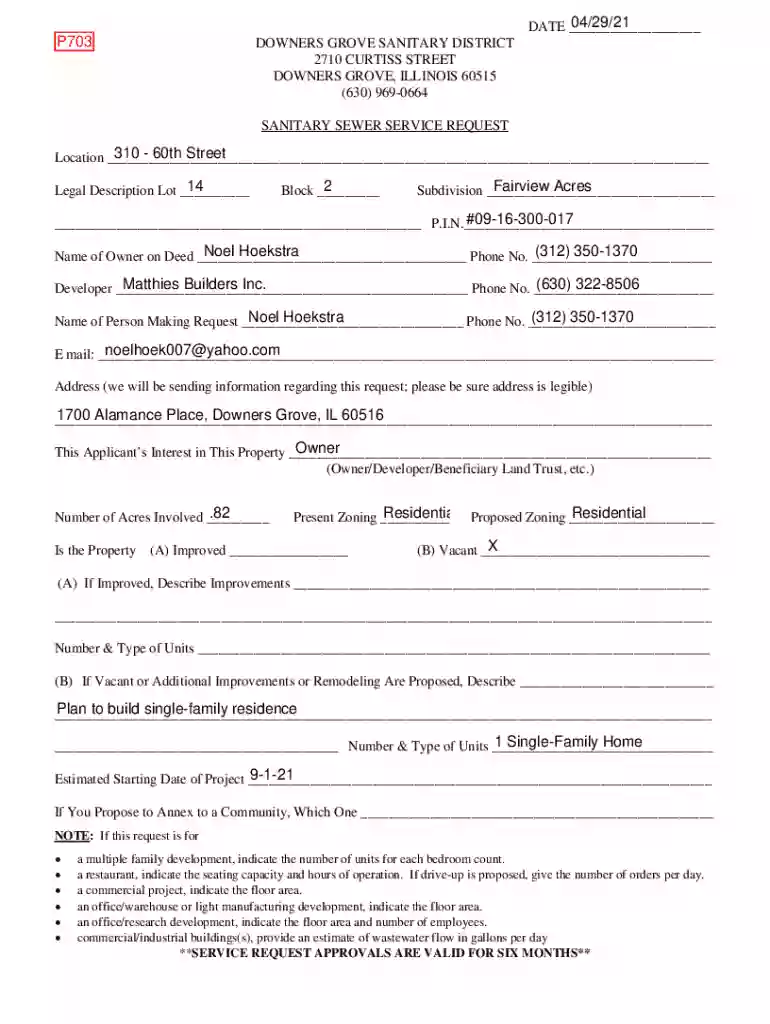
The term "Board of Local Improvements Downers Grove Sanitary District" refers to a governmental body responsible for overseeing and approving infrastructure projects related to sanitation in the Downers Grove area. This board plays a crucial role in maintaining and improving the sanitary systems, ensuring they meet regulatory standards and community needs. They also manage the approval process for new developments and renovations that involve sewer systems. The board’s functions include evaluating projects, approving plans, and ensuring compliance with local laws and regulations.
To utilize the "Board of Local Improvements Downers Grove Sanitary District" form, begin by understanding its specific purpose, which generally involves requests for sewer connections or improvements. Users must gather all the relevant details about their project, such as location, scope, and any involved contractors. The form will typically require you to describe the nature of the work, specify materials, and align with local regulations. Ensure all sections are completed accurately before submission to avoid processing delays.
The form must be used strictly for purposes related to local sanitary improvements in Downers Grove. It ensures legal compliance with sanitary and environmental regulations, thereby avoiding potential legal issues or delays. Misuse of the form, such as providing false information or neglecting required documentation, can lead to penalties or project rejections. It is legally binding, meaning any approvals or agreements reached through this process are enforceable under local law.
An example scenario includes a homeowner requesting approval to connect their property to the municipal sewer system. The homeowner would fill out the form detailing their property's location, propose plans for the connection, and attach necessary site plans and permits. Once submitted, the board reviews the request in light of existing sewer capacity and infrastructure plans. Upon approval, the applicant can proceed to hire contractors and begin the installation process.
For the Downers Grove area, local ordinances may dictate specific requirements for sanitation projects that differ from other parts of the state. These could include stricter environmental standards or more detailed documentation requirements. It's essential to consult with local authorities or legal advisors to understand the specific state laws applicable to your project, ensuring full compliance and reducing the risk of delays or penalties.
We've got more versions of the BOARD OF LOCAL IMPROVEMENTS DOWNERS GROVE SANITARY DISTRICT form. Select the right BOARD OF LOCAL IMPROVEMENTS DOWNERS GROVE SANITARY DISTRICT version from the list and start editing it straight away!
At DocHub, your data security is our priority. We follow HIPAA, SOC2, GDPR, and other standards, so you can work on your documents with confidence.


