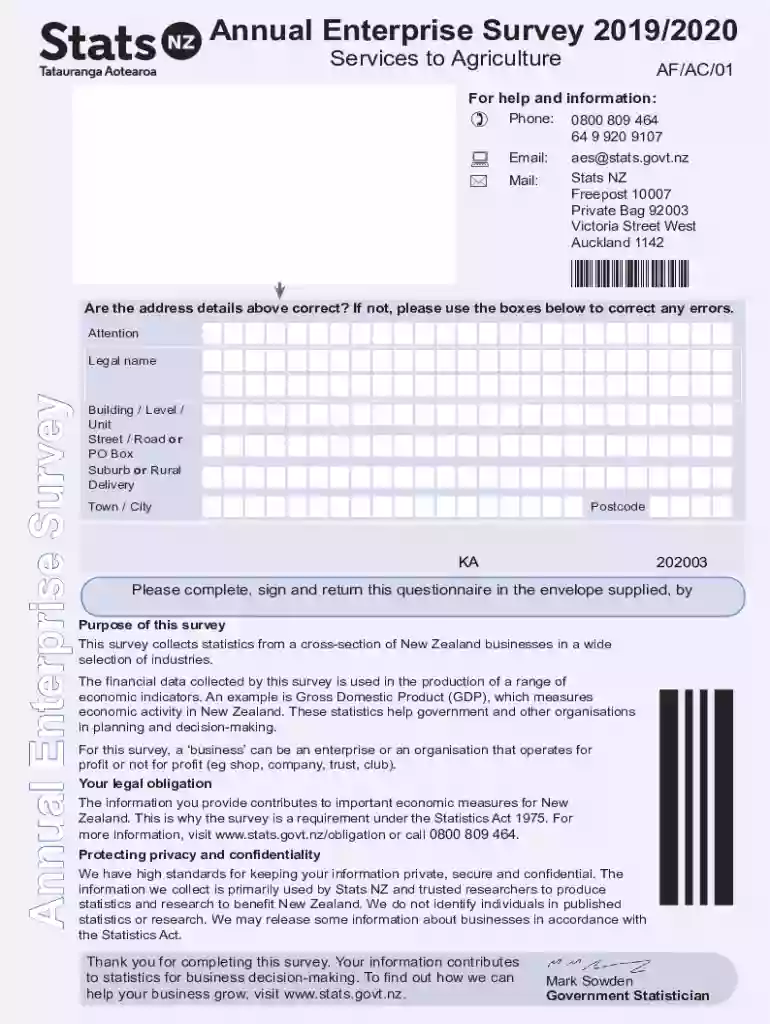
Definition and Meaning of AF-AC-01
The AF-AC-01 form serves as a standardized document within a specific domain that requires comprehensive data collection or submission of pertinent information. While the precise function of AF-AC-01 can vary depending on its specific context, forms like these typically encapsulate critical data entry, compliance requirements, or registration details that an organization or individual needs to fulfill certain conditions. Understanding the meaning and purpose of the AF-AC-01 is crucial, as it directly impacts how the form should be completed and submitted.
Importance of Understanding AF-AC-01
- Compliance: Filling out the AF-AC-01 correctly ensures compliance with applicable regulations or requirements.
- Data Accuracy: Proper understanding minimizes errors, ensuring accurate data submission.
- Legal and Administrative Needs: Awareness of the form’s purpose can support legal or administrative procedures.
Steps to Complete the AF-AC-01
Completing the AF-AC-01 form involves several detailed steps to ensure all required information is accurate and comprehensive. Here’s a breakdown:
- Read Instructions Carefully: Review any accompanying guidelines or instructions provided with the form to understand specific requirements or definitions.
- Gather Necessary Information: Collect all relevant data and documents needed to fill out the form completely.
- Fill Out Personal Details: Enter required personal or organizational information as stipulated on the form.
- Review Sections for Specific Data: Some sections may request explicit data points unique to your situation or organization.
- Check for Completeness: Before submission, review the form to ensure no sections are left incomplete unless marked as optional.
- Make Required Signatures: Complete any necessary signature fields to validate the information.
- Attach Additional Documentation: If additional documents are required, ensure they are correctly attached or included.
Avoiding Common Mistakes
- Double-check for omissions in required fields.
- Verify the accuracy of entered information.
- Ensure all documents are updated and relevant.
Practical Examples
- Business Reporting: Companies may use the AF-AC-01 to report specific business activities or financial data.
- Personal Compliance: Individuals might use the form for tax reporting or compliance with statutory obligations.
Key Elements of the AF-AC-01
Understanding the key components of the AF-AC-01 form is crucial for accurate completion:
- Identification Section: Usually includes fields for entity or individual identification, such as name or ID numbers.
- Detail Sections: Fields that request specific information related to the form's purpose.
- Declaration and Signature Fields: Sections where the form signer declares the information's truthfulness.
Detailed Breakdown
- Identification: Essential for assigning the form correctly to the relevant entity.
- Detail Sections: Require most attention to ensure precision and authenticity.
- Signature: Legally binds the signer to the submitted information.
Legal Use of the AF-AC-01
The AF-AC-01 form may have specific legal implications, depending on its usage context. Proper completion and submission could be necessary for:
- Regulatory Compliance: To meet legal requirements in industry-specific contexts.
- Contractual Obligations: To fulfill terms within business or personal agreements.
- Data Reporting: To provide accurate data required by laws or regulations.
Considerations
- Ensure understanding of applicable laws related to AF-AC-01.
- Confirm submission timelines to avoid penalties.
Digital vs. Paper Version of AF-AC-01
With evolving technology, the AF-AC-01 forms may be available in both digital and paper formats:
- Digital Version: Offers ease of access, reduction in physical storage needs, and often an interactive interface for inputs.
- Paper Version: May be required for certain submissions where digital versions are not accepted.
Advantages of Each
- Digital: Speed, convenience, efficient for edits and corrections.
- Paper: Tangibility, sometimes required for submissions with original signatures.
Software Compatibility for AF-AC-01
Forms like AF-AC-01 may be compatible with software solutions that streamline data entry and submission processes:
- DocHub: Allows for editing and signing directly on the platform, supporting seamless integration with tools like Google Workspace.
- Accounting and Tax Software: Some forms might be used in conjunction with solutions such as QuickBooks or TurboTax to simplify the reporting process.
Benefits of Compatibility
- Enhanced accuracy and efficiency in data handling.
- Streamlined workflows with integrated digital solutions.
Submission Methods for the AF-AC-01
Submitting the AF-AC-01 can be done through various channels, depending on the guidelines:
- Online Submission: Most efficient for speed and tracking.
- Mail: Traditional method but may take longer due to postal delays.
- In-Person: Direct submission to authorities or agencies, often guaranteeing immediate acknowledgment.
Choosing the Right Method
- Evaluate deadlines and required proof of submission to select the best method.
- Consider the urgency and confirmation needs for critical submissions.
Understanding these aspects thoroughly serves as a practical guide through the completion process, ensuring that the requirements specific to AF-AC-01 are met effectively.