



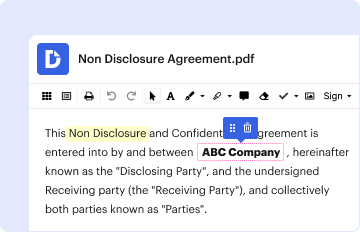
01. Edit your form online
Type text, add images, blackout confidential details, add comments, highlights and more.

Type text, add images, blackout confidential details, add comments, highlights and more.
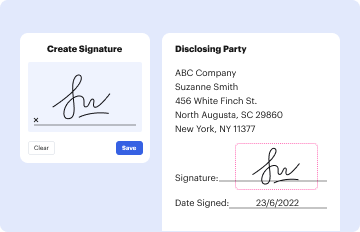
Draw your signature, type it, upload its image, or use your mobile device as a signature pad.

Send it via email, link, or fax. You can also download it, export it or print it out.
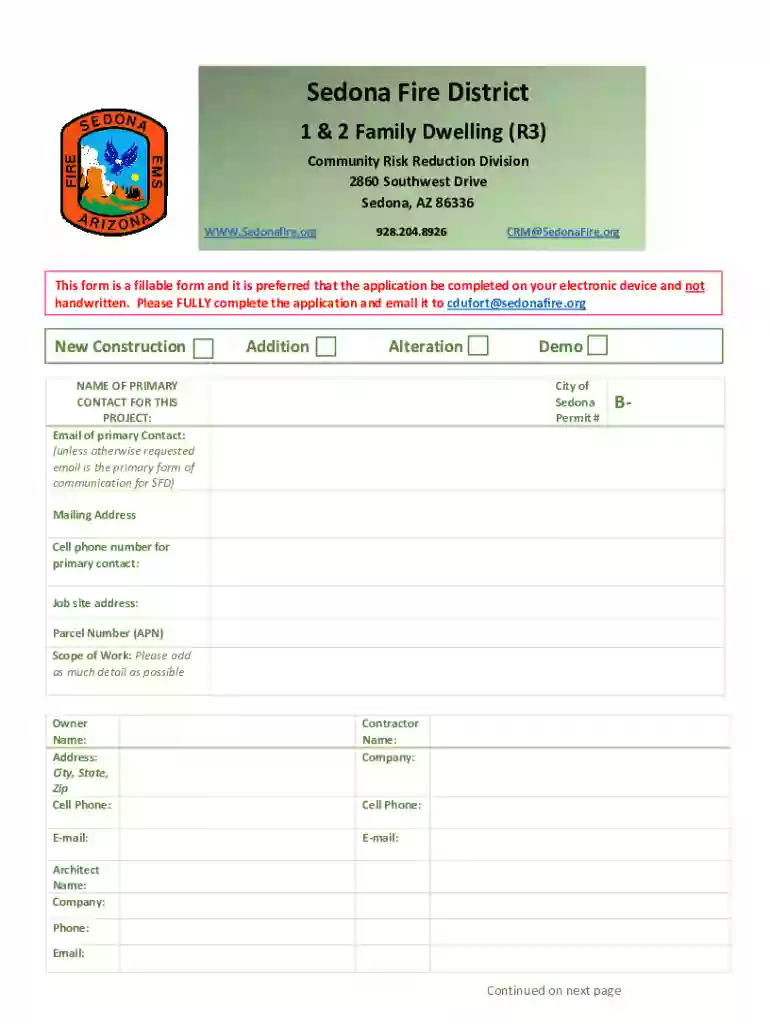
The "Application Form Residential - Sedona Fire District" is a specific document used for new construction, additions, or alterations to one and two-family dwellings within the jurisdiction of the Sedona Fire District. This form serves as a formal request for review and approval by the local fire authorities, ensuring that all residential building projects adhere to essential fire and life safety codes.
The form is essential for maintaining safety standards and assists the fire district in preemptively identifying potential hazards or code violations. It collects detailed project information, enabling the district to assess whether the proposed construction plans comply with regulations designed to protect residents and enhance overall community safety.
Gather Necessary Information:
Provide Project Details:
Complete Required Fields:
Ensure Compliance with Codes:
Review and Sign:
Submit the Form:
Contact Information: Critical for communication and follow-up, each party's details, including addresses, phone numbers, and emails, must be included accurately.
Project Overview: A comprehensive summary of the project indicating whether it is a new build or a modification and includes dimensions, materials, and design features.
Compliance Declarations: Statements verifying that the project complies with relevant local codes and standards, often outlined as checklists or clauses within the form.
Signature and Date: Essential for verifying responsibility and ensuring acknowledgment of all project participants' commitments.
Primarily, this form is used by homeowners, contractors, architects, and developers who are planning to undertake residential construction or modifications in Sedona. Often mandated in the planning phase, the form involves both individual homeowners managing their property renovations and large development companies working on new residential projects.
In addition, architects and builders heavily rely on the form to ensure regulatory compliance, aligning their designs with safety standards and mitigating risks associated with the project's approval processes.


Fire and Life Safety Codes: A set of standards governing the safe construction and use of buildings to prevent accidents and ensure the welfare of occupants.
Primary Contact: The individual designated as the main point of communication for the project, often responsible for overseeing form completion and submission.
Zoning Regulations: Local laws dictating the permissible types of land use and construction specifics within different district zones.
Given that this form is specific to Sedona, Arizona, it aligns with the state's unique building and safety regulations. Arizona's rules may differ considerably from those in other states, especially regarding fire protection systems, environmental considerations, and indigenous cultural site requirements. Contractors and homeowners must be familiar with state and local rules when filling out the form to ensure full compliance and avoid project delays.
Include documentation such as architectural drawings, site plans, permits from related agencies, and any previous correspondence with the fire district. These documents help substantiate the applicant's claims concerning project scope and safety measures. It is advisable to maintain digital copies for easy access and efficient submission processes.
The Sedona Fire District offers multiple submission options to cater to various applicant needs:
Online Submission: Highly recommended for efficiency and speed. Forms and supporting documents can be sent directly through the district’s website or designated email.
Mail Submission: Physical copies can be sent via postal services. Ensure timely delivery to avoid processing delays.
In-Person Submission: Applicants may hand-deliver forms to district offices, allowing for immediate acknowledgment and receipt confirmation.
Failure to submit a complete or accurate application form could result in project delays, denial of permits, and potential fines. Non-compliance with fire safety regulations may lead to mandatory project alterations, increased costs, and in severe cases, suspension of work until all safety measures are met according to the district's standards. It is crucial to adhere strictly to all guidelines and timelines to avoid such penalties.
We've got more versions of the Application Form Residential - Sedona Fire District form. Select the right Application Form Residential - Sedona Fire District version from the list and start editing it straight away!
At DocHub, your data security is our priority. We follow HIPAA, SOC2, GDPR, and other standards, so you can work on your documents with confidence.


