




01. Edit your form online
Type text, add images, blackout confidential details, add comments, highlights and more.

Type text, add images, blackout confidential details, add comments, highlights and more.

Draw your signature, type it, upload its image, or use your mobile device as a signature pad.

Send it via email, link, or fax. You can also download it, export it or print it out.
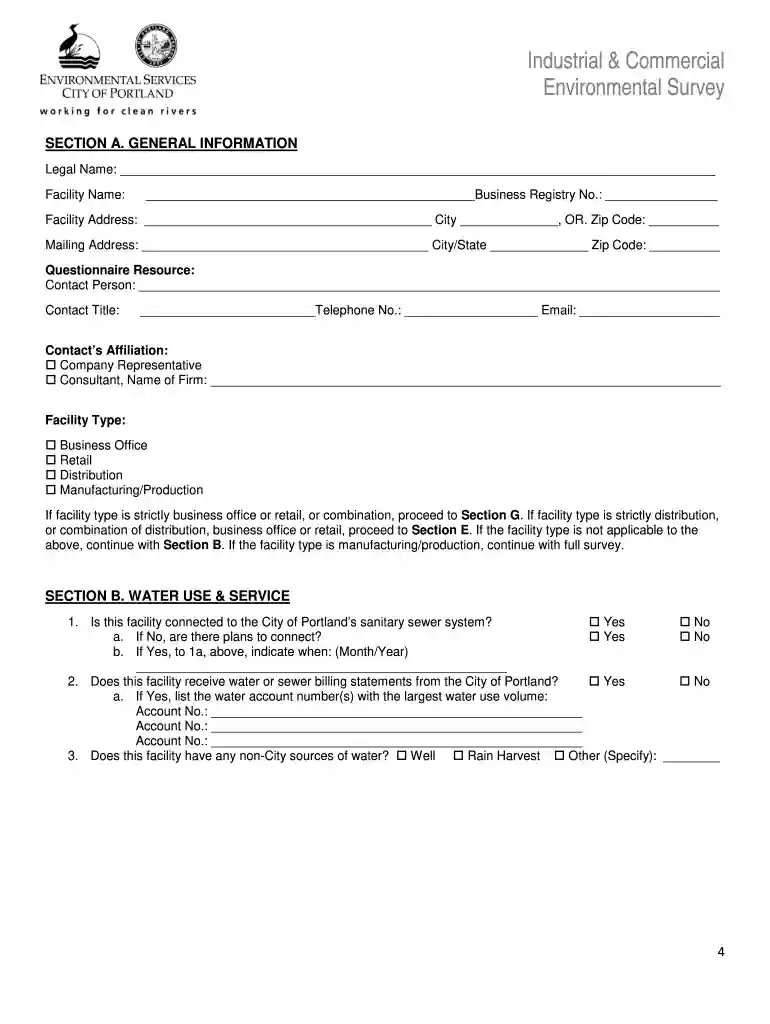
The City of Portland, often referenced simply as the City, is responsible for adhering to a federally mandated Pretreatment Program. This program involves regulations requiring certain industrial and commercial users to track and limit their pollutant discharges. The primary goal is to prevent harmful substances from entering the Publicly Owned Treatment Works (POTW), thereby protecting water quality and the environment.
Stakeholders in industrial and commercial sectors must understand the specific obligations set by the City. This involves:
Gather Facility Data: Collect details about industrial processes, water usage, and waste management practices.
Fill Out the Survey Form: Ensure all sections are thoroughly completed, reflecting current operational status and any changes from previous submissions.
Review Entries for Accuracy: Double-check all entered information to avoid errors that might delay processing or cause non-compliance.
Submit the Form: Use the specified methods, either online for efficiency or by mail for hard copies if necessary.
Retain a Copy: Keep a copy of the submitted form for your records and future reference.
Compliance with the requirements helps:
To comply with the City's requirements, entities must focus on:
Non-compliance can lead to several consequences, including:
While federal laws provide the general framework, Oregon state laws, particularly those applicable to Portland, specify additional requirements. Companies operating within the state must:
The City of Portland offers multiple methods for submitting required forms:
Understanding the differences between these can help users decide which to use:
For digital submissions, certain software platforms can assist:
We've got more versions of the The City of Portland (the City) is required by the form. Select the right The City of Portland (the City) is required by the version from the list and start editing it straight away!
At DocHub, your data security is our priority. We follow HIPAA, SOC2, GDPR, and other standards, so you can work on your documents with confidence.


