




01. Edit your certification and recertification for skilled nursing facility form online
Type text, add images, blackout confidential details, add comments, highlights and more.

Type text, add images, blackout confidential details, add comments, highlights and more.

Draw your signature, type it, upload its image, or use your mobile device as a signature pad.

Send it via email, link, or fax. You can also download it, export it or print it out.
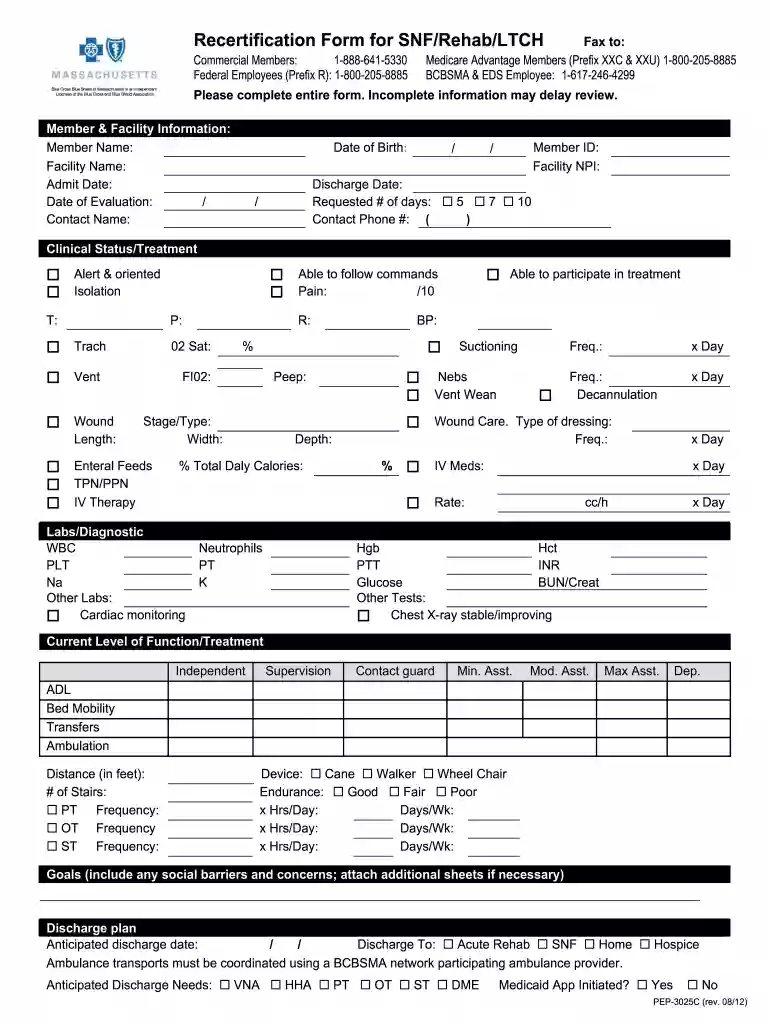
"Briggs Form 888 S" is a recertification form commonly used within the context of skilled nursing facilities, rehabilitation, and long-term care hospitals. This form is designed to collect comprehensive information about both the facility and its members for review purposes. It ensures that the details necessary for assessing clinical status, treatment plans, level of function, discharge plans, and anticipated needs are efficiently gathered. The form is crucial for maintaining accurate records and facilitating the recertification processes mandated by oversight bodies.
Completing Briggs Form 888 S involves several critical steps to ensure accuracy and compliance:
Gather Necessary Information: Before starting, collect all pertinent information regarding the patient's clinical status, treatment details, and facility operations. This includes medical records, treatment history, and expected care outcomes.
Clinical Status Section: Fill out details related to the current medical condition of the patient. This section should include diagnoses, medications, and any recent changes in health.
Treatment Details: Accurately describe ongoing treatments. Include specifics on therapies, the frequency of sessions, and the medical professionals involved in care.
Level of Function: Document the patient's current physical and cognitive abilities. This will involve standard assessments of mobility, self-care capabilities, and cognitive function.
Complete Discharge Plans: Outline any planned discharge or transition details. This section should address the timeline for discharge, post-discharge care, and any assistance required at home.
Review and Submission: Double-check all entries for precision. Once reviewed, the form can be submitted through the appropriate channels depending on the facility's protocol, whether electronically or via mail.
Briggs Form 888 S contains several pivotal components:
Member Information: Personal details about the patient, including their name, address, and identification number.
Facility Information: Includes the name, address, and operational procedures of the healthcare institution.
Clinical Status and Evaluations: Comprehensive documentation of the patient's medical conditions and the evaluations performed.
Treatment Plan: An outline of the proposed and ongoing treatment regimens, goals, and physician endorsements.
Discharge Planning: Detailed planning for post-treatment discharge, addressing where the patient will go and what care they will need.
The use of Briggs Form 888 S is essential for several reasons:
Regulatory Compliance: Adhering to regulatory requirements is critical. The form helps facilities demonstrate compliance with health care standards and regulations.
Streamlined Communication: Facilitates clear and consistent communication among health care providers, ensuring all parties are informed of the patient's status and care needs.
Efficient Record Keeping: Establishes a systematic approach to maintaining patient records that can be referenced in future assessments or regulatory audits.
Understanding key terminology is vital when working with Briggs Form 888 S:
Recertification: The process of renewing the facility's or patient's authorization to provide or receive health care services.
Clinical Status: Current health condition and medical diagnosis of the patient.
Discharge Plan: The strategies and arrangements made for patient care after leaving the healthcare facility.
Level of Function: Assessment of a patient's ability to perform daily tasks and functions.
Legal compliance is a core aspect of using Briggs Form 888 S:
Confidentiality: Sensitive patient information must be handled in accordance with HIPAA regulations to protect privacy.
Accuracy: All information provided should be truthful and accurate, as discrepancies can lead to legal and regulatory repercussions.
Authorization: Ensure all parts of the form are completed by authorized healthcare providers to validate claims and certifications.
The use of software can greatly enhance the preparation and submission of Briggs Form 888 S:
Document Management Systems: Platforms such as DocHub enable electronic handling, editing, and signing of the form, which improves accessibility and efficiency.
Integration: Compatibility with systems like Google Workspace can facilitate easy information sharing and collaboration without downloading and re-uploading documents.
Practical application examples of the form include:
Skilled Nursing Facility: Used when transitioning a patient from hospital care to a skilled nursing facility, ensuring all necessary care information is transmitted.
Long-Term Care Recertification: Employed during periodic reassessments to comply with state and federal recertification requirements for continuing care.
Rehabilitation Centers: Ensures that the treatment plan and progress of patients undergoing rehabilitation are thoroughly documented and communicated.
Briggs Form 888 S can be submitted through various methods:
Online Submission: Facilities using digital platforms can submit the form electronically, which streamlines the process and reduces paper waste.
Mail: For facilities that require physical documentation, the form can be completed and mailed to the appropriate regulatory body or internal review team.
In-Person: Some facilities may require a face-to-face submission, ensuring all details are reviewed in the presence of an authorized party for immediate feedback and corrections.
We've got more versions of the certification and recertification for skilled nursing facility form form. Select the right certification and recertification for skilled nursing facility form version from the list and start editing it straight away!
At DocHub, your data security is our priority. We follow HIPAA, SOC2, GDPR, and other standards, so you can work on your documents with confidence.


