
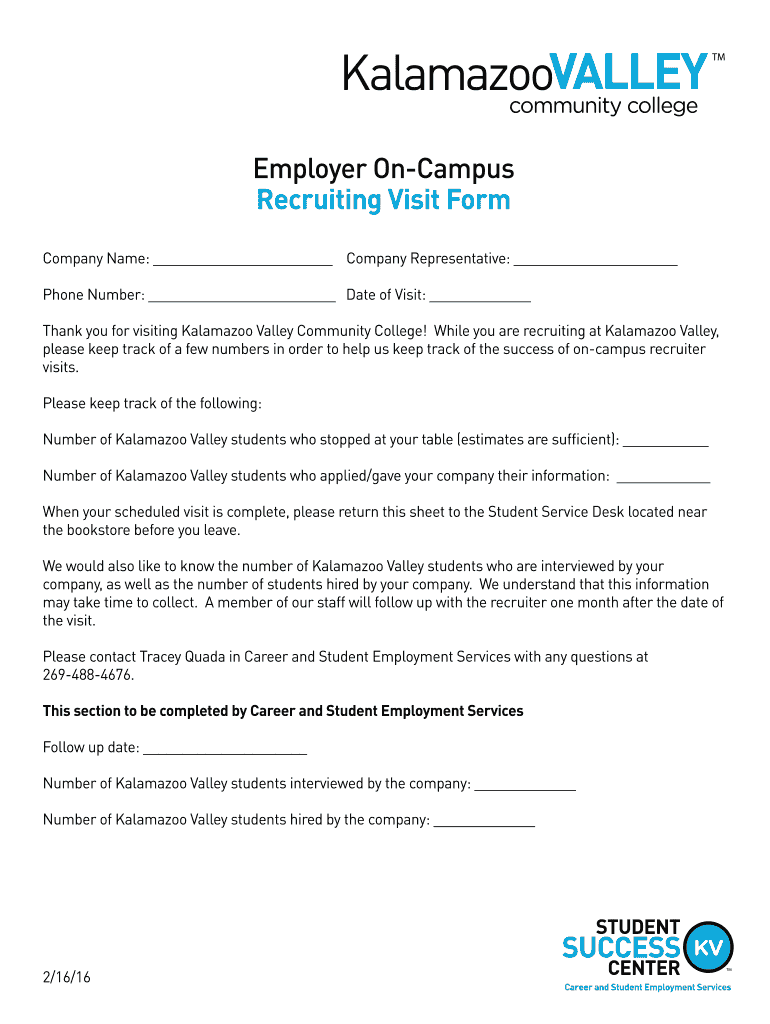







Definition and Meaning
The "Employer On-Campus" form is a structured document used primarily by educational institutions to facilitate and manage on-campus recruiting activities. This form serves as a vital tool for both employers and career service departments, ensuring a seamless exchange of information regarding job opportunities, candidate interactions, and hiring outcomes during campus recruitment events. It provides a standardized method to collect essential data such as the number of student participants, applications submitted, interviews conducted, and offers extended. This uniformity aids both in internal record-keeping and in evaluating the efficacy of recruitment efforts over time.
How to Use the Employer On-Campus Form
- Preparation Before the Event: Before utilizing the Employer On-Campus form, company representatives should coordinate with the host institution's career services to understand specific data collection requirements, such as logging interaction types and outcomes.
- Data Entry During the Event: Throughout the recruiting session, employers fill in sections of the form that track various metrics, such as student engagement metrics and application statuses, ensuring that accurate and comprehensive data is gathered.
- Post-Event Submission: Once the event concludes, the completed form must be returned to the career services department as instructed. This allows the college to maintain organized records and initiate any necessary follow-up actions.
Steps to Complete the Employer On-Campus Form
- Initial Setup: Gather the necessary information, including details about the company and the recruiters present during the event, ensuring that personal information is accurately filled out in the designated sections.
- Log Student Interactions: As students visit, document each interaction on the form, noting their names, contact information, resumes submitted, and any immediate feedback or actions taken (e.g., scheduled interviews).
- Record Outcomes: Capture the number of applications received, interviews conducted, and offers made. This data is crucial for evaluating the recruiting activity's success and improving future campus engagements.
- Final Review and Submission: Before submitting, review the document for accuracy, ensuring all fields are complete and reflect real-time information. Follow the host institution's protocol for submission, whether via physical document handover or digital format.
Important Terms Related to Employer On-Campus
- Recruiting Session: A period during which employers visit campuses to promote job opportunities directly to students.
- Student Engagement: The rate and quality of interactions between students and employer representatives during on-campus events.
- Application Metrics: Data points collected about applications submitted, which can include volume, source, and current status.
- Interview Tracking: Documentation of interviews conducted, noting candidate names, positions applied for, and interview outcomes.
Legal Use of the Employer On-Campus Form
The form aligns with standard legal frameworks and data privacy regulations, ensuring that all shared personal data is handled responsibly and confidentially. Institutions and employers must adhere to applicable laws such as FERPA, which protects student education records, emphasizing transparency and security in use.
Key Elements of the Employer On-Campus Form
- Company Information: Essential details about the recruiting company, including contact information, to establish clear communication channels.
- Engagement Statistics: Metrics related to student participation, which includes the number of visitors, attendees, and participants.
- Recruitment Outcomes: Data reflecting the results of recruiting efforts, such as interviews scheduled, offers extended, and candidates hired.
- Feedback Section: An area for recruiters to provide qualitative feedback about the event, venue, student preparedness, and any suggestions for improvement.
Examples of Using the Employer On-Campus Form
- Kalamazoo Valley Community College Case: An employer documented their campus recruiting experience, noting the high engagement levels and successful candidate conversions, which helped the college tailor future events more effectively.
- Multi-Day Recruitment Event: A company attending a week-long recruitment fair utilized the form to meticulously track student interactions across multiple days, aiding in cumulative reporting efforts.
Software Compatibility and Integration
The form can be efficiently processed using document management software, such as DocHub, which supports editing, sharing, and digital signing. This enables seamless integration into digital workflows, facilitating paperless submissions and enhanced data management, thus optimizing the on-campus recruitment experience.
Eligibility Criteria to Use the Form
- Employer Requirements: Typically restricted to registered businesses or organizations with formal affiliation or partnership agreements with the educational institution.
- Institutional Compliance: Must comply with college rules and guidelines regarding on-campus recruitment activities to ensure a smooth, authorized presence.


Who Typically Uses the Employer On-Campus Form
- Corporate Recruiters: Engaged in campus hiring to identify and acquire new talent directly from educational institutions.
- Career Service Coordinators: Responsible for organizing, managing, and post-event evaluations, ensuring alignment between educational outcomes and employment opportunities.

Filing Deadlines and Important Dates
Employers must adhere to specific filing deadlines set by the host institution, often correlating with the academic calendar. Typically, completed forms are expected shortly after the recruitment event concludes to allow sufficient time for data analysis and follow-up actions.




