Definition & Meaning
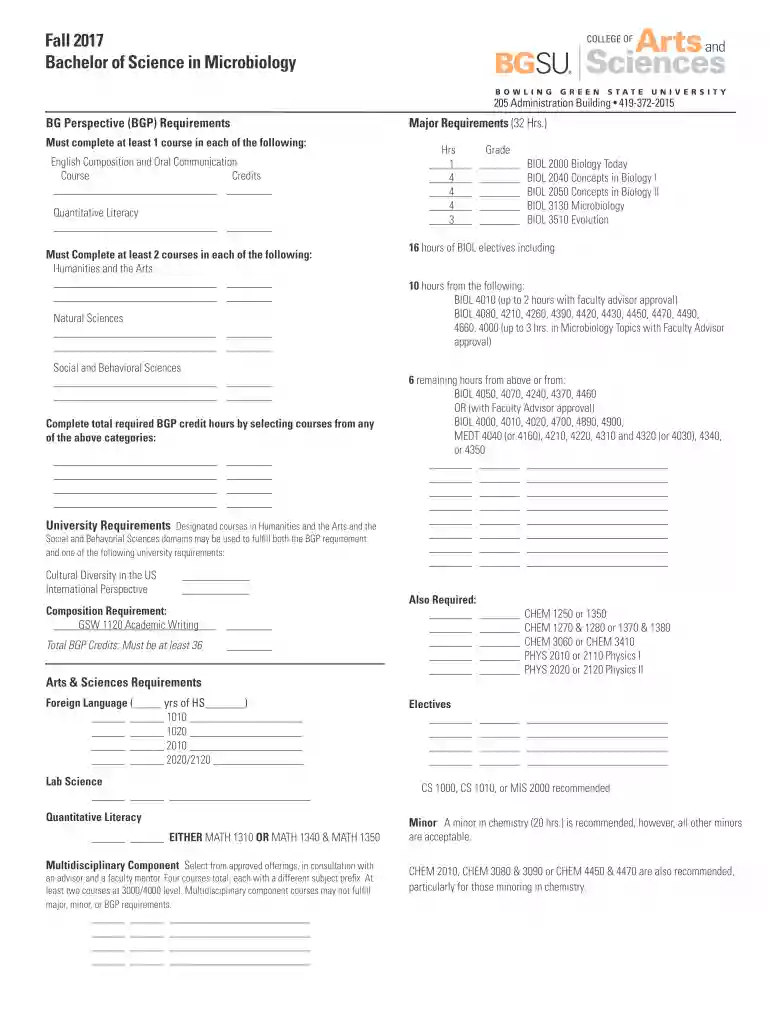
The "Fall 2017 Bachelor of Science in Biology Specialization in" refers to a specialized undergraduate program offered in the Fall of 2017, focusing on Biology with various tracks or concentrations based on students' interests and career goals. This program is typically designed to provide a robust understanding of biological sciences while allowing students to delve deeper into specific areas within Biology, such as microbiology, ecology, or molecular biology. The specialization component enables students to tailor their degree to specific fields that may include genetics, biotechnology, or environmental biology, equipping them with the necessary skills and knowledge for advanced studies or careers in related disciplines.
How to Use the Bachelor of Science in Biology Specialization
To maximize the value of the Bachelor of Science in Biology Specialization, students should:
- Select Relevant Courses: Choose electives and specialization tracks that align with career aspirations and academic interests.
- Engage in Research Projects: Participate in faculty-led research opportunities to gain hands-on experience and apply theoretical knowledge.
- Leverage Networking Opportunities: Connect with professors, industry professionals, and alumni to explore career paths and professional growth opportunities.
- Utilize University Resources: Make full use of academic advising, career counseling services, and internships offered through the university.
- Plan for Advanced Education: If planning to pursue graduate studies, ensure prerequisite courses and GPA requirements are met.
Steps to Complete the Bachelor of Science in Biology Specialization
- Enroll in the Program: Apply and gain admission to the Bachelor of Science in Biology program with a specialization option.
- Meet Core Requirements: Fulfill university and major-specific requirements, including core science and elective courses.
- Choose a Specialization Track: Select a specialization area within the field of Biology that aligns with your career goals.
- Complete Laboratory and Field Work: Engage in required lab and field courses to develop practical skills.
- Perform a Degree Audit: Regularly check academic progress against program requirements and consult academic advisors.
- Fulfill Credit Hour and GPA Requirements: Ensure all credit hours are completed, and maintain the minimum GPA.
- Apply for Graduation: Submit graduation application in accordance with university deadlines and policies.
Key Elements of the Bachelor of Science in Biology Specialization
- Core Biology Courses: Foundational courses covering genetics, cell biology, and organismal biology.
- Specialization Courses: Advanced courses targeting specific areas like marine biology, biochemistry, or zoology.
- Laboratory and Practical Experience: Critical for hands-on learning and application of theoretical knowledge.
- Research Component: Opportunities for conducting independent research or participating in collaborative projects.
- Capstone Project or Thesis: A comprehensive project or thesis to integrate and demonstrate acquired knowledge and skills.
How to Obtain the Bachelor of Science in Biology Specialization
Obtaining this degree involves:
- Applying to the University: Submit applications to universities offering the program before the designated deadlines.
- Securing Financial Aid: Apply for scholarships, grants, or loans if financial assistance is necessary.
- Participating in Orientation: Attend orientation sessions for incoming students to learn about the program structure and resources.
- Engaging in Coursework and Extracurricular Activities: Balance academic responsibilities with extracurricular involvement for a holistic educational experience.
Important Terms Related to Biology Specialization
- Elective Courses: Courses outside the core requirements that allow students to explore specific interests within biology.
- Prerequisites: Courses or requirements that must be completed prior to enrolling in advanced or specialized courses.
- Capstone Project: A culminating project that showcases students’ comprehensive understanding and skills in their chosen specialization.
- Credit Hours: A unit representing the amount of instruction time a student has invested in a course.
Real-World Scenarios of Using a Bachelor of Science in Biology
Graduates with a Bachelor of Science in Biology Specialization can pursue various pathways:
- Research Scientist: Conduct laboratory or field research in specialized areas, contributing to scientific advancements.
- Healthcare Professional: Utilize biological knowledge as a foundation for further studies in medicine, veterinary science, or public health.
- Environmental Consultant: Work on projects focused on conservation, sustainability, and environmental impact assessments.
- Biotech Industry Roles: Engage in biotechnological innovations and product development in pharmaceutical or agricultural sectors.