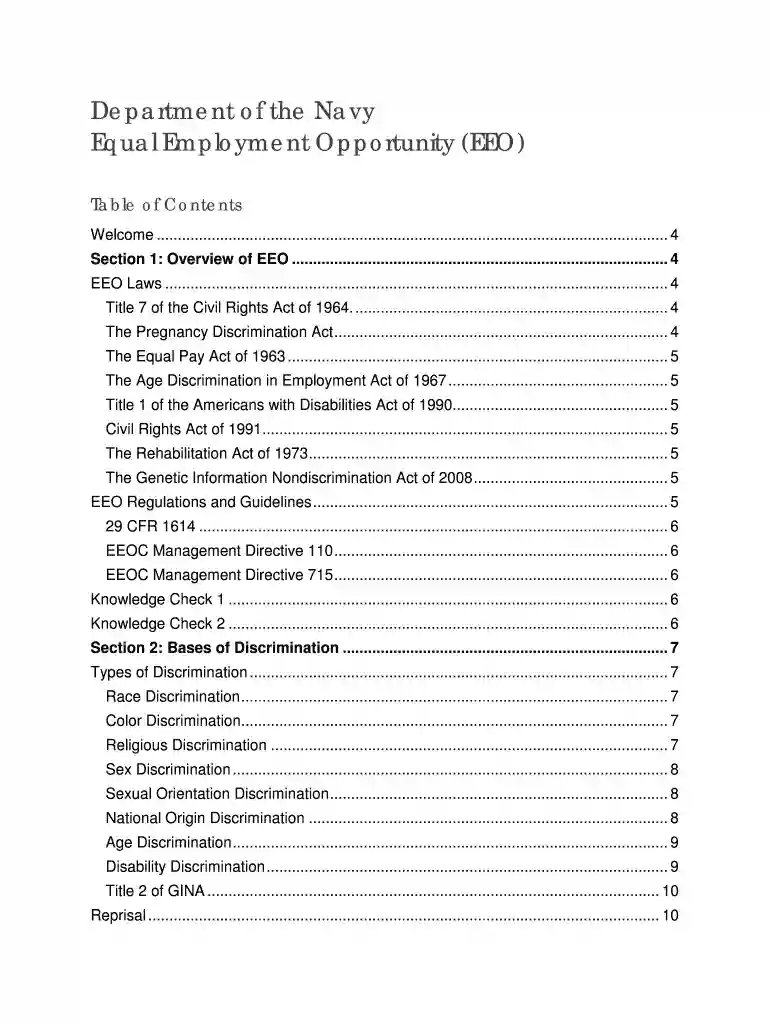
Welcome to Civilian Employment - Civilian Human Resources 2026

Get Form
Welcome to Civilian Employment - Civilian Human Resources Preview on Page 1

Here's how it works

01. Edit your form online
Type text, add images, blackout confidential details, add comments, highlights and more.

02. Sign it in a few clicks
Draw your signature, type it, upload its image, or use your mobile device as a signature pad.

03. Share your form with others
Send it via email, link, or fax. You can also download it, export it or print it out.

Definition & Meaning

The "Welcome to Civilian Employment - Civilian Human Resources" form is designed to introduce individuals to the resources and processes related to civilian employment within government departments or related organizations. It serves as a comprehensive guide for new civilian employees, outlining essential procedures and providing information on available resources to facilitate a smooth transition into their roles.

Purpose of the Form

  • Introduce new employees to civilian human resources procedures.
  • Provide guidance on navigating employment processes.
  • Outline available resources and support systems for new employees.
  • Establish an understanding of roles and responsibilities within a civilian employment context.

Importance in Civilian Workforce

The form plays a crucial role in onboarding by ensuring that new employees have a clear understanding of their entitlements and the human resources processes they need to navigate. This preparation is critical for fostering a smooth transition into the civilian work environment, enabling new hires to become productive and comfortable in their roles more efficiently.

Steps to Complete the Welcome to Civilian Employment - Civilian Human Resources

Proper completion of the "Welcome to Civilian Employment - Civilian Human Resources" form requires careful attention to detail. Here are the essential steps:

  1. Read Through the Entire Form: Before beginning, it is important to read through the entire form to understand what information is required and identify any documents you might need.

  2. Gather Necessary Documents: Depending on the information requested, you may need documents such as identification, previous employment records, or any certifications related to your role.

  3. Fill Out Personal Information: Complete all sections requesting personal information, including full name, contact information, and any specific identifiers used within the organization.

  4. Submit Employment History: Provide details of your employment history as required. Ensure accuracy to facilitate a smooth verification process.

  5. Sign and Submit: Once all sections are completed, provide any necessary signatures and submit the form according to the instructions provided (e.g., online submission, mailing, or in-person handover).

Practical Tips

  • Double-check all information for accuracy to avoid processing delays.
  • If submitting online, ensure compliance with file format requirements.
  • Contact HR if clarification is needed, ensuring proper completion of the form.

Key Elements of the Welcome to Civilian Employment - Civilian Human Resources

The form comprises several key elements vital to the onboarding process:

  • Personal Identification Section: Collects basic personal and contact information to establish an official employee record.
  • Employment History and Experience: Ensures new employees' qualifications and work history are accurately recorded for HR reference.
  • Resource and Benefits Information: Provides details on employee benefits, HR resources, and support systems available to civilian employees.
  • Roles and Responsibilities Acknowledgment: Requires acknowledgment of understanding related to employee responsibilities and organizational expectations.

Considerations for New Employees

New employees should pay close attention to sections detailing benefits and resources, as these provide valuable information on what support is available to them during their employment. Understanding this aspect can significantly enhance the onboarding experience and overall job satisfaction.

Who Typically Uses the Welcome to Civilian Employment - Civilian Human Resources

This form is primarily utilized by:

  • New Civilian Employees: Individuals transitioning into civilian roles within a federal agency or governmental department.
  • Human Resources Departments: HR personnel responsible for onboarding and integrating new employees into the organization.
  • Managers and Supervisors: Those overseeing the introduction of new hires into their teams, ensuring that all HR-related procedures are followed.
decoration image ratings of Dochub

Supporting Different Roles

Different roles may require tailored information or sections. For example, managers might focus more on the onboarding process, while HR personnel might ensure all documentation is complete and accurate for compliance purposes.

Legal Use of the Welcome to Civilian Employment - Civilian Human Resources

Ensuring the legal compliance of the form is critical, as it involves the documentation of employment data and personal information. The following legal aspects need consideration:

  • Data Protection: The form must adhere to data protection laws to safeguard personally identifiable information.
  • Employment Law Compliance: All information collected must align with national employment laws to ensure fairness and equity in employment practices.
  • Nondiscrimination Policies: The form reinforces the organization's commitment to EEO principles, preventing discrimination based on race, gender, or disability.

Legal Framework and Guidelines

Legal documentation and understanding EEO laws are essential. HR departments must ensure that all practices and collected data comply with the relevant legal frameworks to prevent any future disputes or legal challenges.

Important Terms Related to Welcome to Civilian Employment - Civilian Human Resources

Several terms frequently appear in civilian employment and are vital for understanding the form's context:

  • Equal Employment Opportunity (EEO): Emphasizes nondiscrimination in employment practices, ensuring equal access to opportunities for all individuals.
  • Human Resources (HR): Refers to the department responsible for managing employee relations, recruitment, training, and compliance.
  • Onboarding: The process of integrating a new employee into the organization, covering orientation, training, and socialization.
  • Privacy Act: Governs the collection, maintenance, use, and dissemination of personal information to ensure individual privacy.

Comprehending Terminology

Understanding these key terms is fundamental for new employees to navigate the employment landscape effectively. It enables them to engage more comfortably with HR processes and fully utilize available resources.

Examples of Using the Welcome to Civilian Employment - Civilian Human Resources

The form finds several applications across different scenarios:

  • New Hire Orientation: Used during onboarding sessions to provide new hires with comprehensive information about their roles and resources.
  • HR Compliance Checks: HR personnel utilize the form to ensure all legal and company requirements are met for each new employee.
  • Managers' Reference in Team Meetings: Managers use the form to orient new team members, highlighting key areas related to employee responsibilities and organizational culture.

Case Studies

A federal agency implemented the form to standardize its onboarding process, resulting in improved clarity and reduced onboarding time by 30%. Similarly, organizations leveraging digital versions for remote employees saw enhanced accessibility and a more streamlined process.

State-Specific Rules for the Welcome to Civilian Employment - Civilian Human Resources

While the form provides a standardized approach, variations may exist depending on state regulations:

  • California: Requires additional adherence to specific privacy laws when collecting personal data.
  • Texas: Mandates a particular focus on equal employment practices due to state-specific legal frameworks.
  • New York: Offers supplemental resources on anti-discrimination laws pertinent to the state.

Navigating State Differences

HR departments should be aware of these variations and ensure modifications are made to meet local regulations. Tailoring the form for state-specific requirements ensures compliance and protects the organization from legal ramifications.

See more Welcome to Civilian Employment - Civilian Human Resources versions

We've got more versions of the Welcome to Civilian Employment - Civilian Human Resources form. Select the right Welcome to Civilian Employment - Civilian Human Resources version from the list and start editing it straight away!
Versions Form popularity Fillable & printable
2020 4.8 Satisfied (195 Votes)
2017 4.4 Satisfied (53 Votes)
be ready to get more

Complete this form in 5 minutes or less

Get form

Got questions?

We have answers to the most popular questions from our customers. If you can't find an answer to your question, please contact us.
Contact us
Definition. Civilian employment is total employment with the exception of the armed forces.
More broadly, the term can refer to any people in the general public who are outside of a particular group. For example, when reporting on incidents, members of first responder services (such as firefighters and law enforcement) may colloquially refer to members of the public as civilians.
The Civilian Personnel Office provides advisory services to commanders/senior leadership, managers, supervisors and appropriated fund employees on civilian personnel management, staffing, labor and employee relations, affirmative employment programs, resources and human capital management.
Civilian Employee means an Employee who is not a Police Employee. View Source. Civilian Employee means any employee assigned to a position other than that of police employee.
The most common meaning for civilian is simply someone who is not in the military. It can also refer to any object that is not military in origin e.g., civilian clothes or civilian life. The meaning of civilian as a non military person is a relatively new one, dating from the early 19th century.

Security and compliance

At DocHub, your data security is our priority. We follow HIPAA, SOC2, GDPR, and other standards, so you can work on your documents with confidence.

Learn more
ccpa2
pci-dss
gdpr-compliance
hipaa
soc-compliance
be ready to get more

Complete this form in 5 minutes or less

Get form

People also ask

Civilian workers It typically involves: Individuals working at companies. People working for governmental agencies. Self-employed freelancers. Individuals with full- or part-time positions, depending on certain specifications.
The Civilian Human Resources Agency (CHRA) is the organization in the Department of the Army responsible for providing civilian human resources support.

Related links