Definition & Meaning
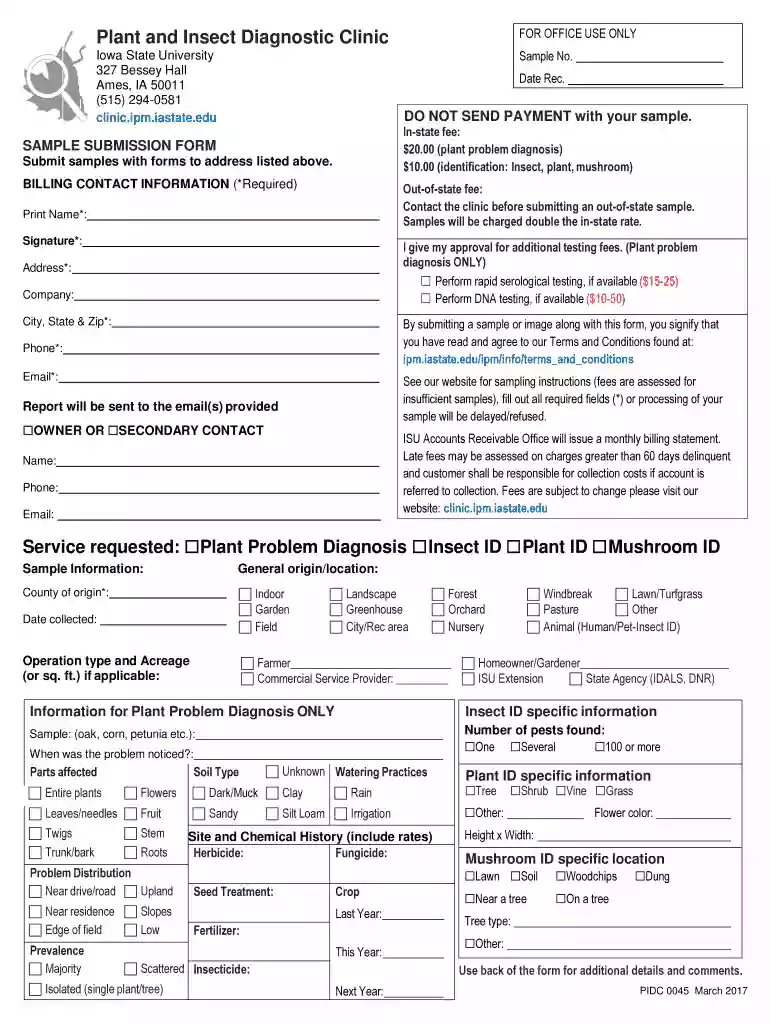
The "Insect Plant ID Problem Form - Iowa State University Extension and" is a document used by individuals and professionals in plant and insect diagnostics. It serves to report issues related to plant diseases, pest infestations, or general plant health issues. The form facilitates the submission of samples or descriptions to the Plant and Insect Diagnostic Clinic at Iowa State University. The primary intent is to enable accurate identification and tailored advice for managing particular plant-related issues.
Purpose and Utilization
- Sample Submission: Designed for sending physical or descriptive samples for analysis.
- Diagnostic Tool: Used to diagnose plant problems or identify insect species.
Target Users
- Gardeners: Individuals with gardens experiencing issues.
- Agricultural Professionals: Farmers or nursery staff seeking expert insights.
- Researchers: Academics requiring precise identification for studies.
How to Obtain the Insect Plant ID Problem Form
The Insect Plant ID Problem Form can typically be obtained from the Iowa State University Extension and Outreach website. The form is available in a downloadable format, such as PDF, which can be printed and filled manually or filled digitally.
Accessing the Form
- Visit the Website: Navigate to the Iowa State University Extension and Outreach official website.
- Form Section: Locate the diagnostics section or use the search function to find the form.
- Download Options: Available in both digital and printable formats.
Availability
- Online Access: Immediate download available.
- Support: For additional help, the extension office provides contact details.
Steps to Complete the Insect Plant ID Problem Form
Completing the Insect Plant ID Problem Form requires accurate input to ensure valuable feedback. Here's a step-by-step guide to avoid missing crucial information.
Essential Steps
- Identification Details: Provide personal and contact details for follow-up.
- Problem Description: Clearly outline the nature and symptoms of the plant issue.
- Sample Information: Include specifics about the sample, such as type of plant, environment, and observed problems.
Additional Details
- Photographic Evidence: Attach images if possible for visual assessment.
- Sample Submission: If sending physical samples, ensure they are packaged according to guidelines to prevent contamination or damage.
Key Elements of the Insect Plant ID Problem Form
The form includes several critical sections, all necessary for precise analysis and feedback.
Form Components
- Personal Information: Name, contact number, and email address.
- Plant and Problem Details: Includes species name, symptoms, and previous treatments.
- Environmental Conditions: Information on soil type, weather conditions, and any chemicals used recently.
Importance of Completeness
- Accurate Diagnosis: Comprehensive information ensures more accurate identification and recommendations.
- Efficient Processing: Complete forms lead to quicker processing times and responses.
Legal Use of the Insect Plant ID Problem Form
The use of the form is bound by guidelines that ensure proper handling and privacy.
Legal Considerations
- Confidentiality: Personal details are handled confidentially and used solely for diagnostic purposes.
- Compliance with Guidelines: Submissions must adhere to guidelines set by the Iowa State University Extension to be considered valid.
Restrictions
- For Educational and Diagnostic Use Only: Not for commercial use or distribution.
- Data Privacy: Users must ensure their submissions do not violate any data privacy laws.
User Categories
- Home Gardeners: Seeking advice on common plant issues.
- Professional Landscapers: Professionals needing to diagnose problems for clients.
- Academic Researchers: Utilizing the form for scholarly research and lab studies.
Benefits for Users
- Expert Insights: Provides access to university-backed expert opinion.
- Cost-Effective Solutions: Offers affordable means to diagnose plant and insect issues without extensive testing.
Examples of Using the Insect Plant ID Problem Form
Practical scenarios exemplify the application and utility of the form in real-world situations.
Case Scenarios
- Home Garden Infection: A homeowner discovers unusual spots on leaves and fills the form, attaching photos to get advice on treatment.
- Agricultural Consultation: A farmer uses the form to submit sample details when a new insect threatens crops, leading to a strategic pest management plan from experts.
Outcome Benefits
- Problem Resolution: Many users have resolved plant health issues through expert advice.
- Academic Contributions: Researchers have utilized results to contribute data to environmental studies.
State-Specific Rules for the Insect Plant ID Problem Form
While broadly applicable, some nuances in form usage are dictated by local state regulations and guidelines.
State Compliance
- Different States, Different Regulations: Certain rules may vary based on state agricultural guidelines.
- Submission Locations: Samples may need to be sent to specified in-state facilities or extension offices.
Navigating State Rules
- Consult Local Guidelines: Always check the specific rules applicable in your state before form submission.
- Extension Office Liaison: Contact your local extension office for state-specific advice and requirements.