
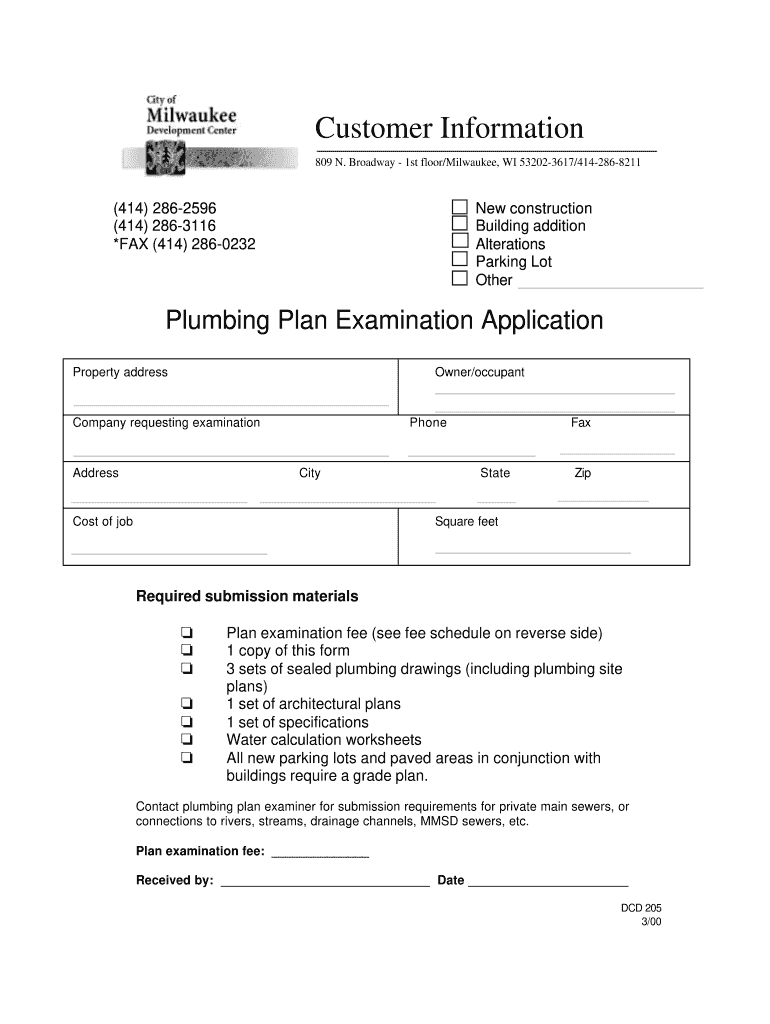







Definition and Meaning of the Plumbing Plan Examination Application
The Plumbing Plan Examination Application is a crucial document used in the construction industry within the United States for submitting plumbing specifications for review and approval. This form ensures that proposed plumbing systems in new constructions, renovations, and building extensions comply with local building codes and safety regulations. It typically includes detailed sections for customer information, property details, and required submission materials such as plumbing drawings and architectural plans. Essentially, this application serves as a formal request for examination and validation of plumbing plans, ensuring adherence to the legal and safety standards mandated by local jurisdictions.
How to Use the Plumbing Plan Examination Application
To effectively use the Plumbing Plan Examination Application, applicants should start by gathering all necessary project information and supporting documents. This includes project blueprints, plumbing drawings, and architectural plans. Applicants must fill out the form with accurate details, which involves specifying the nature of the project, such as whether it pertains to new construction, building additions, or alterations. Once the form is complete, it should be submitted to the relevant local authority responsible for building regulations, often accompanied by a plan examination fee.
- Project Information: Clearly outline the project's scope, size, and objectives.
- Supporting Documents: Ensure that detailed plumbing drawings are attached.
- Submission: Submit to the local building authority with applicable fees.
Steps to Complete the Plumbing Plan Examination Application
-
Gather Documentation: Collect all relevant plumbing and architectural drawings. Make sure these documents are precise and comprehensive to avoid any delays or rejections.
-
Complete the Form: Carefully fill out each section of the form. Pay close attention to mandatory fields, including property details and customer information.
-
Attach Required Materials: Attach all necessary submission materials, which usually include plumbing drawings and architectural plans.
-
Pay Fees: Review the form for the plan examination fee and pay the applicable amount to the stipulated authority.
-
Submit the Application: Depending on local regulations, submit the application in-person, online, or by mail to the appropriate government office.
Key Elements of the Plumbing Plan Examination Application
The Plumbing Plan Examination Application consists of several key components that must be completed accurately to ensure successful processing:
-
Customer Information: Includes details such as name, address, and contact information of the applicant or contractor responsible.
-
Property Details: Specifies information about the location and nature of the property involved in the project.
-
Submission Materials: Involves attaching necessary documents like plumbing drawings, which illustrate the details of the proposed plumbing systems.
-
Plan Examination Fee: Explains details about the fee required for the examination of the plans.
Legal Use of the Plumbing Plan Examination Application
Using the Plumbing Plan Examination Application correctly is legally significant as it represents the applicant’s commitment to following local building codes and safety standards. Submitting this form is mandatory for obtaining approval for plumbing work in various jurisdictions across the U.S. Failure to submit or inaccuracies in the application can result in legal penalties, delays, or even project stoppage. The form helps ensure that all plumbing installations will be executed in line with legal safety requirements, mitigating potential risks of non-compliance and fostering lawful practices in the construction industry.
Who Typically Uses the Plumbing Plan Examination Application
This application is primarily used by contractors, architects, and property developers engaged in construction projects that entail plumbing installations. Local governmental authorities also utilize it for reviewing and approving plumbing plans to ensure compliance with regional construction codes. Additionally, plumbing professionals and engineers often assist in preparing the materials required for successful application submission, ensuring that all design aspects meet the necessary safety and efficiency standards.

Examples of Using the Plumbing Plan Examination Application
Practical examples of this application include its use in diverse construction projects:
-
New Residential Developments: Submitting comprehensive plumbing plans for new housing projects to ensure proper sanitation and water distribution.
-
Commercial Building Renovations: Modifying and expanding existing plumbing systems in an office tower and formalizing changes through a submitted application.
-
Public Infrastructure Projects: Utilizing the form in the construction of public facilities like hospitals or schools where compliance with stringent plumbing regulations is vital.
Required Documents for the Plumbing Plan Examination Application
Various documents are necessary to accompany the Plumbing Plan Examination Application, ensuring that the review authority has all required information to assess the plans:
- Plumbing Drawings: Detailed schematics showing the layout of pipes and fixtures.
- Architectural Plans: Overall building plans that include plumbing systems within the context of the entire construction.
- Site Plans: Layout of the entire property indicating how plumbing integrates with other systems.
- Material Specifications: Lists of plumbing materials and fixtures to be used.
These documents collectively provide a comprehensive view of the proposed plumbing work, facilitating thorough examination by regulatory bodies.
Steps to Obtain the Plumbing Plan Examination Application
Applicants can obtain the Plumbing Plan Examination Application from local municipal or county building departments. Some jurisdictions may provide downloadable forms on their official websites, whereas others might require a visit to a physical office. It's advisable to consult local building authorities to understand specific procedures or to retrieve the most accurate version of the form. Access to this form is essential for ensuring timely project approvals and adherence to local construction standards.
State-Specific Rules for the Plumbing Plan Examination Application
Rules governing the Plumbing Plan Examination Application can vary significantly between states:
- California: Includes strict water efficiency standards and earthquake resilience requirements in plumbing plans.
- Texas: May emphasize detailed wastewater management documentation due to diverse environmental conditions.
- New York: Could require additional public safety reviews for high-rise buildings, with a focus on emergency plumbing measures.
Understanding these state-specific regulations is crucial for successful application processing, ensuring all local laws and codes are meticulously followed.




