
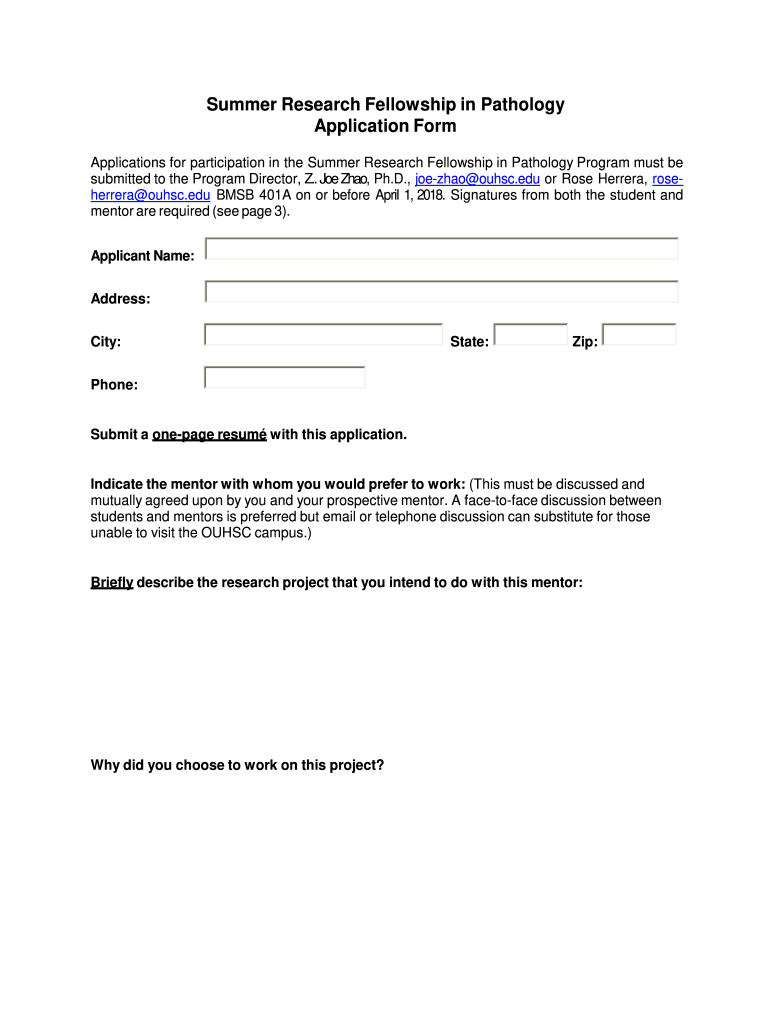







Definition and Meaning
The "Department of Pathology - Summer Research Fellowship" is a program designed to provide undergraduate and postgraduate students with hands-on research experience in pathology. Hosted by university departments or health sciences centers, this fellowship typically involves a combination of laboratory work, mentorship, and academic exploration. Participants engage in a variety of pathology-related research projects, contributing to ongoing studies while enhancing their understanding of pathologic processes. The program aims to cultivate interest in pathology and support career development in medical and research fields.
Key Objectives
- Enhance skills in laboratory techniques and research methodologies.
- Provide mentorship under experienced pathologists and researchers.
- Encourage careers in pathology through practical exposure and learning.
How to Use the Department of Pathology - Summer Research Fellowship
Engagement with the Summer Research Fellowship requires proactive interaction with program components. Participants are expected to immerse themselves in the research environment, complete assigned tasks, and participate in educational seminars. Throughout the fellowship, students should collaborate with peers and mentors to exchange ideas and foster innovation. Regular progress meetings are fundamental to align activities with research objectives and receive feedback.
Practical Engagement
- Attend all scheduled workshops and seminars.
- Utilize laboratory resources to conduct experiments.
- Collaborate with mentors for guidance and skill enhancement.
Steps to Complete the Department of Pathology - Summer Research Fellowship
Participating in the fellowship involves several key steps, ensuring a comprehensive research experience:
- Initial Orientation: Attend introductory sessions to familiarize with the research environment and meet mentors.
- Project Allocation: Receive a research project aligned with academic interests and goals.
- Milestone Tracking: Keep track of project milestones, ensuring timely progress and adaptation as necessary.
- Presentation Preparation: Prepare for a presentation of findings, highlighting research outcomes and personal contributions.
Essential Activities
- Maintain a research journal documenting daily activities and insights.
- Engage in peer review sessions for constructive feedback.
- Develop proficiency in relevant laboratory equipment and software.
Eligibility Criteria
The eligibility for the Summer Research Fellowship typically includes current enrollment in an undergraduate or postgraduate program in a related field, such as biology or medical sciences. Applicants should demonstrate a strong academic record and a keen interest in pursuing a career in pathology. Specific criteria may vary slightly depending on the host institution's requirements.


Common Requirements
- Enrollment in an accredited educational institution.
- Completion of introductory courses in pathology or related disciplines.
- Submission of a statement of interest outlining research aspirations and goals.
Required Documents
Preparation of a complete application package is crucial for eligibility. Essential documents often include:
- One-Page Resume: Highlight relevant academic achievements and any prior research experience.
- Mentor Agreement: A document signed by a faculty member willing to provide oversight and guidance.
- Academic Transcripts: Provide evidence of coursework completed in relevant sciences and any honors or commendations received.
Optional Documents
- Letters of recommendation from academic advisors or previous employers.
- A statement of purpose detailing specific interests in pathology research.
Application Process and Approval Time
The application process for the fellowship involves submitting the required documents through an established portal or via mail. Following submission, the review process may take several weeks, with selection committees evaluating submissions based on academic merit and research potential.
Timeline and Deadlines
- Application Deadline: Typically set around early spring (e.g., April 1).
- Notification of Awards: Usually communicated by late spring (e.g., May 11).
Why Use the Department of Pathology - Summer Research Fellowship
Participating in the Summer Research Fellowship offers numerous benefits for aspiring pathologists. This program allows participants to gain invaluable research experience, network with professionals in the field, and improve their academic profiles. Additionally, the fellowship can serve as a stepping stone to advanced studies and a career in medical research or healthcare.
Benefits
- Access to cutting-edge research facilities and resources.
- Opportunity to contribute to meaningful scientific discoveries.
- Building a professional network with experts and fellow researchers.
Who Typically Uses the Department of Pathology - Summer Research Fellowship
The fellowship program is geared towards students pursuing degrees in biological sciences, medicine, or related fields. It is particularly beneficial for those who have an interest in pathology and wish to gain practical experience in a research setting. The program is also suitable for individuals considering a career in academia or biomedical research.

Target Participants
- Undergraduate students in their junior or senior year.
- Postgraduate students seeking specialized research experience.
- Medical students exploring careers in laboratory medicine and pathology.
Important Terms Related to Department of Pathology - Summer Research Fellowship
Understanding relevant terminology is crucial for navigating the fellowship. Key terms include:
- Pathology: The study of diseases, their causes, processes, development, and consequences.
- Mentorship: Guidance provided by an experienced faculty member who supports the fellow's research endeavors.
- Stipend: A financial grant provided to support the student's participation in the fellowship program.
Additional Concepts
- Laboratory Techniques: Methods used in scientific research to conduct experiments and analyze data.
- Research Proposal: A detailed plan outlining the objectives and methodology of a research project.




