




01. Edit your form online
Type text, add images, blackout confidential details, add comments, highlights and more.

Type text, add images, blackout confidential details, add comments, highlights and more.

Draw your signature, type it, upload its image, or use your mobile device as a signature pad.

Send it via email, link, or fax. You can also download it, export it or print it out.
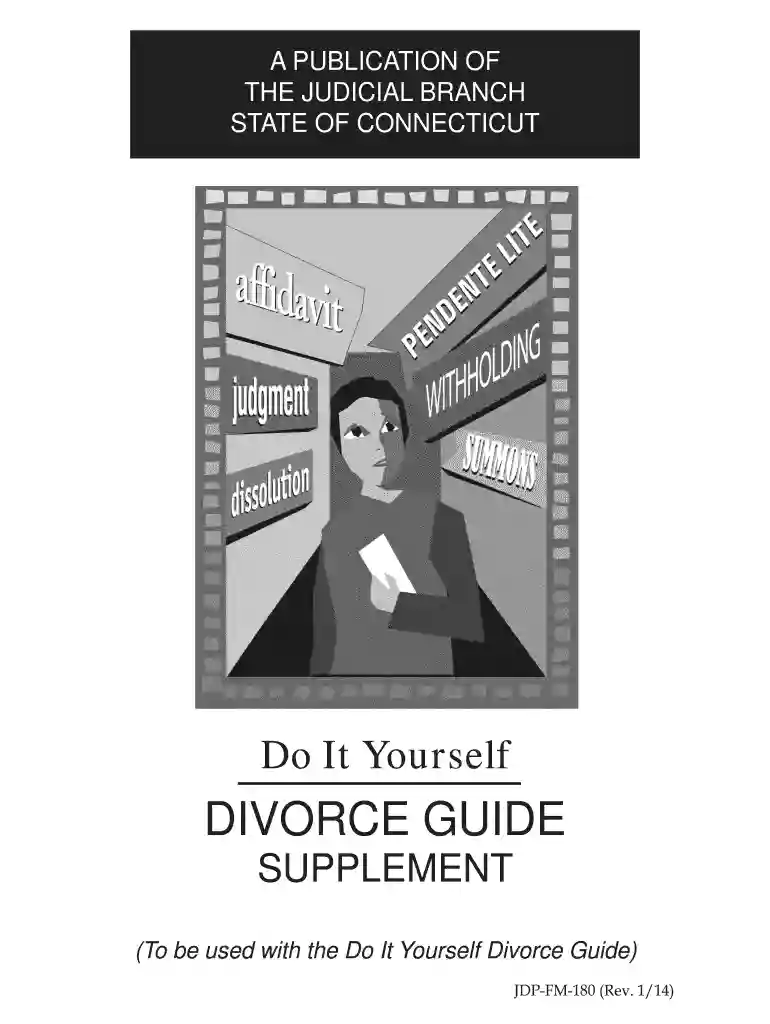
The JD FM 6 form, often referred to by its full name "jd fm 6 long new 1 14 2014 form," is an official document used in the context of divorce proceedings. This specific form is part of the documentation provided by the Judicial Branch of the State of Connecticut, allowing individuals to represent themselves in divorce cases. It serves as a supplemental guide filled with essential instructions and forms required throughout the process. The form's primary aim is to facilitate a smoother legal process for self-representing individuals by clearly outlining the necessary steps and documentation, although it is emphasized that the guide is not a substitute for legal advice.
To effectively utilize the JD FM 6 form, individuals should begin by carefully reviewing the entire document to understand the different sections and the information required. This form is typically accompanied by additional forms, such as financial affidavits and notices of automatic court orders. Users should fill out each section accurately, ensuring all personal and financial information is up to date. If there are sections of the form that are unclear, it is advisable to seek clarification from a legal advisor or the court clerk. The completed form should then be submitted to the appropriate court handling the divorce proceedings.
The JD FM 6 form is utilized by individuals going through a divorce in the state of Connecticut, particularly those who choose to represent themselves without legal representation. It is essential for parties who prefer a straightforward process with predetermined structures and forms directly from the court system.


The form is legally sanctioned by the Judicial Branch of the State of Connecticut and must be used in accordance with state law when seeking a Do It Yourself divorce. It must be filled out truthfully, as submitting false information can lead to legal penalties.
In Connecticut, certain rules may govern the use and submission of the JD FM 6 form. These can include specific deadlines, notarization requirements, and mandatory court appearances. It's crucial for users to adhere closely to these state-specific guidelines to ensure their divorce proceedings are legally compliant.
Failure to correctly complete or submit the JD FM 6 form may result in delays in the divorce proceedings or dismissal of the case. Additionally, providing false information may lead to legal consequences, including fines or other court-imposed penalties.
We've got more versions of the jd fm 6 long new 1 14 2014 form form. Select the right jd fm 6 long new 1 14 2014 form version from the list and start editing it straight away!
At DocHub, your data security is our priority. We follow HIPAA, SOC2, GDPR, and other standards, so you can work on your documents with confidence.
Jan 1, 2014 11/22/13 -- The Judicial Branch has created two new financial affidavits - JD-FM-6 SHORT and JD-FM-6 LONG, based on the recommendations of the
by I Ayres 2021 Cited by 1 In this Article, we study the factors that affect whether judges grant ex parte TRO applications and whether the TROs are subsequently served. In particular, we
Foreword. READ THIS MANUAL carefully to learn how to operate the radio system correctly. This Operators Manual may be available in other languages (contact


