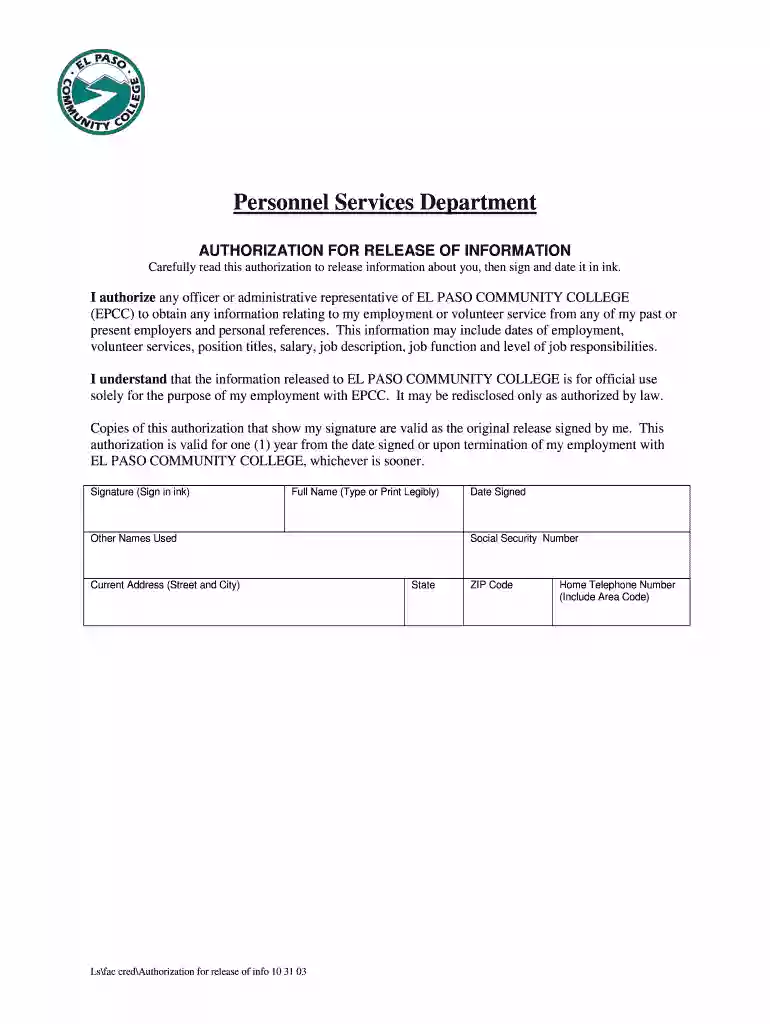
Credentialing Process Outline Attached are the documents that will - epcc 2026

Get Form
Credentialing Process Outline Attached are the documents that will - epcc Preview on Page 1

Here's how it works

01. Edit your form online
Type text, add images, blackout confidential details, add comments, highlights and more.

02. Sign it in a few clicks
Draw your signature, type it, upload its image, or use your mobile device as a signature pad.

03. Share your form with others
Send it via email, link, or fax. You can also download it, export it or print it out.

Definition and Purpose of the Credentialing Process

The Credentialing Process Outline at EPCC provides a structured framework for evaluating individuals who wish to teach dual credit courses at El Paso Community College. It serves as a formal procedure, ensuring that all applicants meet the necessary qualifications and standards set by the institution. By following this outline, the college can maintain academic standards and ensure that students receive high-quality instruction.

This process involves a thorough review of the applicant's qualifications, relevant experience, and educational background. It requires the submission of various documents that verify an individual's credentials and competence to teach dual credit courses.

Steps to Complete the Credentialing Process

  1. Document Submission: Applicants must gather and submit the required documentation, including an employment application, a letter of interest, and official transcripts, to the Dual Credit Office.
  2. Verification: The submitted documents undergo a verification process, where the Dean's office reviews the authenticity and relevance of the qualifications presented.
  3. Approval: Once verified, the documentation is forwarded to the Vice President of Instruction for final approval.
  4. Notification: Upon approval, the applicant is notified, and if successful, they can proceed to engage in teaching dual credit courses at EPCC.

The process ensures that only qualified candidates are approved, maintaining the integrity of the college's dual credit programs.

Required Documents for the Credentialing Process

To successfully navigate the credentialing process at EPCC, applicants need to provide specific documents that validate their eligibility:

  • Employment Application: A completed form outlining the applicant's work history and qualifications.
  • Letter of Interest: A detailed letter stating the applicant's motivations and suitability for teaching dual credit courses.
  • Official Transcripts: Educational transcripts from all attended institutions, sent directly to EPCC. If the transcripts are from a foreign institution, they must be accompanied by a certified translation.
  • Proof of Previous Teaching Experience: Where applicable, documentation evidencing past teaching roles or relevant educational positions.

Completing these document submissions is critical for the application to proceed smoothly through the college's verification and approval stages.

Legal and Security Considerations

Understanding the legal implications of the credentialing process is essential:

  • Compliance with Privacy Laws: All personal information and documents submitted must comply with privacy regulations to protect applicants’ data.
  • Credential Verification: The college ensures that documents are authenticated and comply with academic and employment verification procedures.
  • Document Protection: All shared documents involving personal data are protected with measures such as 256-bit SSL encryption, and sensitive information may require additional password protection.

Applicants should ensure their documents meet these regulatory standards to avoid any delays or rejections in their credentialing application.

Role of Key Individuals in the Credentialing Process

The credentialing process at EPCC involves key individuals who play significant roles:

  • Applicant: The primary individual responsible for initiating the process by submitting all necessary documentation.
  • Dean: Reviews and verifies the submitted documents to ensure compliance with college standards.
  • Vice President of Instruction: Provides final approval after the Dean’s verification, ensuring the applicant meets the institutional criteria for teaching dual credit courses.

Understanding these roles helps align the process and ensures all steps are executed efficiently, minimizing misunderstandings and accelerating approvals.

Importance and Advantages of Credentialing

The credentialing process offers multiple benefits beyond mere compliance:

  • Standardization: Ensures teaching quality across dual credit programs by requiring consistent documentation and verification standards.
  • Quality Assurance: Provides a mechanism to verify the teaching credentials, ensuring students receive education from qualified instructors.
  • Institutional Reputation: Strengthens the reputation of EPCC as an institution committed to quality and excellence in education.

For educators, being a part of this process represents a commitment to professionalism and teaching excellence in the field of dual credit courses.

Collecting Signatures and Collaborating on Documents

In managing the credentialing documents, platforms like DocHub play an integral role:

  • Digital Signatures: Allows legally binding electronic signature collection, simplifying the signature process for involved parties.
  • Collaboration Tools: Facilitates real-time synchronization and changes to documents, ensuring all participants have up-to-date information.
  • Secure Sharing: Features for sharing documents securely with colleagues across departments, streamlining the credentialing process.

These tools simplify document handling, reducing time delays and enhancing coordination among administrative staff and educators.

Handling Foreign Documents

When dealing with foreign transcripts or documentation:

  • Certified Translations: Students must provide certified translations for any non-English documents.
  • Verification of Foreign Credentials: The college or a credential evaluator must authenticate the academic equivalence of foreign qualifications to ensure they meet U.S. standards.
  • Special Considerations: Foreign-educated applicants should be aware of additional requirements such as notarizing their documents to verify their authenticity.

Addressing these specific requirements is crucial for foreign applicants to partake in EPCC’s dual credit teaching programs, ensuring all credentials align with local educational standards.

See more Credentialing Process Outline Attached are the documents that will - epcc versions

We've got more versions of the Credentialing Process Outline Attached are the documents that will - epcc form. Select the right Credentialing Process Outline Attached are the documents that will - epcc version from the list and start editing it straight away!
Versions Form popularity Fillable & printable
2012 4.9 Satisfied (50 Votes)
2011 4.4 Satisfied (56 Votes)
be ready to get more

Complete this form in 5 minutes or less

Get form

Got questions?

We have answers to the most popular questions from our customers. If you can't find an answer to your question, please contact us.
Contact us
The institution must establish 4 vital elements as mandated by the Joint Commission: the evaluation criteria, privilege-specific monitoring methods, duration of monitoring, and reasons to refer for external monitoring. [13] This proactive FPPE process is required for all new medical staff appointments.
Credentialing Documents Needed for New Physicians Personal information like email address, street address, phone, etc. Drivers license. Social Security card. Recent photograph signed and dated in the margin. Medicaid number. Medicare number. Copy of National Provider Identifier (NPI#) documentation and confirmation letter.
Primary Source Verification (PSV) is a crucial step in healthcare credentialing and enrollment processes where information provided by healthcare professionals or entities is directly verified from the original or primary source.
7 Key Steps In Provider Credentialing Identify the Required Documents. Prioritize Insurance Companies. Check for Accurate Information. Completing the CAQH. Wait for Primary Source Verification. Following Up. Recertification.
Credentialing is the first step to putting a physician to work at a facility. Its how employers ensure the applicant is who they say they are. Are the credentials they have provided legitimate?

Security and compliance

At DocHub, your data security is our priority. We follow HIPAA, SOC2, GDPR, and other standards, so you can work on your documents with confidence.

Learn more
ccpa2
pci-dss
gdpr-compliance
hipaa
soc-compliance
be ready to get more

Complete this form in 5 minutes or less

Get form

People also ask

Credentialing begins with the collection of essential documents and data, including educational certificates, licenses, residency completion records, and work history. Providers are also required to submit docHubd government-issued identification, malpractice history, and sometimes criminal background checks.

Related links