
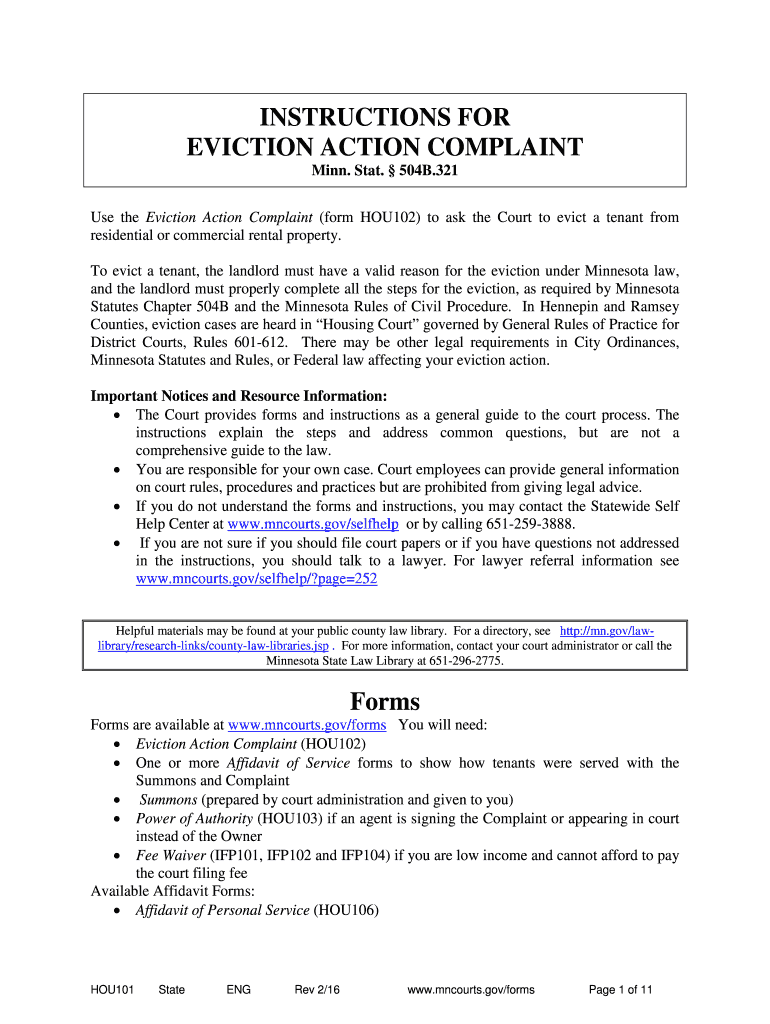







Definition and Purpose of Form HOU102
The Eviction Action Complaint (form HOU102) is a legal document used in Minnesota to initiate the process of evicting a tenant from residential or commercial rental properties. The primary function of this form is to formally request the court to order an eviction due to breaches of lease agreements, such as non-payment of rent or property damage.
Importance in Landlord-Tenant Disputes
- Provides a structured method for landlords to present their case.
- Establishes a legal record of eviction attempts.
- Supports lawful eviction proceedings under Minnesota statutes.
Landlords must ensure compliance with state laws while filling out and submitting form HOU102 to avoid unnecessary delays or legal repercussions.
How to Use the Eviction Action Complaint (Form HOU102)
To successfully use form HOU102, landlords should adhere to a step-by-step process:
-
Identify Grounds for Eviction: Confirm that the reason for eviction aligns with Minnesota's legal grounds, such as breach of contract or lease violations.
-
Complete the Form: Accurately fill in the tenant's details, property address, reasons for eviction, and any specific incidents leading to the call for eviction.
-
Serve Notice: Before proceeding to file the complaint, notify the tenant of the eviction, allowing them the opportunity to rectify the violation.
-
Submit the Complaint to Court: File the completed form with the appropriate county court. Ensure all required sections are filled out to prevent dismissals.
-
Attend Court Hearings: Be prepared to present evidence and documentation supporting the eviction claim during scheduled court sessions.
Steps to Complete Form HOU102
Completing form HOU102 requires careful attention to detail:
- Tenant Information: Include the full names and contact details of all tenants involved in the lease agreement.
- Property Details: Clearly state the address and any identifying information about the rental property.
- Reason for Eviction: Provide a succinct but thorough explanation of why eviction is being sought. Include dates, transaction records, or communications with the tenant.
- Supporting Documents: Attach any relevant evidence, such as payment receipts or previous warning letters.
Why Use the Eviction Action Complaint (Form HOU102)
Using form HOU102 is beneficial due to its:
- Legality: Following this structured process ensures that landlords act within the bounds of the law, reducing the risk of legal disputes or invalid evictions.
- Efficiency: Streamlines the eviction process by providing a clear outline of the necessary steps and documentation.
- Protection: Offers legal protection to landlords by creating a documented trail of actions taken, thus safeguarding against tenant counterclaims.
Who Typically Uses Form HOU102
The primary users of form HOU102 are:
- Landlords and Property Managers: Those managing rental properties who need a legal avenue to resolve conflicts involving non-compliant tenants.
- Legal Professionals: Attorneys representing either party in an eviction dispute may assist in the preparation and filing of the form.
Understanding who uses this form helps in ensuring that all parties approach its completion with the necessary legal and procedural knowledge.
Legal Requirements for Form HOU102
In Minnesota, the legal application of form HOU102 involves:
- Complying with State Laws: The form must align with Minnesota's specific landlord-tenant statutes and regulations.
- Filing with the Correct Jurisdiction: Ensure the complaint is filed in the proper county where the property resides.
- Accuracy and Completeness: Incomplete or inaccurate filings can result in case dismissals or delays.
Key Elements of Form HOU102
The form includes several critical elements that must be correctly addressed:
- Filing Party Information: Details about the landlord or property manager initiating the complaint.
- Tenant's Legal Obligations: Section where tenant's breached obligations or lease terms are specified.
- Court Information: Identifies the court authority receiving the complaint.
Attention to these key elements ensures a sound filing process and enhances the likelihood of a favorable outcome.
Important Terms Related to Form HOU102
Familiarity with key terms assists in navigating the eviction process:
- Plaintiff: The party filing the complaint (landlord).
- Defendant: The party the complaint is filed against (tenant).
- Eviction: The legal removal of a tenant from a property.
- Lease Violation: A breach of terms outlined in the rental agreement.
Understanding these terms is crucial for accurately completing and filing form HOU102 and for facilitating clear communication during court proceedings.




