






Definition and Purpose of the 2010 CA NC-420
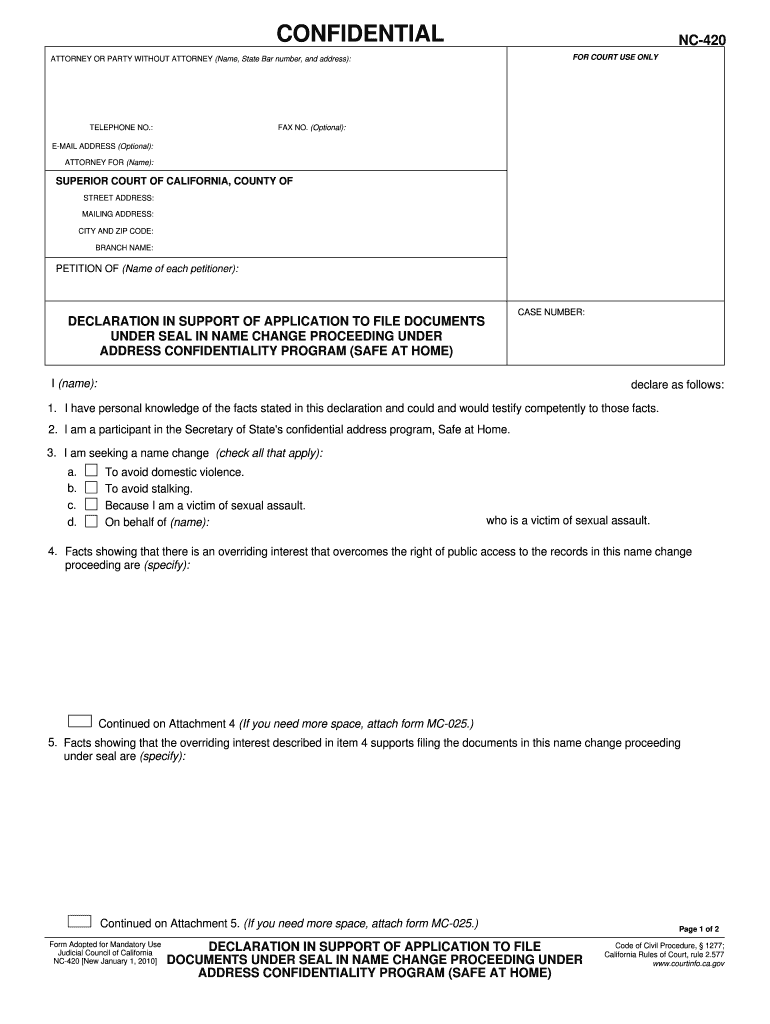
The 2010 CA NC-420, officially known as a form used in California's Superior Court, serves individuals participating in the Safe at Home program. This legal document is pivotal for those seeking to file documents under seal during name change proceedings. The primary purpose of the 2010 CA NC-420 is to protect the petitioner's identity from disclosure. It ensures that individuals facing threats of domestic violence, stalking, or similar dangers can pursue a legal name change without compromising their safety. The form requires a detailed declaration of the petitioner's reasons for seeking confidentiality.
How to Use the 2010 CA NC-420
Utilizing the 2010 CA NC-420 involves several systematic steps essential for ensuring the legal protection it offers. Begin by accurately completing all sections of the form, providing detailed personal information and the specific reasons for seeking a sealed record. Ensure that the explanations highlight the necessity of confidentiality to protect the petitioner's personal safety. Once completed, the form should be submitted to the appropriate division of the Superior Court handling name change requests. It is crucial to follow court-specific procedures, which may involve additional documentation or a hearing.
Steps to Complete the 2010 CA NC-420
- Gather Personal Information: Collect all relevant personal details, including current legal name, contact information, and a brief background about the circumstances necessitating the name change.
- Explain Necessity for Sealing: Detail the reasons for needing to file the documents under seal. This can include evidence of threats or fears for personal safety.
- Review Eligibility: Confirm eligibility for the Safe at Home program, as the form is specifically designed for participants of this initiative.
- Provide Supporting Documentation: Attach any supporting documents that substantiate the request, such as police reports or court orders.
- Submit the Form: Deliver the completed form and any accompanying documents to the court. This may be done in person, by mail, or electronically depending on court capabilities.
- Participate in Hearings: Be prepared to attend any court hearings if required to further discuss the necessity of the sealed filing.
Who Typically Uses the 2010 CA NC-420
The 2010 CA NC-420 is predominantly used by individuals who are part of California's Safe at Home program. This includes victims of domestic violence, stalking, sexual assault, or others at high risk of endangerment. Participants use this form to ensure their legal name change process remains confidential and secure. The form is typically utilized by people who have valid and pressing reasons to protect their new identity from public records.


Key Elements of the 2010 CA NC-420
- Personal Identification Information: Complete details about the petitioner, which must be protected under the program.
- Detailed Justification for Confidentiality: A comprehensive narrative explaining why the petitioner requires their filing to be under seal.
- Supporting Evidence: Any applicable documents that clearly show the need for protection, such as legal affidavits or domestic violence restraining orders.
- Signature and Affirmation: The petitioner must certify the accuracy of the provided information under penalty of perjury.
Legal Use of the 2010 CA NC-420
The legal use of the 2010 CA NC-420 is governed by California law, particularly catering to individuals in the Safe at Home program seeking a legal name change. The form is used to petition the court to keep related documents confidential and out of the public record. This tool provides a secure method to address and manage legal identity changes without exposure to potential threats.
State-Specific Rules for the 2010 CA NC-420
California's strict criteria for the use of the 2010 CA NC-420 involve specific eligibility within the Safe at Home program. Applicants must demonstrate a direct and legitimate need for document confidentiality. The form is exclusively applicable within the state and adheres to California's legal frameworks regarding privacy and safety in judicial processes. Each court may have slight procedural differences, so it is essential to confirm specific requirements with the relevant Superior Court division.
Filing Deadlines and Important Dates for the 2010 CA NC-420
The 2010 CA NC-420 doesn't have a standardized set of deadlines applicable statewide, as deadlines can vary based on individual court schedules and the specifics of the case. However, timely filing in response to court mandates or before scheduled hearings is crucial to ensure that the protection measures are effective when needed. Petitioners should consult the specific court overseeing their case for guidance on any relevant timeframes and ensure proper adherence to ensure seamless processing.