




01. Edit your form online
Type text, add images, blackout confidential details, add comments, highlights and more.

Type text, add images, blackout confidential details, add comments, highlights and more.

Draw your signature, type it, upload its image, or use your mobile device as a signature pad.

Send it via email, link, or fax. You can also download it, export it or print it out.
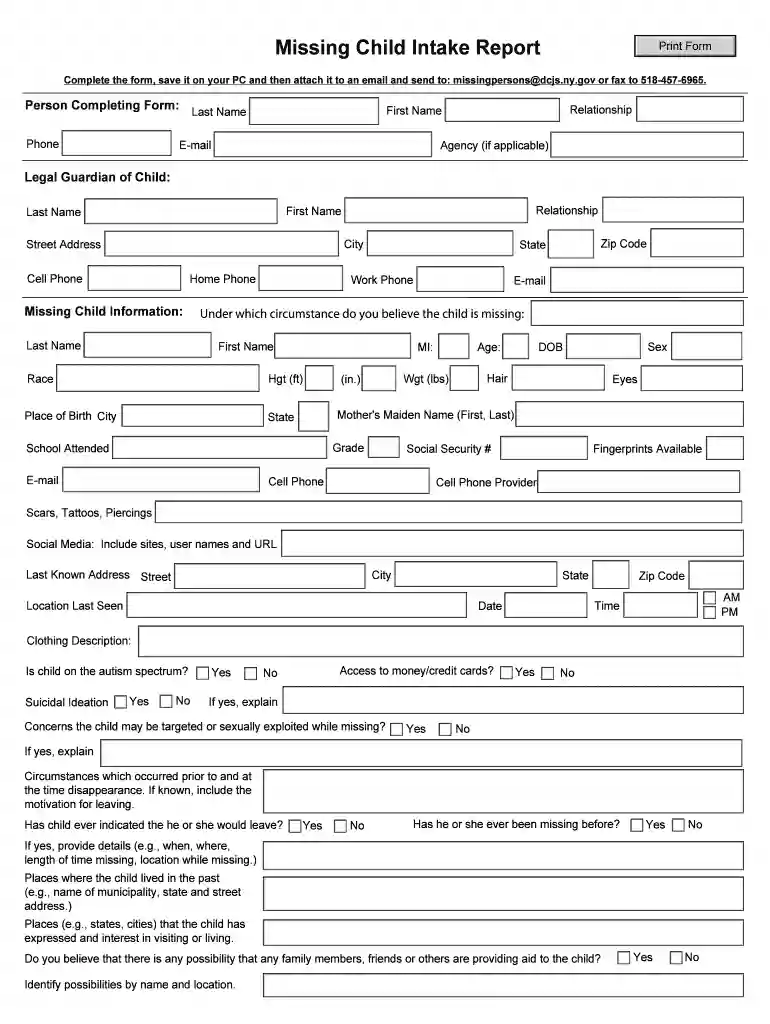
The term "Forms, Publications and Statutes - Missing and Exploited Children" refers to a collection of official documents and legal frameworks designed to address issues related to missing and exploited children. This includes forms for reporting missing children, publications that provide guidelines and support for involved parties, and statutes that lay down legal procedures and penalties. These components work together to ensure a coordinated response and protection for vulnerable children. Such documents may be used by law enforcement, childcare agencies, and legal professionals to streamline procedures and ensure compliance with applicable laws.
Completing the "Forms, Publications and Statutes - Missing and Exploited Children" involves several detailed steps to ensure all pertinent information is captured accurately and comprehensively. Below is a step-by-step guide:
Gather Personal Information: Start by collecting all necessary personal details of the child and the reporting individual. Essential data includes names, addresses, contact numbers, and any identification numbers associated with the child or reporting party.
Detail the Circumstances: Fill in the circumstances surrounding the child's disappearance. This should include the last known location, time, and any events that occurred before or after the child's disappearance. Providing a detailed narrative can significantly aid in the investigation.
Medical and Mental Health Information: If applicable, provide any relevant medical or mental health details. This can help authorities understand any special considerations that may be needed during the search or after the child is found.
Authorization for Information Release: Sign and complete the section authorizing the release of information to relevant authorities. This ensures that important data can be shared efficiently during the investigation.
Review and Submit: Before submitting, review the form for completeness and accuracy. Missing information can delay the process and may hinder law enforcement efforts.
Forms related to missing and exploited children are typically used by a diverse group of individuals and organizations involved in child welfare and public safety:
Law Enforcement Agencies: To initiate and manage investigations related to missing children.
Child Protective Services: For formalizing cases and coordinating with criminal justice systems.
Schools and Educational Institutions: In cases where a child has gone missing from an academic environment.
Legal and Advocacy Groups: To support the legal process and advocate for the child's interests throughout the investigation and beyond.
These stakeholders use the forms to ensure coordinated efforts in locating and protecting children.


While there is a general framework in place for dealing with missing and exploited children, specific rules and procedures can vary from state to state across the United States:
Reporting Requirements: Different states might have specific reporting capabilities and requirements, such as mandatory reporting timelines for specific agencies.
Legal Definitions: The definition and classification of exploitation can vary, affecting how cases are managed and prosecuted.
Support Services: Availability and type of state-provided support services for affected families may differ internationally.
Understanding state-specific nuances ensures compliance and maximizes the effectiveness of the response to missing child cases.
Grasping the language and terms associated with the "Forms, Publications, and Statutes - Missing and Exploited Children" is essential for effective use:
Amber Alert: A notification system to spread information quickly about a missing child.
Endangered: Refers to a child who may be at risk of physical harm or mental distress.
Foster Care: Temporary placement of children who cannot safely remain in their home environment.
Parental Abduction: When a child is taken by one parent against custody arrangements.
Understanding these terms can aid in better communication among involved parties and streamline the form completion process.
When completing forms related to missing and exploited children, several accompanying documents are typically required to support investigations:
Identification Documents: Such as birth certificates or social security cards to verify identity.
Photographs: Recent images fitting descriptions to aid visual recognition.
Legal Documents: Custody papers or court orders that might affect the child’s legal status.
Medical Records: If applicable, to provide context about the child’s physical or mental health.
Ensuring these documents are attached can greatly assist in expediting investigations.
Failing to adhere to the protocols and requirements associated with these documents can result in significant penalties:
Legal Repercussions: Non-compliance can result in legal actions or fines against the reporting entities.
Delayed Response: Incorrect or incomplete submissions can lead to delays in initiating a search or investigation, thereby endangering the child further.
Liability Issues: Organizations or individuals may face civil liability if negligence is proven in handling cases of missing or exploited children.
Understanding the penalties ensures that all involved parties complete the forms accurately and on time.
The responsibility for issuing forms related to missing and exploited children typically lies with various governmental and legal entities:
State Departments: Such as the Department of Criminal Justice Services in New York.
Child Welfare Agencies: At both state and national levels.
School Districts: May have tailored forms for incidents occurring in educational settings.
These entities ensure that forms adhere to relevant laws and are updated to reflect changes in statutes or best practices.
We've got more versions of the Forms, Publications and Statutes - Missing and Exploited Children form. Select the right Forms, Publications and Statutes - Missing and Exploited Children version from the list and start editing it straight away!
At DocHub, your data security is our priority. We follow HIPAA, SOC2, GDPR, and other standards, so you can work on your documents with confidence.
Report Missing Children Information about missing children cases can be reported to NCMECs 24-hour hotline at 800THELOST. Help for Families
The IRS shall publish pictures and biographical data related to missing children in domestic penalty mail containing annual tax forms and instructions.
This publication is intended primarily for individuals sent here by the instructions to Forms 1040, 1040A, and 8812.


