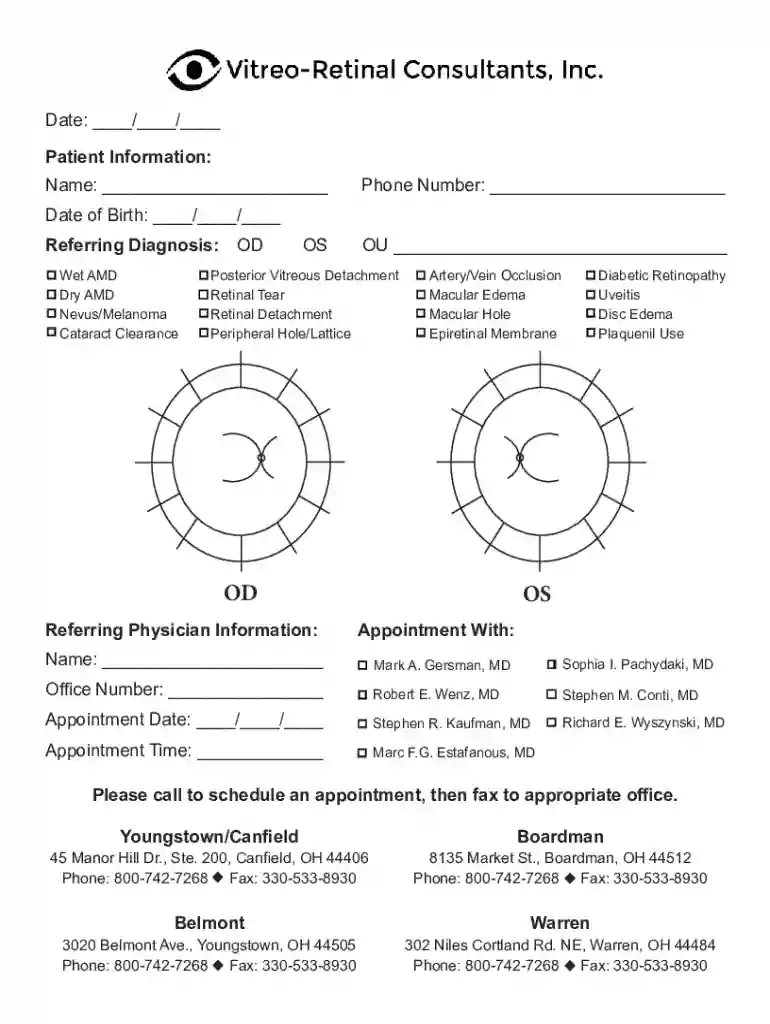
Inspection by the board a patients name address phone 2026

Get Form
Inspection by the board a patients name address phone Preview on Page 1

Here's how it works

01. Edit your form online
Type text, add images, blackout confidential details, add comments, highlights and more.

02. Sign it in a few clicks
Draw your signature, type it, upload its image, or use your mobile device as a signature pad.

03. Share your form with others
Send it via email, link, or fax. You can also download it, export it or print it out.

Definition & Meaning

The "Inspection by the board a patients name address phone" refers to the process of reviewing and verifying vital patient information by an authoritative board. This inspection typically ensures that the patient's details, such as their name, address, and phone number, are accurately documented and stored. This verification process is crucial for maintaining precise records, which can be essential for effective communication and care coordination.

How to Use the Inspection by the Board a Patients Name Address Phone

To use the inspection process effectively, it’s essential to have access to the patient’s records. Here are the steps involved:

  1. Collection of Documents: Gather all relevant patient documents that need to be reviewed.
  2. Detail Verification: Check each document for the correct spelling of the patient's name, current address, and active phone number.
  3. Cross-Verification: Compare the data with other available resources such as past medical records or insurance information.
  4. Update Records: Make any necessary changes to ensure the information is up-to-date.
  5. Final Review: Once verified, sign off on the document as a verified record.

Examples of use could include a healthcare provider preparing for a patient visit, ensuring that all contact information is correct to prevent any miscommunication regarding appointments or treatment plans.

Steps to Complete the Inspection by the Board a Patients Name Address Phone

Completing this inspection involves several key steps to ensure accuracy and compliance:

  1. Initial Document Assessment: Begin by reviewing all documents provided to ensure they are completed correctly.
  2. Verification Against ID: Use government-issued identification to verify the patient's name.
  3. Address Validation: Check the current address against utility bills or other reliable sources.
  4. Phone Number Confirmation: Confirm that the phone number is active and currently in use by the patient.
  5. Consistency Check: Ensure that all documents contain consistent information across all sections.
  6. Corrections: Make any necessary corrections and note them on the record.
  7. Board Sign-off: Have the inspection signed by the designated board member once all checks are complete.

Key Elements of the Inspection by the Board a Patients Name Address Phone

The inspection process includes specific elements:

  • Patient Identification: Full legal name, date of birth, and any patient identification numbers.
  • Contact Information: Accurate residential address and an active phone number.
  • Verification Sources: Use of official documents for verification – government ID, utility bills, or official correspondence.
  • Documentation Integrity: Confirm that all provided documents are genuine and have no signs of tampering.

These elements are critical to maintaining integrity and reliability in patient record management.

Why Should You Conduct an Inspection by the Board a Patients Name Address Phone

Conducting this inspection is vital for several reasons:

  • Accuracy in Medical Records: Ensures all treatment and communications are directed to the right individual.
  • Compliance: Fulfills regulatory requirements for maintaining updated patient records.
  • Quality of Care: Enhances patient care by ensuring that all healthcare providers have accurate and current patient information.
  • Efficient Communication: Facilitates seamless communication between the healthcare provider and the patient, reducing the risk of missed appointments or lost information.

Legal Use of the Inspection by the Board a Patients Name Address Phone

Legally, this inspection process is integral for compliance with healthcare standards and practices. It ensures that:

  • Patient Privacy is Protected: By verifying and securing patient information, privacy obligations under laws like HIPAA are met.
  • Record-Keeping Protocols: Abide by legal record-keeping requirements mandated by healthcare regulations.
  • Audit Readiness: Maintains an audit-ready status where documentation is accurately and legally verified, should it be required for review by legal or medical boards.

Important Terms Related to Inspection by the Board a Patients Name Address Phone

Several critical terms are associated with this process:

  • Verification: The process of validating the authenticity and accuracy of the information.
  • Compliance: Adhering to legal and professional standards.
  • Confidentiality: Ensuring sensitive patient information is only viewed by authorized individuals.
  • Integrity: Maintaining the accuracy and consistency of patient records.

Understanding these terms helps in comprehending the importance and methodology of the inspection process.

Examples of Using the Inspection by the Board a Patients Name Address Phone

Practical scenarios where this inspection might be used include:

  • Pre-Surgical Checklist: Verifying patient details before a surgical procedure to prevent errors.
  • New Patient Intake: During the initial stages of patient onboarding, ensuring all records match submitted forms.
  • Insurance Claims Processing: Cross-checking patient data when processing claims to ensure no discrepancies.

These examples illustrate how the inspection as a standard practice helps prevent errors and enhances healthcare delivery.

See more Inspection by the board a patients name address phone versions

We've got more versions of the Inspection by the board a patients name address phone form. Select the right Inspection by the board a patients name address phone version from the list and start editing it straight away!
Versions Form popularity Fillable & printable
2022 4.8 Satisfied (136 Votes)
2020 4.2 Satisfied (35 Votes)
2019 4.3 Satisfied (40 Votes)
be ready to get more

Complete this form in 5 minutes or less

Get form

Got questions?

We have answers to the most popular questions from our customers. If you can't find an answer to your question, please contact us.
Contact us
Criminal penalties Covered entities and specified individuals, as explained below, who knowingly obtain or disclose individually identifiable health information, in violation of the Administrative Simplification Regulations, face a fine of up to $50,000, as well as imprisonment up to 1 year.
Sharing PHI using non-secure methods Hence, sharing patients health information through texting, video conferencing applications, phone calls, personal emails, and common file-sharing services counts as a HIPAA violation.
In most circumstances, saying a patients name by itself is not a HIPAA violation when the name does not relate to the patients health condition, treatment for the condition, or payment for the treatment. However, there are some circumstances in which saying a patient name is a HIPAA violation.
The minimum necessary requirement is not imposed in any of the following circumstances: (a) disclosure to or a request by a health care provider for treatment; (b) disclosure to an individual who is the subject of the information, or the individuals personal representative; (c) use or disclosure made pursuant to an
Facility Directories. The provider may then disclose the individuals condition and location in the facility to anyone asking for the individual by name, and also may disclose religious affiliation to clergy.

Security and compliance

At DocHub, your data security is our priority. We follow HIPAA, SOC2, GDPR, and other standards, so you can work on your documents with confidence.

Learn more
ccpa2
pci-dss
gdpr-compliance
hipaa
soc-compliance

People also ask

According to the Health Insurance Portability and Accountability Act (HIPAA), protected health information (PHI) is any health information that can identify an individual that is in possession of or transmitted by a covered entity or its business associates that relates to a patients past, present, or future health.

Related links