





Definition and Meaning
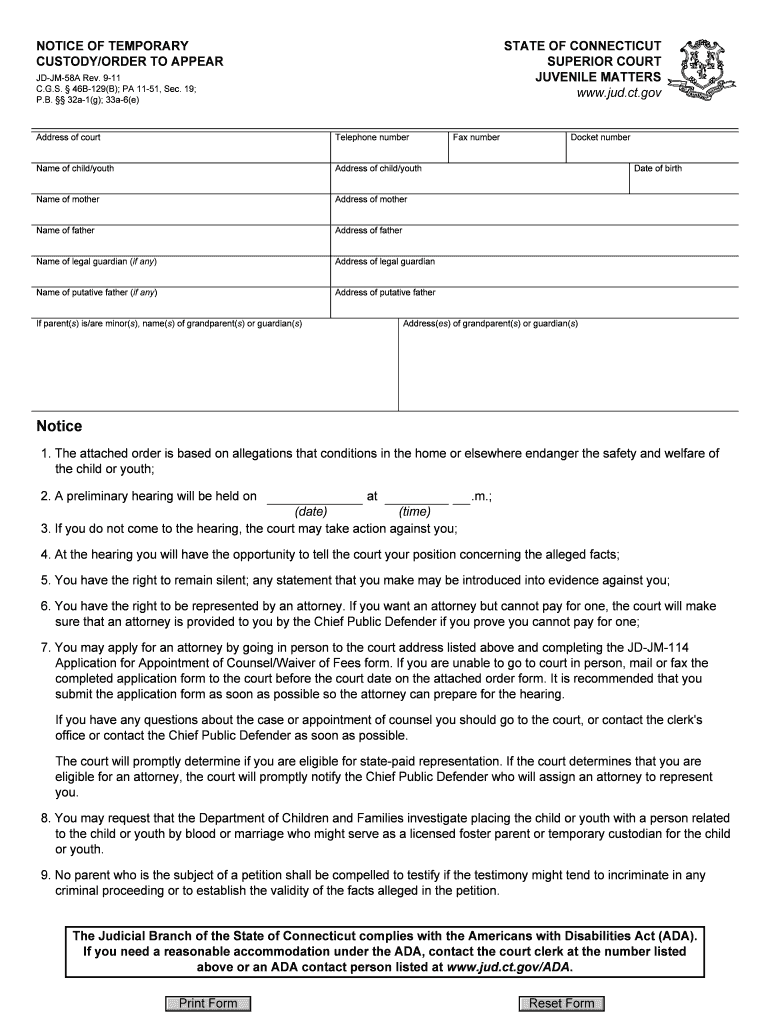
Official Court Forms of the Connecticut Judicial Branch, often referred to by their shorthand "jud ct," encompass a comprehensive collection of legal documents necessary for various proceedings within the Connecticut court system. These forms are integral to the judicial process, serving diverse needs from initiating legal proceedings to responding to a court order. The goal is to standardize court processes, making it accessible and structured for users ranging from legal professionals to laypersons who need to navigate the state's judicial system.
The forms cover a wide array of legal topics, ensuring each step of a proceeding adheres to statutory requirements. They include instructions, disclaimers, and necessary information to ensure clarity and compliance. By using these official forms, users can ensure their submissions are complete and fulfill legal expectations.
How to Use the Official Court Forms
Utilizing the Official Court Forms of the Connecticut Judicial Branch effectively requires adherence to specific guidelines. Users should start by identifying the relevant form based on their legal needs, whether for family law, civil actions, or probate matters. Each form typically includes an instruction sheet that guides users on proper completion, required sections, and accompanying documentation.
Steps for usage:
- Identify Needed Forms: Determine which form corresponds to your legal situation. Categories include family, civil, criminal, housing, and small claims.
- Download or Access: Forms can be accessed online via the Connecticut Judicial Branch website, ensuring users have the most current versions.
- Complete Required Sections: Fill out all required fields accurately. Pay attention to sections marked as mandatory to avoid processing delays.
- Attach Supporting Documents: Include any necessary supplementary documents that provide context or additional information supporting your case.
- Review and Validate: Check for completeness and accuracy. Mistakes can lead to rejection or processing errors.
- Submit Appropriately: Depending on form requirements, submissions can be electronic, mailed, or handed in person at the relevant courthouse.
How to Obtain the Official Court Forms
Acquiring these forms is a straightforward process designed to maximize accessibility. Users can download them directly from the Connecticut Judicial Branch's official website. This ensures that individuals are using the most up-to-date versions, which are essential for proper legal proceedings.
Alternative methods include:
- Visiting a local courthouse to collect physical copies.
- Utilizing public libraries or legal assistance centers that provide access to these forms and associated resources.
- Requesting copies through legal aid services if internet access is an issue.
Steps to Complete the Official Court Forms
Completing these forms requires careful attention to detail. Each form is divided into sections that correspond to specific information or declarations needed for legal purposes. Here's a step-by-step guide:
- Read Instructions Carefully: Each form comes with a detailed instruction section that outlines what is required for completion.
- Gather Necessary Information: Assemble all relevant personal information, case specifics, and any other data asked for within the form.
- Input Information: Enter data accurately in the specified areas. Use legal names and authorized signatories only.
- Double-Check for Accuracy: Review all entries for typographical errors or omissions.
- Signatures and Notarization: Some forms require signatures to be notarized. Ensure this is done where applicable.
- Include All Attachments: Ensure all required attachments are included, such as affidavits, evidence, or corroboratory documents.
- Final Review: Before submission, conduct a final check or consult legal aid to confirm all sections are complete and accurate.
Key Elements of the Official Court Forms
Understanding the critical components of these forms ensures efficiency and correctness. Below are essential elements typically included:
- Heading and Filing Information: Court name, case number, and parties involved.
- Petitioner and Respondent Details: Full personal information for the parties in the case.
- Legal Claims or Statements: Specific legal grounds or claims related to the form's purpose.
- Declaration of Facts: Detailed descriptions relevant to the legal matter being addressed.
- Signatures: Required endorsements from involved parties and, if necessary, a notary.
- Instructions and Filing Requirements: Guidance for additional actions or documents needed for successful submission.
Legal Use of the Official Court Forms
These forms serve as a foundational legal tool for various judicial processes within Connecticut. Their proper use is not only mandatory but ensures compliance with state regulations and facilitates smooth case processing.
Legal applications include:
- Filing for Custody or Support: Essential for family court matters regarding child custody, support, or visitation rights.
- Civil Lawsuits: Used for initiating or responding to civil litigation.
- Criminal Procedures: Encompasses applications for bail, motions, and appeals.
- Probate and Estate Matters: Required for actions involving wills, estates, and guardianship.
State-Specific Rules for the Official Court Forms
Connecticut imposes particular rules that may not be applicable in other states. Users must be aware of these unique requirements to ensure compliance.
Key facts include:
- State-Specific Instructions: Forms are tailored to align with Connecticut statutes and judicial guidelines.
- Mandatory Electronic Filing for Attorneys: Legal professionals might be required to file certain documents electronically based on court mandates.
- Local Variations: Different districts may have localized practices. It's essential to check district-specific requirements when filing.
Examples of Using the Official Court Forms
Practical scenarios where these forms come into play showcase their versatility and necessity.
- Family Law: A parent seeking sole custody may use specific forms to petition the court, citing necessary legal grounds.
- Small Claims: An individual pursuing a small claims case for unpaid services can accurately present their case using the designated forms.
- Eviction Proceedings: Landlords can file eviction notices using structured forms that meet legal eviction and housing regulations.
These examples highlight their role in facilitating legal processes efficiently and within regulatory frameworks.
Digital vs. Paper Version
A growing trend is the transition from paper to digital for ease and efficiency. Digital versions provide advantages such as rapid access and editing capability.
- Accessibility: Digital forms are available online, offering quick and convenient access.
- Efficiency: Digital submissions can be processed faster, reducing wait times.
- Environmentally Friendly: Limits paper usage and storage requirements.
However, paper versions are still essential in instances where digital access is limited, or personal preference dictates.
Understanding the nuances and applications of these Official Court Forms of the Connecticut Judicial Branch is vital for anyone engaging with Connecticut's judicial environment, ensuring proper handling and successful outcomes in legal matters.


