







Definition and Meaning
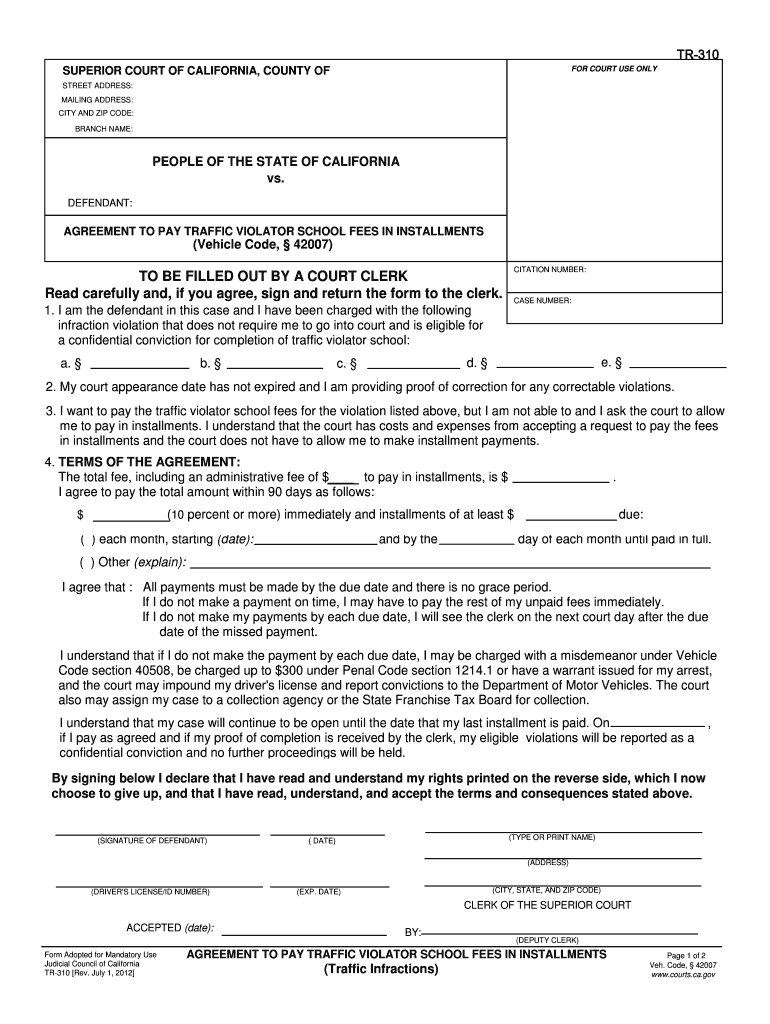
The TR-310 form, used in the California Courts system, serves as a legally recognized document for defendants seeking to pay their traffic violator school fees in installments. This form outlines the agreed terms between the court and the defendant, including details on payment amounts, due dates, and consequences for delayed payments. By opting for this form, defendants acknowledge and waive certain rights that would usually be exercised by attending court directly.
How to Use the TR-310 Form
- Identify Eligibility: This form is primarily for those who have received a traffic citation and wish to attend traffic violator school to mitigate fines or penalties.
- Review the Agreement Terms: Carefully read the installment plan terms. Ensure you understand all financial commitments and restrictions.
- Submit the Form: Present the completed form to the relevant court authority by the specified deadline. Follow up with the court for approval and adherence confirmation.
Steps to Complete the TR-310 Form
- Acquire the Form: Obtain the form from the California Courts' official website or local courthouse.
- Fill Out Personal Information: Enter your name, contact details, citation number, and any other identifying information requested.
- Specify Payment Plan: Detail your proposed installment amounts and frequency.
- Sign the Form: Ensure your signature matches legal identifiers used in previous court interactions.
- Submit the Form: Deliver it either through mail, in person, or via an online submission portal if available.
Key Elements of the TR-310 Form
- Defendant Information: Personal and contact details of the individual submitting the form.
- Citation Details: Information about the traffic violation, including the citation number and court case details.
- Proposed Payment Plan: Clear breakdown of installment amounts, frequency, and timeline.
- Waiver of Rights: Acknowledgment of the rights being waived in exchange for the installment arrangement.
Legal Use and Compliance
- Court Approval Required: The installment payment plan must be approved by the court to be valid.
- Adherence to Payment Schedule: Defendants must strictly follow the payment plan's schedule. Any deviation could result in penalties or reversal of privileges offered by the traffic violator school option.
- Consequences for Non-Compliance: Failure to adhere to the payment plan can lead to additional fines, suspension of driving privileges, or court summons.
Important Terms Related to the TR-310 Form
- Traffic Violator School: A program that allows traffic offenders to attend a school in lieu of harsher penalties.
- Installment Plan: An arrangement where payments are spread over a period of time rather than paid in one lump sum.
- Waiver of Rights: Legal acknowledgment that the defendant opts out of potential court defenses or appearances by choosing the installment plan.
Filing Deadlines and Important Dates
- Submission Deadline: Check the citation notice for the deadline to file the TR-310 form.
- Payment Dates: Clearly stated on the agreed installment plan; missing these could trigger penalties.
- Review and Approval Timeline: Typically, courts take a few weeks to approve or address any issues with the filing.
Examples of Using the TR-310 Form
- Scenario One: A student needs to manage financial priorities and opts to pay traffic school fees in installments rather than face immediate full payment.
- Scenario Two: A self-employed individual uses the form to allow their license to remain valid while managing cash flow through structured payments over several months.
State-Specific Rules for the TR-310 Form
- California Jurisdiction: The form is exclusive to California courts and is tailored to meet the state's legal requirements.
- Variations by County: Be aware that some counties may have additional local rules or guidelines. Always confirm with the local courthouse for any supplementary instructions or restrictions.
By understanding these facets of the TR-310 form, defendants can efficiently navigate the legal process involved in managing their traffic school fees within California, leveraging the form's intended benefits while remaining compliant with all stipulated court protocols.




