






Definition & Meaning
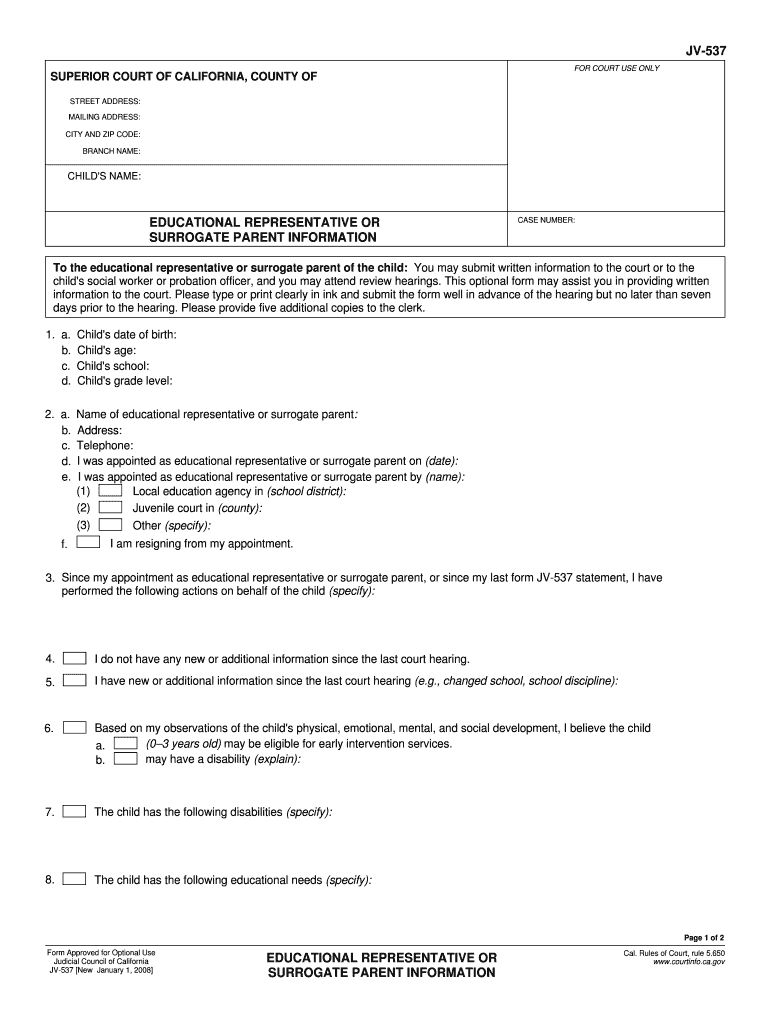
The JV-537 Educational Representative or Surrogate Parent Information Judicial Council form is a critical tool used in the Superior Court of California. It is designed for educational representatives or surrogate parents to provide detailed and structured information about a child’s educational needs and services. This form ensures that the court remains informed about various aspects of the child's education, facilitating better decision-making regarding the child's welfare and educational progress. It is especially vital for children who may not have traditional parental involvement in their educational or welfare decisions.
How to Use the JV-537 Form
This form is utilized in several scenarios, particularly during court proceedings involving the welfare and education of minors who require a surrogate or educational representative. Situations may include:
- Providing evidence of the child's current educational needs.
- Submitting new developments since the last court review about the child's progress.
- Outlining the surrogate's actions taken on behalf of the child.
Using this form, representatives can offer a comprehensive account of the child's educational setting, interventions, and any accommodations required.
How to Obtain the JV-537 Form
To acquire the JV-537 form, individuals can access it through multiple channels:
- Online Access: Visit the California Courts official website where you can download the form in PDF format.
- Court Clerk’s Office: Obtain a physical copy from the clerk’s office at the local Superior Court of California.
- Legal Aid Societies: Some organizations provide these forms as part of their support to educational representatives or surrogate parents involved in legal proceedings.
Ensure that you have the latest version of the form to comply with current regulations and requirements. It's vital to check the form's revision date or consult with court officials for assistance.
Steps to Complete the JV-537 Form
Completing the JV-537 form requires meticulous attention to detail to ensure all relevant information is included:
- Section Identification: Start by identifying the child and the case by providing personal details such as name, court case number, and court location.
- Background Information: Detail the child's diagnostic information, including any disabilities and educational needs.
- Actions Taken: Describe the actions taken on behalf of the child, emphasizing advocacy steps and any changes implemented in the educational plan.
- Information Submission: Use the space provided to report on any new developments or information that has arisen since the last court hearing.
- Sign and Submit: After completing all sections, sign the form and submit it to the appropriate court as directed in the form instructions.
Each section must be filled accurately to avoid any delays or issues in the court proceedings.
Key Elements of the JV-537 Form
Several core components require careful attention when filling out the JV-537 form:
- Child's Educational Background: Include a detailed history of the child's education, highlighting any special education services received.
- Disability and Needs: Clearly state the child’s disabilities and the special needs arising from them.
- Requested Assessments: Indicate any educational assessments requested to support the child’s learning.
- Intervention Plans: Provide an overview of intervention strategies in place and their effectiveness in meeting the child’s educational goals.
These elements provide the court with a comprehensive view of the child's educational circumstances, aiding in informed decision-making.
Legal Use of the JV-537 Form
Within legal proceedings, this form serves to ensure that educational decisions made for minors lacking direct parental involvement are in their best interest. It ensures compliance with:
- State Laws: Adherence to California state laws governing child welfare and education.
- Federal Education Standards: Alignment with federal standards such as the Individuals with Disabilities Education Act (IDEA).
Proper usage of the form provides a lawful framework for surrogate parents and educational representatives to advocate effectively for the child’s educational needs.
Important Terms Related to JV-537 Form
Understanding specific terminology is crucial for those completing the JV-537 form:
- Surrogate Parent: An individual appointed to represent the child’s educational interests when a parent is unavailable.
- Educational Representative: A person responsible for making educational decisions on behalf of the child.
- IEP (Individualized Education Program): A plan designed for children with special education needs.
Grasping these terms aids in comprehending the responsibilities and roles involved in the judicial process regarding the child's education.
Examples of Using the JV-537 Form
Consider the following practical scenarios where the JV-537 form would be used:
- Case Review Hearings: During periodic court reviews, this form helps update the court on the child’s progress and changing needs.
- Intervention Planning: Assistance in planning educational interventions by providing detailed information about the child’s current educational setting and requirements.
- Disability Services Modification: When requesting modifications to existing education plans or services.
These examples demonstrate the versatility and necessity of the JV-537 form in various judicial and educational settings.
Who Typically Uses the JV-537 Form
The form is predominantly used by:
- Educational Representatives: Individuals acting on behalf of the child’s educational welfare.
- Surrogate Parents: Appointed guardians who provide educational guidance.
- Legal Practitioners: Lawyers and advocates who work within the child welfare system.
These users leverage the form to ensure that the child’s educational rights and needs are met through court intervention and support.