




01. Edit your form online
Type text, add images, blackout confidential details, add comments, highlights and more.

Type text, add images, blackout confidential details, add comments, highlights and more.

Draw your signature, type it, upload its image, or use your mobile device as a signature pad.

Send it via email, link, or fax. You can also download it, export it or print it out.
Title 22, Section 2423-A, outlines the authorized conduct for the medical use of marijuana in compliance with state regulations, specifically within the context of Maine's Medical Use of Marijuana Program. It provides a legal framework for individuals and entities involved in the cultivation, distribution, and use of medical marijuana. The section defines the roles and responsibilities of caregivers, patients, and other associated parties, ensuring that their activities align with state laws. This ensures safe access to medical marijuana for patients who require it for health reasons.
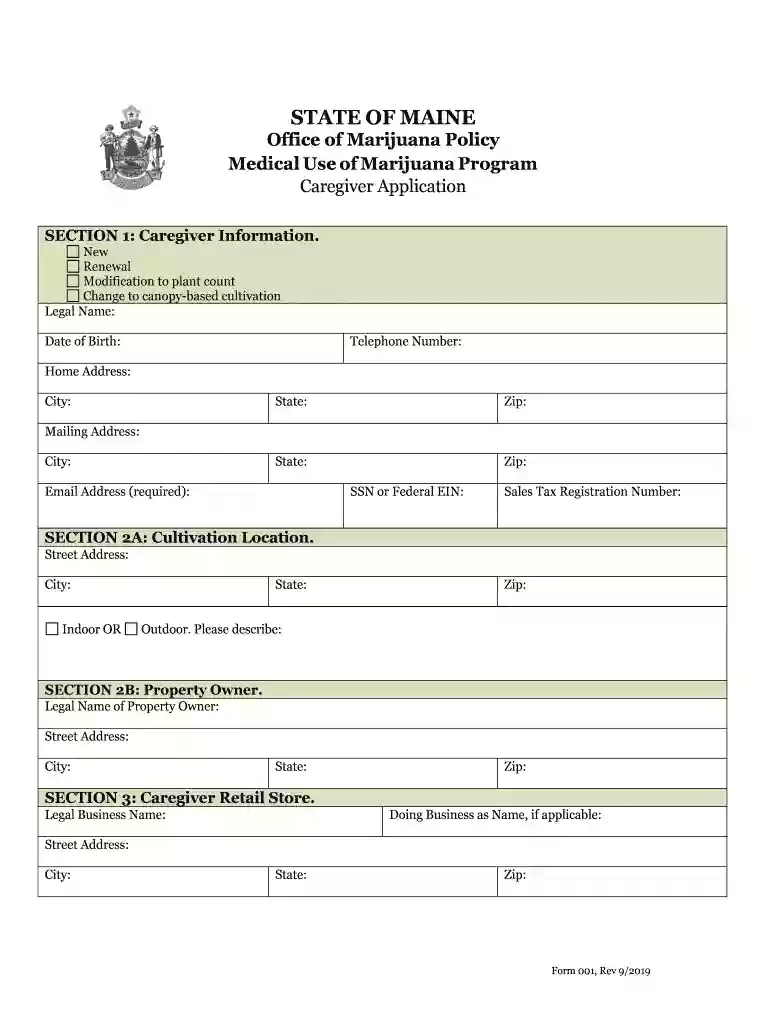
Gather Required Information: Collect details about the caregiver, including personal identification and contact information.
Specify Cultivation Location: Indicate where the marijuana plants will be cultivated. This step requires a physical address and any associated permits or licenses.
Provide Retail Store Details: If applicable, include the location and operational details of any retail store involved in the distribution.
Outline Authorized Activities: Detail the specific activities for which authorization is sought, such as cultivation, distribution, or both.
Calculate Fees Based on Plant Count: Determine the appropriate fees, which may depend on the number of plants or the size of the canopy.
Complete the Attestation Section: Read and agree to the terms of compliance, confirming adherence to state regulations.
Each step must be carefully completed to ensure compliance and avoid delays in the authorization process.
Understanding these terms is pivotal when navigating the application process or ensuring compliance.
Complying with Title 22, 2423-A is essential for participating legally in the Medical Use of Marijuana Program. This section provides legal protection to caregivers and patients who adhere to the guidelines. It ensures that all activities, from cultivation to distribution, are conducted within the boundaries of state law, reducing the risk of legal repercussions. Additionally, it outlines the permissible activities, helping participants avoid unauthorized practices that could lead to penalties.
These elements work together to ensure a regulated and transparent medical marijuana program.
While the section primarily addresses Maine's regulations, other states might have varied provisions for medical marijuana use. In Maine, strict guidelines dictate the number of plants one may cultivate and the conditions under which marijuana may be dispensed. Neighboring states, for instance, could have differing limits or additional requirements for obtaining caregiver status or patient registration. Understanding these state-specific nuances ensures compliance no matter the jurisdiction.
Scenario 1: A caregiver in Portland registers to cultivate medical marijuana for three patients. They provide their cultivation location and ensure compliance by regularly updating their records as per the state’s guidelines.
Scenario 2: A registered patient legally obtains medical marijuana from an authorized caregiver based in Augusta, ensuring all transactions are recorded and traceable for state audits.
These examples highlight how individuals navigate and utilize the permissions granted by Title 22, 2423-A.
Failing to adhere to the stipulations in Title 22, 2423-A can lead to significant penalties, including fines or loss of caregiver status. Non-compliance might also result in broader legal action, including criminal charges. Ensuring accurate record-keeping, secure cultivation practices, and maintaining proper authorizations are key strategies to avoid these penalties.
To participate under Title 22, 2423-A, caregivers must meet specific criteria, such as being at least 21 years old and residing in Maine. They must also undergo a criminal background check and provide proof of residence. Patients seeking medical marijuana must have a qualifying medical condition and obtain a recommendation from a licensed healthcare provider. Meeting these criteria is essential for participation in the program.


We've got more versions of the Title 22, 2423-A: Authorized conduct for the medical use of form. Select the right Title 22, 2423-A: Authorized conduct for the medical use of version from the list and start editing it straight away!
At DocHub, your data security is our priority. We follow HIPAA, SOC2, GDPR, and other standards, so you can work on your documents with confidence.
2423-A. Authorized conduct for the medical use of cannabis (1) Cultivate cannabis plants for more than 2 members of the family or members of the same
Jan 19, 2017 This publication discusses common business expenses and explains what is and is not de ductible. The general rules for deducting busi.


