





Definition and Purpose of the Division of Vehicles, Kansas Department of Revenue - kssos
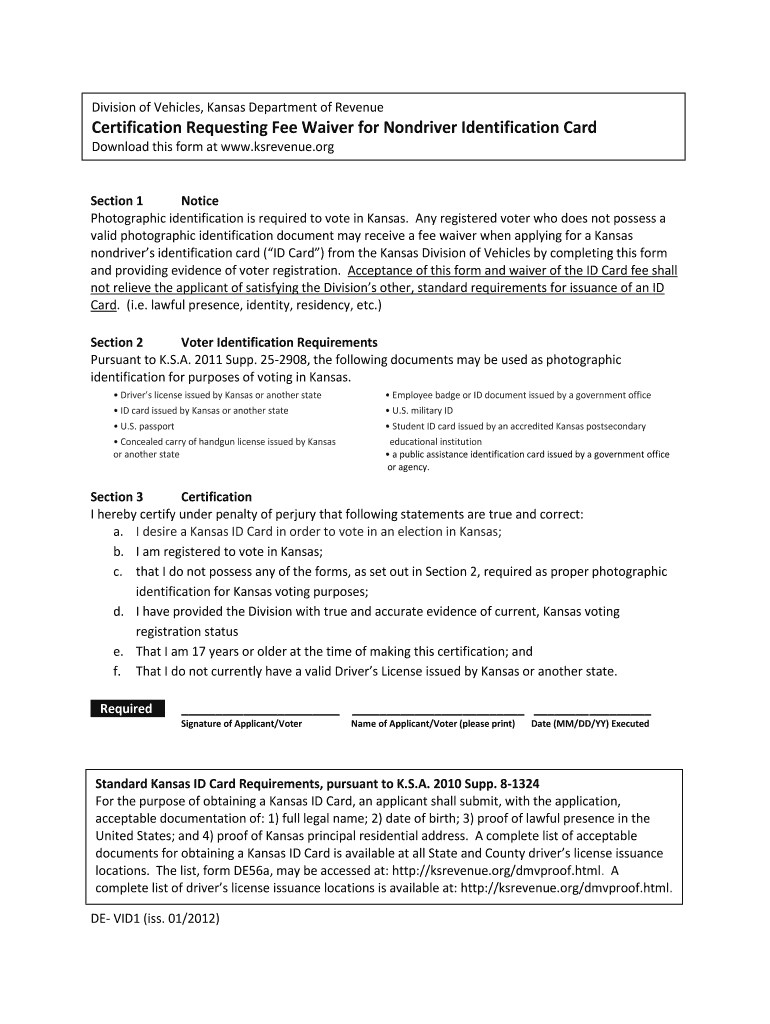
The "Division of Vehicles, Kansas Department of Revenue - kssos" serves a crucial role in managing vehicle-related documentation and processes for residents of Kansas. Its primary purpose is to regulate and facilitate the administration of vehicle titles, registrations, and licenses. This division ensures that all vehicles operating on Kansas roads comply with state regulations, contributing to safety and legal conformity. Examples of its tasks include processing driver's license applications, vehicle registrations, and enforcing state vehicle laws.
Steps to Complete the Division of Vehicles, Kansas Department of Revenue - kssos
Completing the necessary documentation through the Division of Vehicles involves several important steps. To start, applicants must gather all required documentation, such as proof of identity and residency. Next, it's crucial to fill out the forms correctly, ensuring each section is completed according to the guidelines provided by the division. Applicants are typically required to submit forms either online, via mail, or in person at a local office. Reviewing the submission for completeness can prevent processing delays. Finally, staying informed on the confirmation process and any subsequent steps ensures the application proceeds smoothly.
Required Documents
- Proof of identity, such as a valid driver's license or passport
- Proof of residency, which may include utility bills or a lease agreement
- Vehicle information, such as a VIN number for title transfers
Form Submission Methods
- Online: Many forms can be completed and submitted through the Kansas Department of Revenue's official website.
- Mail: For some applicants, mailing paper forms is a preferred method, although it may take longer.
- In-Person: Visiting a local DMV office can expedite certain processes, allowing direct interaction with staff.
Key Elements of the Division of Vehicles, Kansas Department of Revenue - kssos
The form encompasses several key elements that applicants must take into account. First, applicants need to provide accurate personal information, ensuring it matches their identification documents. Additionally, vehicle details like make, model, year, and VIN are crucial for accurate processing. The form may also include sections for fee calculations which must be addressed according to state guidelines. Familiarizing oneself with these elements helps in minimizing errors and avoiding potential rejections.
Important Terms Related to the Form
- VIN (Vehicle Identification Number): A unique code to identify individual motor vehicles
- Title: Legal document establishing ownership of a vehicle
- Registration: Official recording of a vehicle with the state for legal operation
Legal Use and Compliance
The Division of Vehicles in Kansas adheres to strict legal standards to ensure compliance with state and federal laws. When completing their requirements, applicants must be aware that any false information or fraudulent use of forms could result in penalties or legal action. Therefore, accuracy and honesty in declaration are paramount. Legal experts recommend consulting official guidelines or seeking legal advice if there's any uncertainty around form completion and use.
Eligibility Criteria
Eligibility for the processes governed by the Division of Vehicles depends on several factors including age, residency status, and vehicle type. For example, to obtain a driver's license, individuals must meet specific age requirements, complete necessary tests, and provide valid identification. Understanding these criteria can significantly enhance one’s ability to navigate the administrative processes effectively.


Examples of Eligibility Requirements
- Kansas residency proof for state-specific titles
- Minimum age for driver's license application
- Compliance with specific vehicle standards for registration
Examples and Scenarios Using the Form
Utilizing the form involves several scenarios, depending on the applicant's needs. One example includes a first-time applicant seeking a Kansas driver's license, who must schedule and pass a driving test. Alternatively, a vehicle owner transferring a car title to a new state resident would complete a title application, providing proof of ownership and necessary fees. Understanding these scenarios can guide individuals through practical usage of the form, reducing confusion and errors.
State-Specific Rules and Differences
Each state has unique regulations regarding vehicle documentation, and Kansas is no exception. These can include specific documentary requirements, fees, and processing times that are distinct from those of neighboring states. For individuals moving to Kansas or dealing with vehicles registered out-of-state, it's essential to familiarize oneself with the nuances of Kansas vehicle laws to ensure compliance and smooth transactions.
State-Specific Rules Include
- Different tax rates or fees for vehicle registration
- Unique emission standards or inspection requirements
- Specific deadlines for registration or title transfer after moving to Kansas
Who Typically Uses This Form
The form for the Division of Vehicles, Kansas Department of Revenue, is commonly used by a variety of individuals including new residents, existing car owners, and potential drivers. Additionally, businesses operating fleet vehicles require these forms to ensure compliance with state regulations. Understanding the primary user groups can help tailor the form's completion process, ensuring that it meets the diverse needs of its users.
Penalties for Non-Compliance
Failure to comply with the regulations set by the Division of Vehicles in Kansas can result in significant penalties. These may include fines, suspension of vehicle operation privileges, or even legal proceedings. Consequently, adherence to guidelines and prompt application submissions are crucial to avoid these repercussions.
Potential Penalties
- Fines for delayed vehicle registration renewal
- Suspension of driver's licenses for providing false information
- Legal action for unregistered or uninsured vehicle operations
By providing detailed insights and structured guidance on the "Division of Vehicles, Kansas Department of Revenue - kssos," individuals can navigate the complex processes with confidence, ensuring compliance and efficiency in vehicle-related documentation and applications.


