



01. Edit your form online
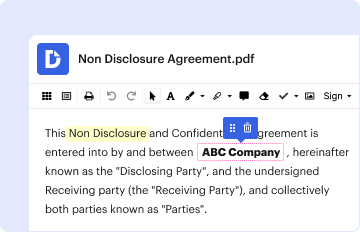
Type text, add images, blackout confidential details, add comments, highlights and more.

Type text, add images, blackout confidential details, add comments, highlights and more.
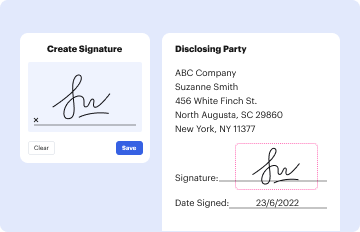
Draw your signature, type it, upload its image, or use your mobile device as a signature pad.

Send it via email, link, or fax. You can also download it, export it or print it out.
A concealed weapons permit issued by the Idaho State Police is an official document that allows the permit holder to carry a concealed weapon within the state. The permit requires applicants to comply with specific state and federal laws governing firearm possession. Its primary purpose is to ensure that individuals carrying concealed weapons have met the necessary legal criteria and pose no known threat to public safety. Successful applicants demonstrate a level of responsibility and understanding of firearms, as evidenced by their legal status and training.
Once issued, the permit allows individuals to carry concealed firearms in locations where it is legally permissible within Idaho. Permit holders should always carry their permit when armed, as law enforcement officers may request to see it during an encounter. Holders should familiarize themselves with areas where carrying a concealed weapon is restricted, such as on school grounds or in federal buildings. Understanding these regulations ensures compliance with the law and promotes safety for all parties involved.
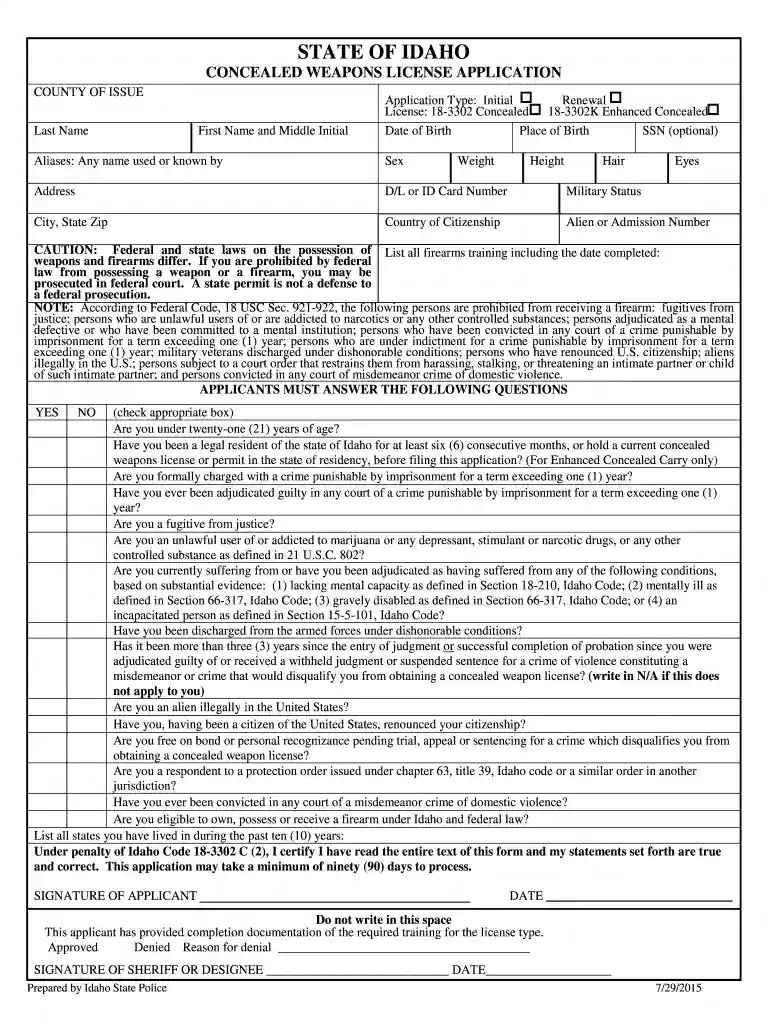
To apply for a concealed weapons permit in Idaho, individuals must complete an application form provided by the Idaho State Police. This process involves:
After submission, applicants are informed of their application's status, either resulting in an approved permit or denial based on disqualifying factors.
Eligibility for a permit requires adherence to several criteria:
Each applicant is responsible for providing documentation that clearly demonstrates their eligibility.


The application form contains several critical sections:
The permit grants authority to carry concealed firearms within the jurisdiction of Idaho but mandates compliance with all applicable laws. Holders are obliged to refrain from carrying in prohibited areas and must disclose their armed status to law enforcement upon request. Misuse or violation of these terms, such as carrying while impaired or in restricted locations, can result in permit revocation or legal consequences.
Non-compliance with Idaho's concealed carry laws can lead to serious ramifications, including:
Ensuring adherence to all laws helps maintain your legal rights and promotes public safety.
Idaho has unique regulations concerning concealed carry. Understanding these nuances ensures legal compliance:
These rules highlight the importance of staying informed about state-specific regulations to exercise your rights lawfully.
We've got more versions of the Concealed Weapons - Idaho State Police - Idaho form. Select the right Concealed Weapons - Idaho State Police - Idaho version from the list and start editing it straight away!
At DocHub, your data security is our priority. We follow HIPAA, SOC2, GDPR, and other standards, so you can work on your documents with confidence.


