







Definition & Meaning
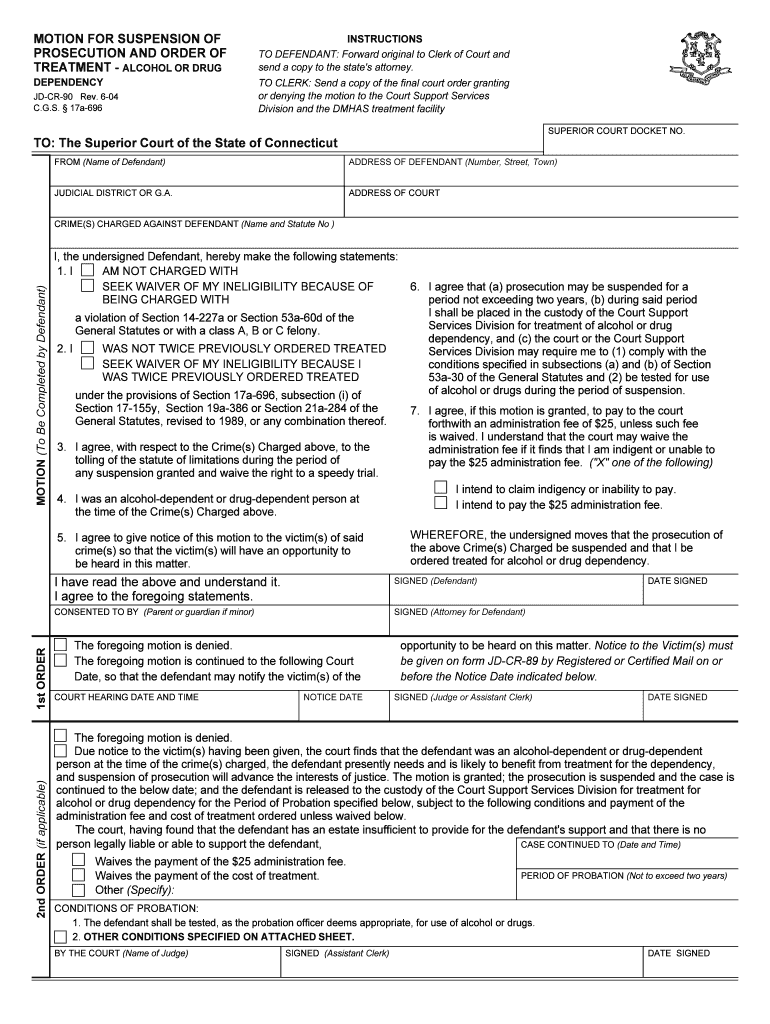
The "Motion for Suspension of Prosecution and Order of Treatment - Alcohol or Drug Dependency" is a legal document utilized in the judicial system to request that a defendant's prosecution be put on hold. This suspension is contingent upon the defendant undergoing treatment for alcohol or drug dependency. It serves as a mechanism to address substance abuse issues within the context of criminal proceedings, offering defendants an opportunity to seek rehabilitation as an alternative to traditional punitive measures. The court considers this motion to promote recovery and reduce recidivism, integrating therapeutic intervention into the justice system.
How to Use the Motion
To utilize the motion, defendants or their legal representatives must formally file it with the court. The process involves compiling necessary information, including the defendant's personal details, the charges faced, and a detailed treatment plan. The motion should clearly outline how the proposed treatment aligns with legal requirements and the defendant's rehabilitation objectives. Filing this motion requires adherence to specific procedural rules dictated by the jurisdiction in which the case is being heard. Legal counsel is strongly advised to ensure that all elements are correctly addressed to improve the likelihood of the court granting the motion.
Eligibility Criteria
To be eligible to file the motion, several criteria must be met. The defendant should be charged with offenses related to or influenced by alcohol or drug dependency, and there must be a demonstrable willingness to undergo treatment. The court will assess factors such as the nature and severity of the charges, the defendant’s criminal history, and the proposed treatment program's ability to effectively address the dependency. Eligibility may also depend on jurisdictional laws that establish specific requirements for such motions, underscoring the importance of consulting legal advisors familiar with local regulations.


Steps to Complete the Motion
- Gather Necessary Information: Collect the defendant’s personal details, case number, and charges.
- Develop a Treatment Plan: Secure a detailed and actionable treatment plan from a recognized rehabilitation center.
- Prepare the Motion Document: Fill out the motion with all required information, ensuring clarity and completeness.
- File the Motion: Submit the completed motion to the appropriate court office, adhering to filing deadlines and procedural rules.
- Notify Relevant Parties: Inform victims, if applicable, and ensure all interested parties are aware of the impending court proceedings related to the motion.
- Attend the Court Hearing: Be prepared to present and defend the motion during the court hearing.
Key Elements of the Motion
- Defendant's Personal Information: Includes name, address, and contact details.
- Case Details: Charge descriptions, case number, and jurisdiction.
- Treatment Plan: Outlines the rehabilitation program, including duration, methods, and expected outcomes.
- Legal Justification: Explains how the treatment aligns with legal and rehabilitative goals.
- Notification to Victims: Ensures affected parties are informed and have the opportunity to provide input.
Legal Use of the Motion
The motion is legally used to balance the need for public safety with the rehabilitation of the defendant. It is based on the legal principle that treatment can be an effective form of intervention for dependency-related offenses. Courts view this motion as a rehabilitative alternative to incarceration, considering both the potential benefits to the defendant and the broader community. Legal practitioners leverage this document to argue for a client's opportunity to receive constructive treatment rather than face immediate punitive measures.
State-Specific Rules
The application and acceptance of this motion can vary significantly across different states. Each jurisdiction may have unique rules regarding eligibility, required documentation, and the scope of acceptable treatment programs. States may also differ in terms of procedural deadlines and the degree of discretion granted to judges when considering such motions. Comprehensive knowledge of these state-specific regulations is crucial for those filing the motion, highlighting the need for expert legal guidance to navigate the complexities of different state laws.
Examples of Using the Motion
For instance, a defendant charged with DUI-related offenses due to alcohol dependency might file this motion as part of a plea agreement. By committing to a structured rehab program, they might avoid jail time, reflect the court's consideration of personal rehabilitation over punitive actions. Another example involves a drug possession charge where the defendant demonstrates that substance dependency is the root cause of their legal issues. By securing a motion for suspension, they can focus on developing long-term recovery strategies and reintegration into the community.




