




01. Edit your u s border patrol organizational chart online
Type text, add images, blackout confidential details, add comments, highlights and more.

Type text, add images, blackout confidential details, add comments, highlights and more.

Draw your signature, type it, upload its image, or use your mobile device as a signature pad.

Send it via email, link, or fax. You can also download it, export it or print it out.
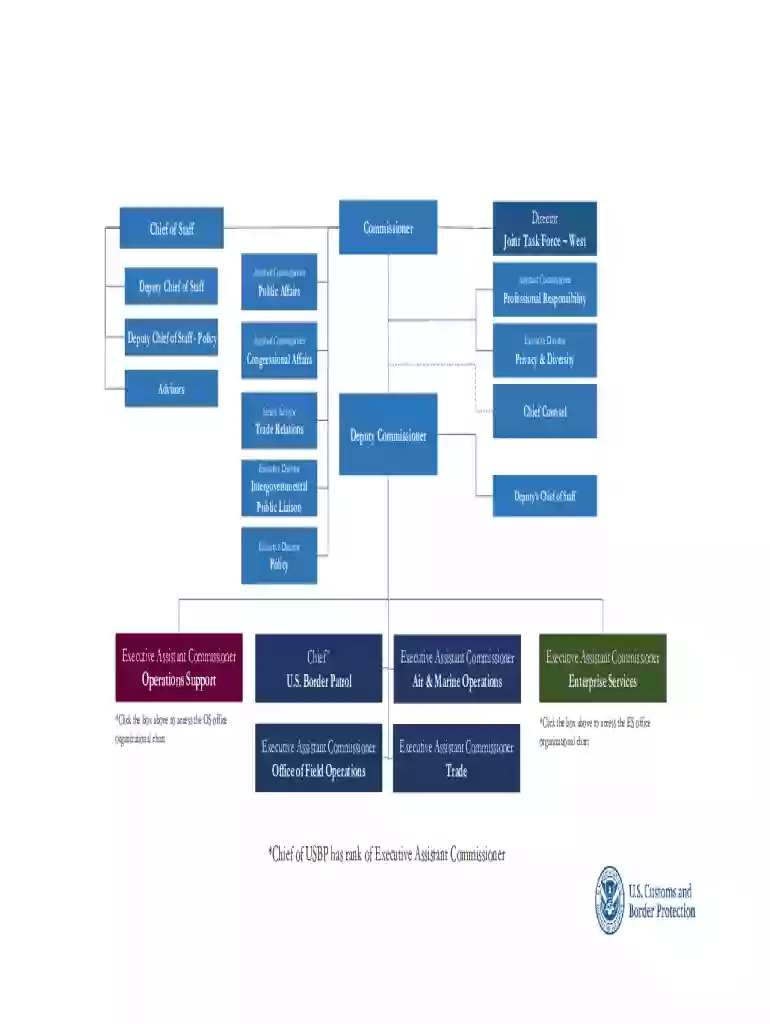
The "U S Customs and Border Protection Organizational Charts 10 25 2017 organization" refers to a detailed diagram outlining the structure of the U.S. Customs and Border Protection (CBP) as of October 25, 2017. The chart illustrates the hierarchy within the agency, showcasing key positions such as the Commissioner, Deputy Commissioners, and various divisions like Operations, Policy, and Public Affairs. Understanding this structure is essential for comprehending how CBP functions and manages its operations at a federal level.
To effectively use the organizational charts, stakeholders should familiarize themselves with each department's function within the CBP. The chart typically includes:
Users can leverage this understanding to identify the appropriate contacts for specific inquiries or collaborations within CBP. The chart also assists in analyzing the agency's structural dynamics and resource allocation.
Accessing the U.S. Customs and Border Protection Organizational Charts from October 25, 2017, usually involves:
When reviewing the CBP organizational charts, follow these steps for a comprehensive understanding:
Using these charts is crucial for:
The essential components of the CBP organizational charts include:
These elements reflect how CBP’s strategic priorities are executed on a daily basis.
Understanding the legal parameters for utilizing these charts is necessary for compliance. The charts:
Real-world applications of the CBP organizational charts include:
Utilization of these charts provides a roadmap for navigating the U.S. Customs and Border Protection’s complex organizational framework, facilitating informed decision-making and strategic alignment across various sectors.
We've got more versions of the u s border patrol organizational chart form. Select the right u s border patrol organizational chart version from the list and start editing it straight away!
| Versions | Form popularity | Fillable & printable |
|---|---|---|
| 2017 | 4.8 Satisfied (234 Votes) |
At DocHub, your data security is our priority. We follow HIPAA, SOC2, GDPR, and other standards, so you can work on your documents with confidence.
by D Jancsics 2019 Cited by 39 Data were analyzed on 156 criminal cases of officers and agents employed by the U.S. Customs and Border Protection (CBP). Results from the present work advance
Budget for 2014-2016 and Budget for 2017-2019 by Organizational Structure Organization through the management, control and reporting of the Organizations


