




01. Edit your banquet hall rental contract online
Type text, add images, blackout confidential details, add comments, highlights and more.

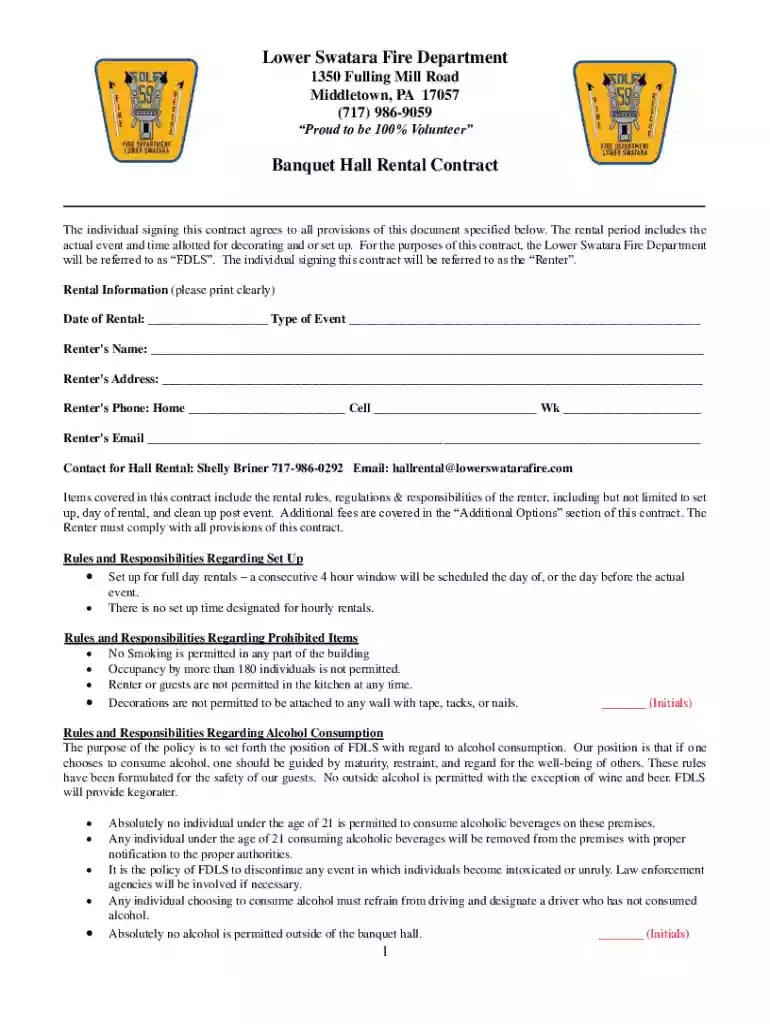
Type text, add images, blackout confidential details, add comments, highlights and more.

Draw your signature, type it, upload its image, or use your mobile device as a signature pad.

Send it via email, link, or fax. You can also download it, export it or print it out.
A banquet hall rental contract is a legal document that outlines the terms and conditions for renting a banquet hall. This contract ensures that both the renter and the venue owner are clear about their obligations, rights, and responsibilities. Typically used for events like weddings, corporate functions, and parties, the contract specifies details such as rental fees, event duration, and any additional services provided by the venue. It serves to protect both parties in the event of disputes and ensures compliance with any applicable laws or regulations.
The essential components of a banquet hall rental contract include:
Rental Fee and Deposit: Clearly outlined costs associated with renting the venue, including any security deposits that may be required upfront.
Duration of Rental: Specific times for when the renter can access the venue for setup, the event itself, and cleanup.
Cancellation Policy: Details regarding how cancellations are handled and any associated fees, ensuring both parties understand the financial implications of canceling the contract.
Liability and Insurance Requirements: Conditions covering liabilities during the event and any necessary insurance policies the renter must carry to protect against potential damages or injuries.
Setup and Cleanup Responsibilities: Guidelines on who is responsible for setting up the venue for the event and cleaning it afterward, often involving checklists or conditions for the return of the security deposit.
Gather Necessary Information: Identify the date and time of the event, number of expected guests, and any specific requirements or requests.
Review the Venue’s Terms: Understand the venue’s rules, including restrictions on decorations, catering services, and alcohol consumption.
Complete the Contract Details: Enter all relevant information, including personal details, event specifics, and any additional requests for services.
Discuss Specific Needs: Communicate any special requirements, such as technical equipment or additional facilities, with the venue manager.
Confirm and Sign the Contract: Once both parties agree on the terms, each should sign the document to make it legally binding.
Retain Copies: Each party should maintain a copy of the signed contract for future reference and in the event of any disputes.
Entities and individuals who frequently utilize banquet hall rental contracts include:
Event Planners and Coordinators: Responsible for organizing various functions, they utilize these contracts to ensure all logistical aspects are legally accounted for.
Private Individuals: Often seeking venues for personal events such as weddings, anniversaries, or family reunions.
Corporate Organizations: Use these contracts to secure locations for meetings, conferences, or team-building events, ensuring a formal agreement is in place.
Nonprofit Organizations: May require a venue for fundraising events or community gatherings, benefiting from the clear stipulations such contracts provide.


The contract’s enforceability is rooted in its adherence to local and state laws. It ensures compliance with regulations governing maximum occupancy, noise levels, and alcohol sales or consumption. Additionally, rental contracts must conform to anti-discrimination laws, ensuring equal access to venues.
Key legal elements include:
Compliance with Safety Regulations: Ensures the venue adheres to fire safety and health codes, providing a safe environment for attendees.
Adherence to Licensing Requirements: Particularly relevant if the event involves live music or sales of alcohol, necessitating appropriate permits.
State regulations may impact rental contracts, with varying differences primarily related to:
Insurance and Liability Requirements: States may have different requirements for liability insurance necessary to cover potential damages or accidents.
Alcohol Regulations: Laws governing the sale or consumption of alcohol can vary significantly, necessitating proper permits and adherence to specific guidelines.
Occupancy Limits: Defined by state building codes, ensuring that every event hosted adheres to safety and capacity regulations.
Understanding these state-specific nuances is critical to ensuring compliance and avoiding penalties.
Familiarity with specific terminology can facilitate understanding and negotiation of rental contracts:
Force Majeure: Provisions related to the cancelation or alteration of the contract due to unforeseen events such as natural disasters.
Indemnity Clauses: Agreements to protect the venue owner from certain liabilities, transferring specific risks to the renter.
Non-Refundable Deposit: Part of the rental fee that is non-recoverable should the event be canceled or rescheduled.
These terms provide clarity and reduce potential legal ambiguity for both renters and venue providers.
The application of these contracts can be illustrated through practical examples:
Weddings: Couples securing venues, often months in advance, ensuring dates and specifics are locked in. Contracts prevent overbooking and guarantee that facilities meet expectations.
Corporate Events: Businesses engaging venues for annual meetings or product launches, utilizing contracts to ensure all logistical and technical needs are met and that proprietary information shared during events remains confidential.
Community Functions: Local organizations booking halls for charity fundraisers, spelling out terms that cater to nonprofit activities, including potential discounts or waivers on fees for community events.
These scenarios underscore the contract’s role in facilitating organized, structured events while safeguarding the interests of all involved parties.
We've got more versions of the banquet hall rental contract form. Select the right banquet hall rental contract version from the list and start editing it straight away!
| Versions | Form popularity | Fillable & printable |
|---|---|---|
| 2020 | 4.8 Satisfied (76 Votes) |
At DocHub, your data security is our priority. We follow HIPAA, SOC2, GDPR, and other standards, so you can work on your documents with confidence.
By signing this form, renter accepts the event quote (if applicable) and terms and conditions as stated on the attached pages.
From baby showers to wedding receptions, church events, and school banquets, the City of Upland offer a variety of rooms for your next special event!


