




01. Edit your form online
Type text, add images, blackout confidential details, add comments, highlights and more.

Type text, add images, blackout confidential details, add comments, highlights and more.

Draw your signature, type it, upload its image, or use your mobile device as a signature pad.

Send it via email, link, or fax. You can also download it, export it or print it out.
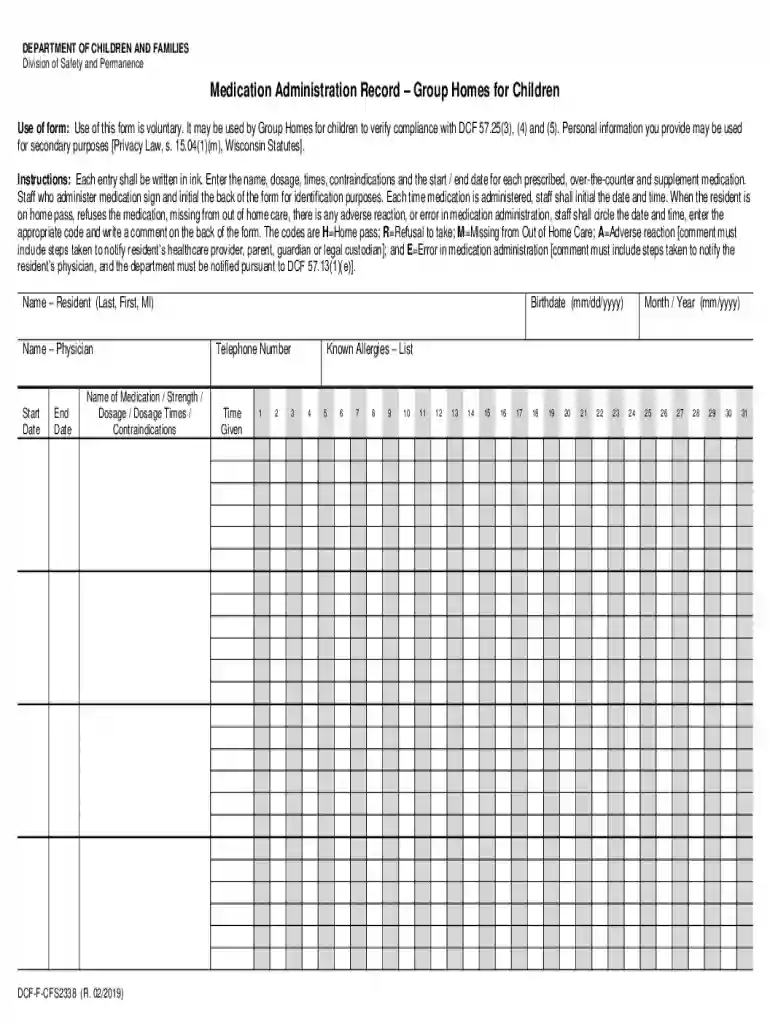
The "Massachusetts Department of Children and Families (DCF)" form is a crucial document used to engage with the state's child welfare system. This form is primarily intended for managing interactions, cases, and services related to child protection and family welfare. The DCF oversees crucial aspects such as the safety and well-being of children while working to strengthen family dynamics. By utilizing this form, individuals can initiate or respond to services offered by the department, often in scenarios involving child protection, foster care, and adoption services.
To effectively use the Massachusetts Department of Children and Families (DCF) form, it is important to follow specific instructions to ensure accurate processing.
Identify the Purpose: Determine whether the form is for reporting suspected child abuse, initiating guardianship, or other DCF services.
Complete Required Fields: Fill out all mandatory sections including personal details, case information, and any relevant observations regarding the child's situation.
Attach Supporting Documents: Include additional documentation that supports your report or request, such as medical records or school reports.
Review for Accuracy: Double-check the completed form for errors or omissions that might delay processing.
Submit the Form: Deliver the completed form via the specified method—either online or by mail, as directed by the specific form instructions.
Completing the Massachusetts Department of Children and Families (DCF) form involves several distinct steps to ensure comprehensive submission.
Acquire the Form: Obtain the form from the official DCF website or a local DCF office.
Gather Necessary Information: Collect all relevant data including names, addresses, and details about the child and family in question.
Fill Out the Form: Enter all information accurately, following the specific instructions provided for each section.
Consult with Professionals: If needed, seek advice from legal professionals or social workers for clarity on complex sections.
Include Consent Forms: Attach any required consent documents, especially when involving sensitive information or healthcare details.
Finalize and Submit: Ensure all information is legible and submit the form according to the official guidelines provided by DCF.
Various stakeholders may find themselves using the Massachusetts Department of Children and Families (DCF) form:


The legal usage of the Massachusetts Department of Children and Families (DCF) form involves:
Understanding the core components of the DCF form aids in its comprehensive completion:
Massachusetts has unique regulations governing the completion and submission of the DCF form:
Completion of the DCF form often necessitates supplementary documentation:
Ensuring that these documents accompany the form aids in an expedited and comprehensive evaluation by the DCF.
We've got more versions of the mass orgsmassachusetts-department-ofMassachusetts Department of Children and Families (DCF) form. Select the right mass orgsmassachusetts-department-ofMassachusetts Department of Children and Families (DCF) version from the list and start editing it straight away!
At DocHub, your data security is our priority. We follow HIPAA, SOC2, GDPR, and other standards, so you can work on your documents with confidence.


