







Definition and Meaning
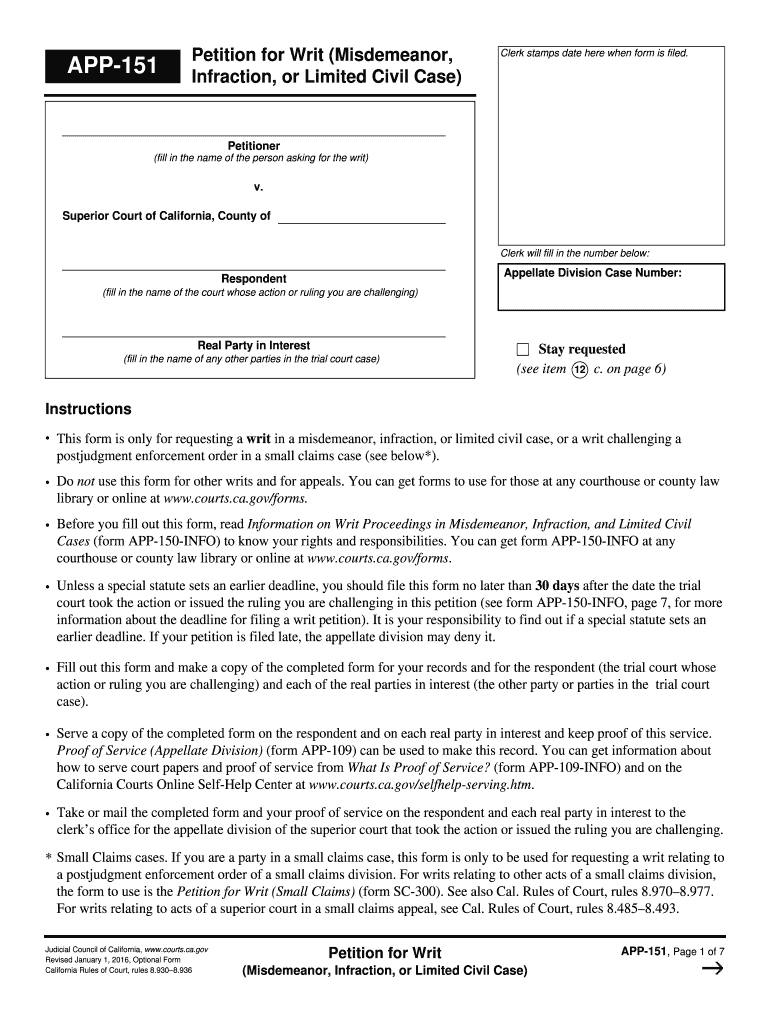
The "form petition writ 2016," specifically referred to as the APP-151, is utilized in California to request a writ in various legal situations, including misdemeanor, infraction, or limited civil cases. Such a writ is a court order directing an individual or entity to perform or cease performing a specific action. The form acts as a formal request, outlining the petitioner’s reasons for seeking judicial intervention. Important components include details about the trial court action in question, the parties involved, and supporting documentation essential for substantiating the claims made in the petition.
How to Use the Form Petition Writ 2016
Filing the APP-151 involves several steps, ensuring that the petitioner clearly articulates the basis of their request. Typically, users must:
- Accurately fill in the form with complete details of their case.
- Attach relevant documents that support their petition.
- Ensure the reasons for the writ are clearly stated, showing why the action is necessary.
- Serve copies to all related parties involved in the case.
Courts evaluate these petitions to determine whether the writ will be granted or denied, making the provision of thorough and precise information critical in the decision-making process.
Steps to Complete the Form Petition Writ 2016
Completing this form involves a structured approach:
- Gather Information: Collect all relevant details of the court case, including names, dates, and case numbers.
- Fill Out the Form: Enter all required personal and case information. Ensure clarity and correctness.
- Attach Supporting Documents: Include evidentiary documents to substantiate the need for a writ.
- Review and Proofread: Carefully review the filled form to correct any errors or omissions.
- Submit the Petition: Deliver the completed form to the appropriate court and serve copies to all involved parties.
Ensuring that each step is conducted thoroughly enhances the likelihood that the writ will be granted.
Who Typically Uses the Form Petition Writ 2016
The APP-151 is commonly utilized by individuals involved in legal disputes requiring court intervention under the California judicial system. Typical users include:
- Defendants or plaintiffs in misdemeanor or infraction cases.
- Parties in limited civil cases who require court orders.
- Attorneys acting on behalf of their clients.
- Legal representatives of parties seeking relief through judicial oversight.
Recognizing whether you fall within these categories helps determine your eligibility to file this specific form.


Legal Use of the Form Petition Writ 2016
The APP-151 is legally recognized as a procedural document in the California court system. It plays a critical role in:
- Requesting higher court review of a lower court’s decision.
- Ensuring compliance with court orders.
- Addressing perceived injustices or errors that occurred in trial courts.
Filing this form invokes a higher court's jurisdiction over a decision, providing an opportunity to rectify incorrect or unjust lower court determinations.
Key Elements of the Form Petition Writ 2016
Critical components of the form include:
- Petitioner Information: Detailed information about the individual or entity filing the petition.
- Case Details: Specifics about the legal matter, including the court case number and involved parties.
- Reasons for the Petition: Comprehensive explanation of why the writ is necessary.
- Supporting Documents: Evidence and documents that validate the claims and request.
Ensuring the completeness and accuracy of these elements is vital for the effective processing of the petition.
Filing Deadlines and Important Dates
Adhering to specific timelines is critical when filing the APP-151:
- Standard Filing Deadline: Generally, petitions for writs must be filed within a set period following a decision in the lower court. Delays could result in rejection.
- Service Deadlines: Copies of the petition must also be served to the opposing parties within a designated timeframe.
Understanding the legal timelines ensures the petitioner’s case is not dismissed on procedural grounds.
Required Documents
When filing the APP-151, necessary supporting documents generally include:
- Evidence: Items that support the petitioner's claims.
- Court Records: Copies of past proceedings relevant to the case.
- Legal Opinions or Analysis: Documents that explain the legal basis for seeking a writ.
Having these documents prepared and organized assists in building a compelling petition.




