





Definition & Meaning
Civil cases other than domestic relations encompass legal disputes between parties involving a range of non-family related issues. These cases can include matters such as contracts, personal injury, property disputes, and business disagreements. Unlike domestic relations cases, which deal with issues of family law such as divorce or custody, these civil cases focus on resolving conflicts where parties may seek compensation or other legal remedies.
Common Types of Civil Cases
- Contract disputes: Issues arise when one party alleges a breach of contract.
- Property disputes: Involve disagreements over land or property ownership.
- Personal injury: Cases where individuals seek compensation for injuries due to negligence.
- Business disputes: Conflicts between businesses over services, products, or partnerships.
Context and Importance
Understanding the scope of civil cases beyond domestic relations is crucial for individuals and businesses to navigate legal challenges effectively. These cases form a significant part of the judicial system, ensuring that laws are enforced and disputes are settled fairly.
How to Use the (Civil Cases Other than Domestic Relations) Form
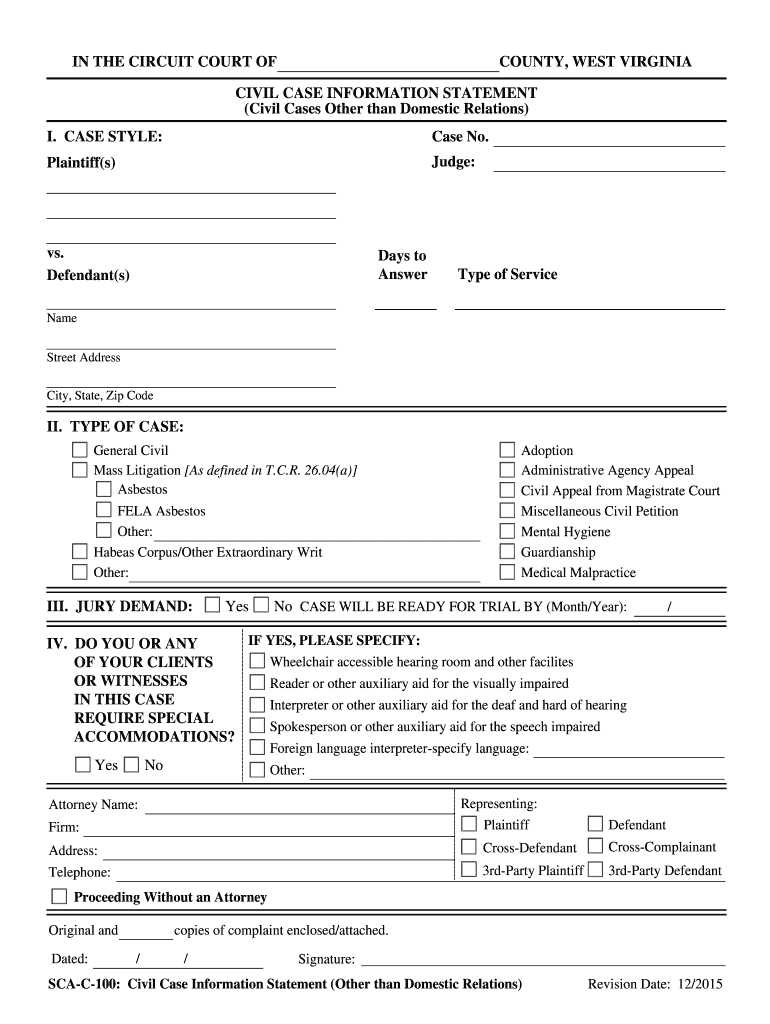
The Civil Case Information Statement is a crucial document used in the Circuit Court of West Virginia to provide essential details about a civil case. Filling out this form accurately is vital for the efficient processing of the case.
Key Steps
- Identify Case Type: Specify the nature of the civil dispute (e.g., contract dispute).
- Fill Out Case Style: This includes identifying the parties involved.
- Specify Jury Demand: Indicate whether the case requires a jury trial.
- Address Special Accommodations: Note any needs for individuals with disabilities.
- Provide Representation Details: Include information about legal representatives.
Tips for Accurate Completion
- Ensure all sections are completed to avoid delays.
- Double-check legal names and addresses.
- Review court requirements specific to the state of West Virginia.
How to Obtain the (Civil Cases Other than Domestic Relations) Form
To initiate a civil case in the Circuit Court of West Virginia, parties must first obtain the relevant Civil Case Information Statement.
Acquisition Methods
- Online: Visit the official West Virginia Judiciary website to download the form.
- In-Person: Forms can be acquired at the clerk's office of the circuit court where the case will be filed.
- Mail Request: Contact the court to request a mailed copy.
Considerations
Ensure you are downloading or obtaining the most current version of the form to comply with any recent updates in procedural requirements.
Steps to Complete the (Civil Cases Other than Domestic Relations)
Accurate completion of the Civil Case Information Statement is critical for processing your legal dispute.
Detailed Instructions
- Gather Information: Compile all relevant legal documents, personal identification, and case-related facts.
- Section by Section: Fill out each part methodically, starting with case style down to representation details.
- Review for Accuracy: Verify that all entered information is correct and complete.
- Submit the Form: Send the completed form to the court, either online, by mail, or in person.
Example Scenario
If initiating a property dispute case, gather property deeds, previous communications regarding the dispute, and any contracts involved before filling the form.
Who Typically Uses the (Civil Cases Other than Domestic Relations)
This form is widely used by various individuals and entities seeking legal resolution through the Circuit Court.


Typical Users
- Individuals: People involved in personal injury cases or contract disputes.
- Businesses: Companies engaged in legal disputes over commercial contracts or business practices.
- Lawyers: Attorneys representing clients in non-domestic civil cases.
Importance for Each User
For individuals, this form starts the legal journey towards potential compensation or remedy. For businesses, it is essential in pursuing or defending against claims that could affect operations.
Important Terms Related to (Civil Cases Other than Domestic Relations)
Understanding legal jargon is critical when dealing with civil cases to ensure clarity and compliance throughout the judicial process.
Key Terms
- Plaintiff: The party initiating the lawsuit.
- Defendant: The party being accused or sued.
- Jury Trial: A legal proceeding where a jury makes a decision or findings.
- Damages: Compensation sought by plaintiffs.
Why They Matter
Grasping these terms helps parties understand roles, expectations, and potential outcomes within their legal proceedings.
Legal Use of the (Civil Cases Other than Domestic Relations)
Proper legal use of this form is critical in maintaining procedural integrity within the court system.
Compliance Requirements
- Ensure the form correctly reflects the case’s nature and detail.
- Follow state-specific guidelines outlined by the West Virginia courts.
- File within set deadlines to prevent case dismissal or delays.
Outcomes of Non-Compliance
Failure to adhere to legal requirements can result in complications ranging from case dismissal to financial penalties, thus emphasizing the importance of thoroughness and accuracy.
Key Elements of the (Civil Cases Other than Domestic Relations)
The form is comprehensive, with essential sections designed to capture all necessary information for effective case handling.
Sections to Note
- Case Style: Documents parties involved and court details.
- Case Type: Specifies the nature of the dispute.
- Jury Demand: Indicates if a jury trial is requested.
- Representation Details: Lists names and contact information of legal counsel.
Application in Legal Proceedings
Each section ensures the court has a clear understanding of the case dynamics, facilitating an efficient and fair judicial process.