




01. Edit your form online
Type text, add images, blackout confidential details, add comments, highlights and more.

Type text, add images, blackout confidential details, add comments, highlights and more.

Draw your signature, type it, upload its image, or use your mobile device as a signature pad.

Send it via email, link, or fax. You can also download it, export it or print it out.
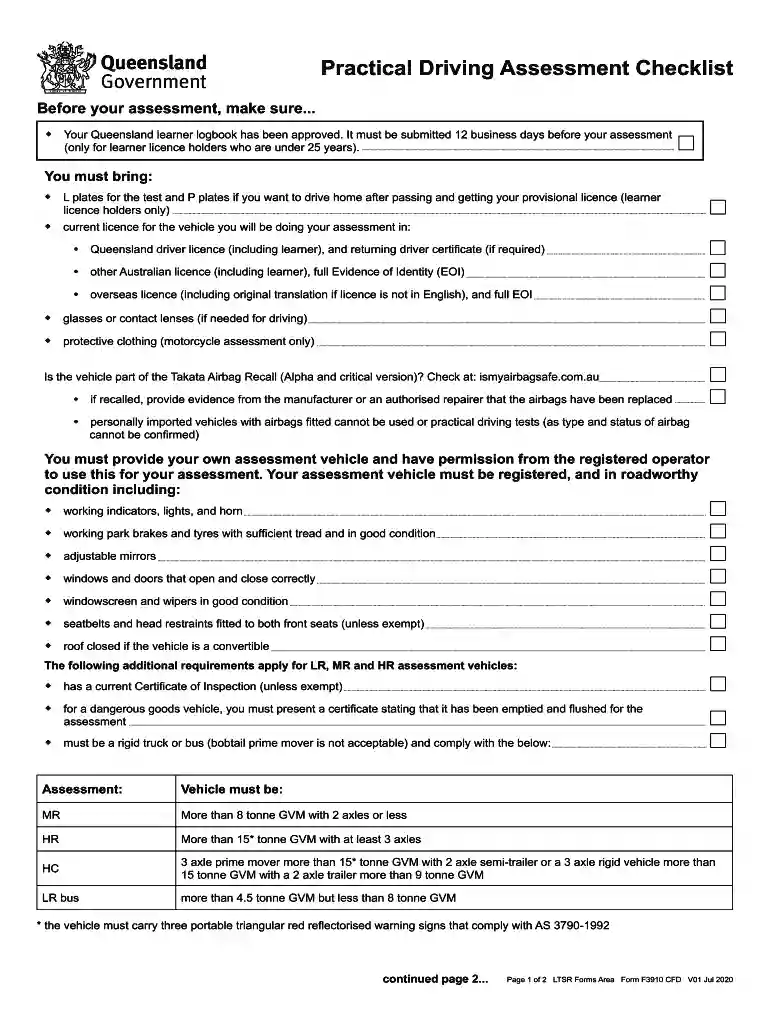
The Practical Driving Assessment Checklist serves as a comprehensive guide to prepare candidates for their driving test. It encompasses essential tasks and items necessary to ensure that all driving test prerequisites are met. This guide is designed to enhance readiness, reduce anxiety, and increase the likelihood of passing the driving assessment. The checklist typically addresses vital areas such as required documents, vehicle condition checks, and other preparatory steps candidates must complete before test day.
Each component of the checklist contains specific details and guidelines. For instance, vehicle requirements might involve confirming tire tread depth, checking fluid levels, and ensuring no warning lights are active on the dashboard. Moreover, identification documents must be current and match the details provided during test registration.
Using the Practical Driving Assessment Checklist effectively involves organizing tasks well in advance of the test. Candidates are advised to systematically complete each item to ensure no critical requirement is overlooked. This step-by-step approach not only facilitates thorough preparation but also builds confidence.
Completing the Practical Driving Assessment Checklist involves a series of progressive actions designed to streamline preparation for the driving test. Each step must be thoroughly followed to ensure completeness and compliance with local traffic laws.
The Practical Driving Assessment Checklist also holds legal significance, as non-compliance with the specified items can result in disqualification or a failed driving test attempt. Understanding these consequences underscores the importance of adhering to checklist requirements.
Failure to adhere to checklist guidelines can lead to penalties such as rescheduling fees, additional driver education requirements, or prolonged waiting periods for reassessment. It's crucial to approach the checklist with diligence and thoroughness.
Several key elements are fundamental to the Practical Driving Assessment Checklist and play a pivotal role in ensuring candidates are well-prepared for the driving test. Each element needs particular attention to detail and careful planning.
Given the localized nature of driving assessments, it's important to note that the Practical Driving Assessment Checklist can vary significantly by state. Each jurisdiction might have specific requirements, and these differences should be acknowledged during preparation.
Real-world applications of the Practical Driving Assessment Checklist highlight its usefulness in guiding candidates through the driving test preparation process. These scenarios underscore the checklist's role in ensuring preparedness and compliance.
We've got more versions of the Practical Driving Assessment Checklist Practical Driving Assessment Checklist form. Select the right Practical Driving Assessment Checklist Practical Driving Assessment Checklist version from the list and start editing it straight away!
At DocHub, your data security is our priority. We follow HIPAA, SOC2, GDPR, and other standards, so you can work on your documents with confidence.


