



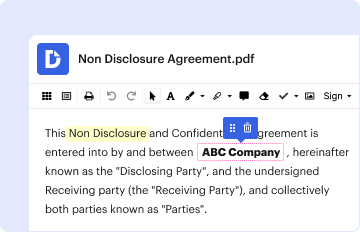
01. Edit your declaration template word online
Type text, add images, blackout confidential details, add comments, highlights and more.

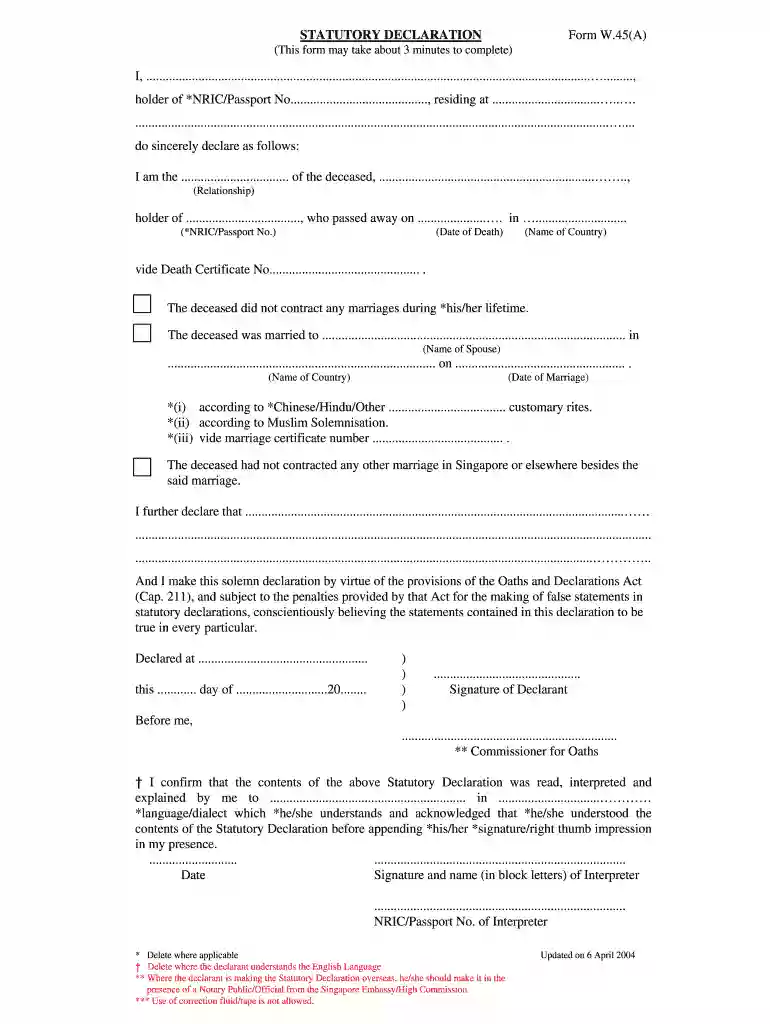
Type text, add images, blackout confidential details, add comments, highlights and more.
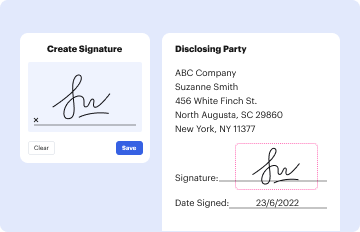
Draw your signature, type it, upload its image, or use your mobile device as a signature pad.
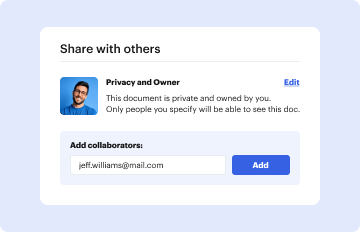
Send declaration form template word via email, link, or fax. You can also download it, export it or print it out.
A declaration form is an official document in which an individual affirms certain facts, statements, or intentions. When utilizing a specific declaration form format in Word, the format is designed for clarity and structure, making it easier to capture and present information accurately. The primary purpose of this form is to provide a legally binding statement that can be used in various contexts, such as legal proceedings, financial disclosures, and personal affirmations.
Typically, a declaration form includes essential elements such as the name and address of the declarant, a statement of the facts being declared, and spaces for signatures and dates. The format ensures that all necessary components are included, enhancing the document's validity and adherence to legal requirements. This structured approach facilitates usability and understanding while minimizing the risk of omission or error in critical data.
Completing a declaration form in Word involves several key steps to ensure accuracy and compliance with legal standards.
Download the Template: Start by obtaining the declaration form template suitable for your needs. This template should be formatted properly to include all necessary fields.
Fill in Personal Information: Enter your name, address, contact information, and any other requested identifiers. Ensure that this information is accurate to avoid issues later.
State Your Declaration Clearly: In the designated area, articulate the facts or statements being declared. Stick to clear, concise language to avoid ambiguity.
Review Required Attachments: Some declarations may require supporting documents. Check whether you need to attach any additional files, such as identification or other proofs.
Sign and Date: After completing the form, sign it personally and date it where indicated. If applicable, ensure that any witnesses also sign to validate the declaration.
Save Your Work: Save the completed document correctly to avoid losing any changes. Consider keeping a backup in another format, such as PDF, for sharing.
Understanding key terms associated with the declaration form format can aid in the effective use and completion of the document. Here are several important terms:
Numerous scenarios demonstrate the utility of a declaration form format in Word. Below are some examples:
Legal Proceedings: A witness may complete a declaration form to attest to what they observed during a case, ensuring that their testimony is documented.
Financial Disclosures: When applying for loans, individuals often submit a declaration of assets to provide lenders with a clear picture of their financial standing.
Employment Applications: Job applicants may need to fill out a declaration form to declare their eligibility or compliance with specific regulations.
Affidavits: Often used in family law cases, declarations can serve as part of an affidavit where parties assert their version of events regarding custody or visitation.
Identity Verification: A declaration may be needed for identity purposes when an individual is gaining access to restricted areas or services.
The legal implications of a declaration form are significant. It serves as a formal statement that can be utilized in various legal contexts, including court proceedings. Legal documents must often adhere to specific formats to be accepted, reinforcing the importance of using a standardized declaration form format in Word.
Legally Binding: A properly completed declaration can be considered legally binding, meaning that the declarant can be held accountable for the truthfulness of the statements made within it.
Evidence in Court: Declarations can serve as evidence if presented in a court of law, further emphasizing the necessity for accuracy in completion.
Compliance with Laws: Certain declarations must comply with specific state or federal laws, indicating that users should be aware of requirements that pertain to their location or situation.
The use of declaration forms spans a wide array of individuals and groups, each with specific needs and contexts for using this format:
By understanding the typical users, individuals can better appreciate how these forms apply to their situations and ensure correct usage.


Acquiring the declaration form format in Word is a straightforward process.
Visit Reliable Sources: Look for established legal websites or document template providers that specialize in official forms.
Select the Appropriate Template: Identify the declaration form relevant to your needs, whether it is for personal, business, or legal purposes.
Download the Template: Ensure that the downloaded document is in Word format for easy editing.
Check Version Compatibility: Confirm that the version of Word you are using is compatible with the template to avoid formatting issues.
Customize as Needed: After downloading, modify the template to include fields relevant to your specific situation while retaining the integrity of the form.
Each of these steps ensures that you are equipped with the right declaration format, enabling you to create a legally recognized document efficiently.
We've got more versions of the declaration template word form. Select the right declaration template word version from the list and start editing it straight away!
| Versions | Form popularity | Fillable & printable |
|---|---|---|
| 2004 | 4.8 Satisfied (305 Votes) |
At DocHub, your data security is our priority. We follow HIPAA, SOC2, GDPR, and other standards, so you can work on your documents with confidence.
No. Declaration of. [Name]. (Optional Use). (DCLR). This declaration is made by: declaration. Such records should be served on the other party and filed withRead more
1. Name of Inventor(s): 2. Title of Invention: 3. Inventor(s) Declaration: An invention is considered toRead more
Nov 9, 2015 scoping form or format. The use of this PA requires the collection of traditional engineering and environmental data to support the design.Read more


