







Definition & Meaning of DFCI Medical Records
The dfci medical records, also known as Dana-Farber Cancer Institute medical records, detail the health information and history of patients treated at Dana-Farber Cancer Institute. These records are crucial for maintaining a comprehensive account of a patient's medical history, covering diagnostic tests, treatment plans, and ongoing care interactions. They are integral in ensuring consistent treatment approaches, particularly for patients undergoing cancer care.
How to Use DFCI Medical Records
Utilizing dfci medical records efficiently requires understanding their structure and purpose. The records are used by medical professionals to review past treatments and make informed decisions about future care. These records also allow patients to stay informed about their health status, providing essential information needed for treatment choices and consultations with healthcare providers. By accessing these records, healthcare practitioners can coordinate with other specialists, facilitating a collaborative approach to patient care.
How to Obtain DFCI Medical Records
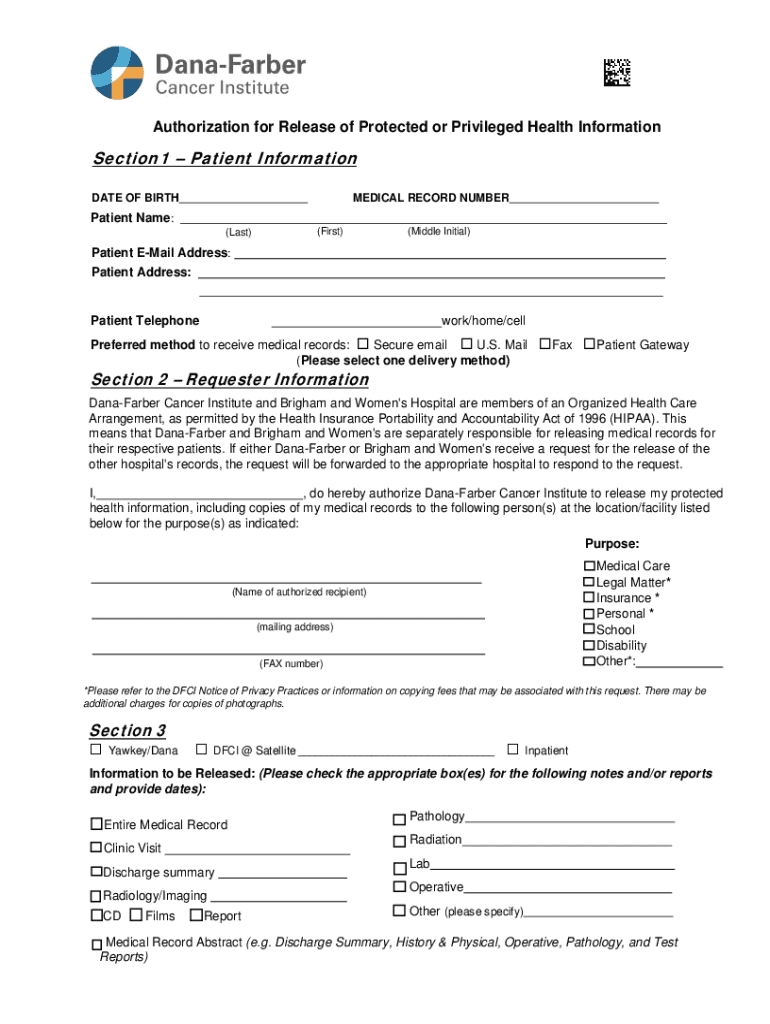
To access dfci medical records, patients or authorized representatives must submit a formal request to the institute. This is often done by completing an authorization form that includes the patient's identification details and specifies the documents needed. Requests can be made through the institute's health information management department, and the process usually involves verifying the requester's identity to ensure compliance with privacy laws. Patients can receive the records via mail, fax, or through secure electronic methods depending on their preference.
Steps to Complete the DFCI Medical Records Request
-
Obtain the Authorization Form: Visit the Dana-Farber Cancer Institute's website or contact their health information department to get the necessary form.
-
Fill Out Personal Information: Provide accurate personal details like name, date of birth, and patient ID if available.
-
Specify Records Requested: Clearly indicate the periods and types of records you need—for example, treatment notes, test results, or full medical history.
-
Purpose of Request: State the reason for the record request, such as continued treatment, transferring care, or personal records.
-
Sign and Date: Ensure the form is signed by the patient or the guardian, with the date of request clearly indicated.
-
Submit the Form: Send the completed form to DFCI via mail, fax, or email, along with any required identification documentation.
Key Elements of DFCI Medical Records
- Patient Identification: Includes personal details like name, date of birth, and contact information.
- Medical History: Comprehensive details about past diagnoses, treatments, and healthcare interactions.
- Treatment Plans: Information regarding past and current treatment regimens, including chemotherapy, radiotherapy, or surgical interventions.
- Test Results: Laboratory and radiological findings that support diagnosis and treatment planning.
- Clinician Notes: Observations and notes made by healthcare providers throughout treatment.
Legal Use of DFCI Medical Records
Handling dfci medical records demands adherence to legal standards such as HIPAA (Health Insurance Portability and Accountability Act) in the United States. These regulations ensure patient privacy is maintained and that records are only shared with authorized entities. Patients have the right to access their records and request amendments if inaccuracies are found. Legal compliance is crucial when transferring records to other healthcare providers or using them for insurance purposes.
Important Terms Related to DFCI Medical Records
- HIPAA: A critical law that safeguards the confidentiality and security of health information.
- PHI (Protected Health Information): Any information in medical records that can be used to identify a patient.
- EHR (Electronic Health Record): Digital version of a patient's paper chart, encompassing their entire health history.
- Authorization Form: Document that patients must complete to grant permission for the release of their medical records.
- Privacy Notice: A document informing patients how their health information will be used and protected.
Who Typically Uses DFCI Medical Records
DFCI medical records are primarily utilized by healthcare providers who are involved in the patient's care at the institute. Furthermore, insurance companies may review these records to process claims. Patients themselves are frequent users, especially when they need to share information with other medical facilities or require a personal account of their medical history. Family members or legal guardians of patients may also access these records with proper authorization to assist in managing healthcare decisions.
Form Submission Methods (Online / Mail / In-Person)
Dana-Farber Cancer Institute offers multiple submission methods for requesting medical records:
- Online: Fill out the request form available on the institute's patient portal for efficient electronic submission.
- Mail: Send completed forms via postal service to the institute's health information management department.
- In-Person: Visit the Institute to submit the form directly; this option can be suitable for those who prefer face-to-face interactions to resolve any questions immediately.
These varied methods ensure that patients have flexible options depending on their needs and convenience.




