




01. Edit your hc 001 fillable online
Type text, add images, blackout confidential details, add comments, highlights and more.

Type text, add images, blackout confidential details, add comments, highlights and more.

Draw your signature, type it, upload its image, or use your mobile device as a signature pad.

Send hc 001 via email, link, or fax. You can also download it, export it or print it out.
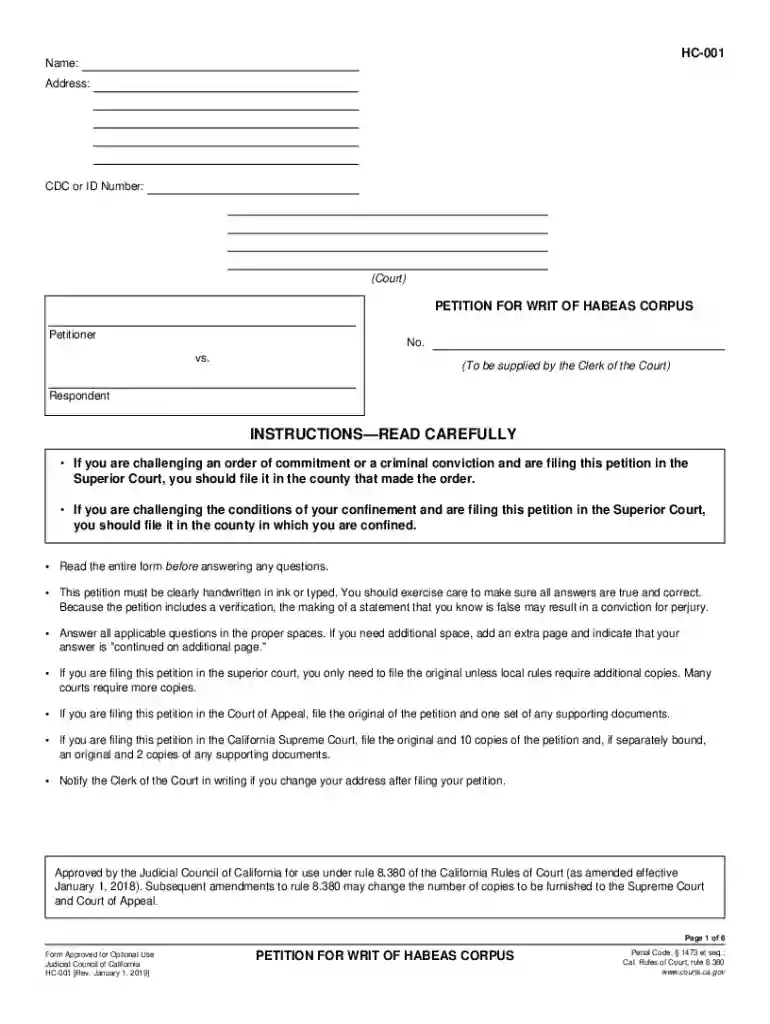
The "hc 001" form refers to a petition for a Writ of Habeas Corpus. This is a legal procedure used by individuals to challenge their detention or imprisonment. The form serves as a critical tool in the legal system to address issues of unlawful or unconstitutional incarceration. By filing this petition, a detainee can request the court's intervention to evaluate the legitimacy of their detention, ensure their rights are upheld, and potentially secure their release. This form is of particular importance in situations where the petitioner believes their confinement violates due process or results from an erroneous legal process.
Completing the HC 001 form requires attention to detail to ensure the petition is processed effectively. Here is a step-by-step guide:
Personal Information: Enter your full legal name, date of birth, and contact information.
Details of Incarceration: Provide comprehensive details about your incarceration, including the facility name, location, and the date of detention.
Grounds for Relief: Clearly outline the reasons you are challenging your detention. This could involve errors in your trial, unlawful detainment procedures, or rights violations.
Previous Appeals or Petitions: Document any prior legal attempts to challenge your detention, including case numbers and outcomes.
Sign and Date: Ensure the form is signed and dated; this confirms the accuracy and completeness of the information provided.
Legal Representation: If applicable, include the contact details of your attorney or legal representative who will assist you in the process.
Understanding certain legal terms is essential when dealing with the HC 001 form:
Writ of Habeas Corpus: A court order demanding a review of a detainee's imprisonment's legality.
Petitioner: The individual filing the HC 001 form to seek relief from unlawful detention.
Due Process: Legal requirement that the state must respect all legal rights owed to a person.
Detention Facility: The place where an individual is held in custody.
The HC 001 form is used primarily within the context of challenging the legality of incarceration. It provides a mechanism for detained individuals to request judicial review of their detention. It's a fundamental right under U.S. law to prevent abuses of power by authorities, ensuring every individual's rights are protected and upheld within the justice system. The petition process requires the court to examine whether the detention is justified under the law.
The form is typically used by individuals who are:
Legal aid organizations and attorneys often assist in completing and filing this form to ensure accuracy and compliance with legal protocols.


Several key elements must be meticulously detailed within the HC 001 form:
Claim for Relief: Specific reasons why the arrest or detention is believed to be unlawful.
Case Details: Information about the arresting authority, charges, and court case details where applicable.
Supportive Documentation: Any evidence or documents supporting the claim for unlawful detention, such as affidavits or previous court decisions.
Since legal proceedings can vary across different jurisdictions, understanding state-specific rules is crucial:
Each state may have its own procedural nuances, filing locations, and deadlines for habeas corpus petitions.
Some states offer additional protections or streamlined processes for certain types of claims.
It is often beneficial to consult with a legal expert familiar with the laws of the state where the petition is being filed.
Timeliness is a critical factor in filing the HC 001 form:
Filing Deadlines: Typically, there are specific timelines for filing a habeas corpus petition, which may vary by jurisdiction and the nature of the challenge.
Court Hearings: Be aware of scheduled court dates once the petition is filed, as missing these can affect the outcome.
Deadlines for Appeals: If the initial petition is denied, there are usually strict timelines to file an appeal.
Understanding these deadlines is vital to ensure the court hears the petition, and failing to adhere can result in dismissal or delay of the case.
We've got more versions of the hc 001 fillable form. Select the right hc 001 fillable version from the list and start editing it straight away!
At DocHub, your data security is our priority. We follow HIPAA, SOC2, GDPR, and other standards, so you can work on your documents with confidence.
File Details ; Depositor: archives@sebts.edu ; Date Uploaded: 2026-02-12 ; Date Modified: 2026-02-12 ; Fixity Check: Fixity checks have not yet been run on this
(HC-001) Request a writ of habeas corpus to challenge your criminal conviction, detention, or the conditions of your confinement, including claims under the
Methyl tert-Butyl Ether (MTBE) - Its Movement and Fate in the Environment and Potential for Natural Attenuation. Air Force Center for Environmental Excellence


