




01. Edit your form online
Type text, add images, blackout confidential details, add comments, highlights and more.

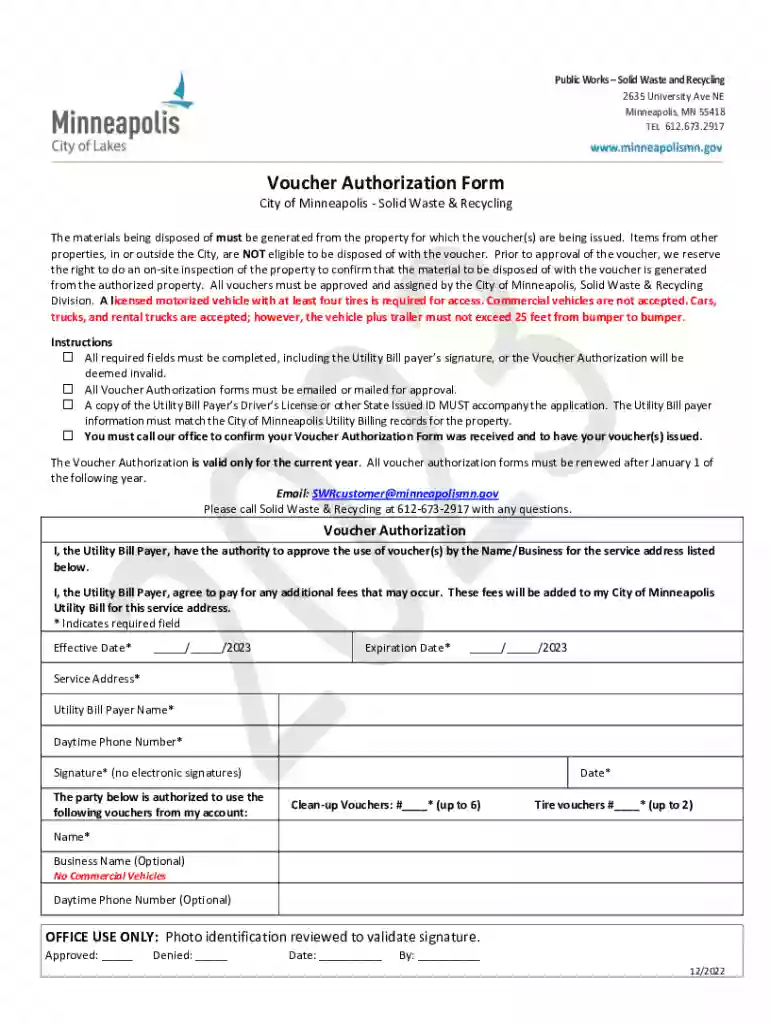
Type text, add images, blackout confidential details, add comments, highlights and more.

Draw your signature, type it, upload its image, or use your mobile device as a signature pad.

Send it via email, link, or fax. You can also download it, export it or print it out.
The "Drop-Off Items and Fees - City of Minneapolis" refers to a system designed to facilitate the disposal of various items at dedicated facilities within Minneapolis. This system ensures residents can responsibly dispose of waste, including large items and hazardous materials, while adhering to city regulations. It also outlines applicable fees and any policies affecting the drop-off process. Understanding this form is crucial for residents aiming to manage waste disposal effectively and sustainably.
To effectively use the drop-off system in Minneapolis, residents should follow a few essential steps:
Determine Eligibility: Only residents with a valid utility bill associated with the City of Minneapolis are eligible to use the drop-off facilities for certain types of waste.
Identify the Type of Waste: Residents should categorize their waste according to the types accepted by the city facilities, such as electronics, bulk waste, and hazardous materials.
Check Fees and Requirements: Review any applicable fees associated with the disposal of specific items, as well as specific documentation required at the time of drop-off.
These steps ensure a seamless experience when disposing of waste, helping residents avoid potential penalties or additional fees.
Completing the process involves these crucial steps:
Prepare the Necessary Documentation: Collect any required documents, such as a valid ID and a current utility bill, to prove residency and eligibility.
Inspect and Sort Waste: Conduct a thorough inspection of items to ensure compliance with facility guidelines. Proper sorting helps streamline the drop-off process.
Schedule an Appointment if Necessary: Some materials might require an appointment prior to drop-off, so it’s prudent to check the facility’s policy ahead of time.
Present Documentation and Pay Fees: Upon arrival at the facility, present the required documents and settle any disposal fees based on the type and amount of material dropped off.
These steps allow for efficient processing of items, promoting better waste management practices within the city.
Several key elements are integral to understanding this system:
Residents who are familiar with these elements will find it easier to navigate the process of disposing of waste responsibly.
Residents must be equipped with certain documents when utilizing the drop-off services:
These documents ensure that only eligible residents use the service, maintaining the integrity and efficiency of the system.
Legal considerations include strict adherence to municipal waste disposal regulations. Unauthorized use of the system by non-residents or inappropriate disposal of prohibited items may result in fines or legal action. Compliance with rules ensures a lawful and smooth operation of waste management services in the city. The City of Minneapolis may conduct audits or inspections to prevent misuse or illegal dumping, thereby protecting the environment and city infrastructure.
Several scenarios illustrate a typical use of this system:
These examples demonstrate practical uses of the facility, helping residents plan appropriately and adhere to city standards.
The City of Minneapolis operates under a set of rules that cater specifically to Minnesota's environmental laws. This includes:
Understanding these rules helps residents align their waste disposal efforts with both city and state regulations, ensuring compliance and support of broader environmental objectives.
We've got more versions of the Drop-Off Items and Fees - City of Minneapolis form. Select the right Drop-Off Items and Fees - City of Minneapolis version from the list and start editing it straight away!
At DocHub, your data security is our priority. We follow HIPAA, SOC2, GDPR, and other standards, so you can work on your documents with confidence.
Quick errands, deliveries, or drop offs are not valid excuses for parking. Parking fees can be paid in advance the parking fee is $3.00 per day instead of
Drop-off items and fees. You can bring yes Household garbage and furniture yes Large recyclable items. Mattresses and box springs. Phone 612-673-2917 8 a.m.


