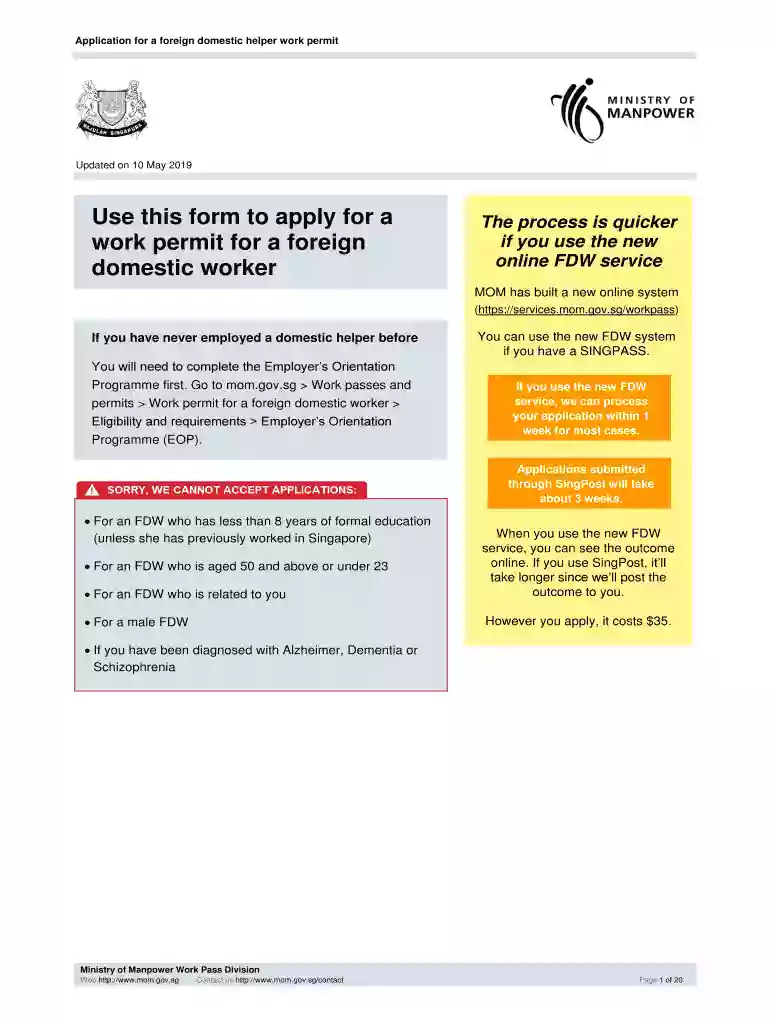
Definition and Meaning
The form referenced by "Use this form to apply for a" is commonly understood as an application form required for various official processes. This form can be critical when applying for permits, licenses, or benefits that are regulated by governmental or authoritative institutions. Its purpose is to collect detailed information from applicants to evaluate their eligibility for a specific service or authorization. The nature of information requested typically includes personal, financial, and sometimes legal data, tailored to the specific requirements of the target application.
How to Use the Form
Using the form effectively involves understanding its structure and submitting completed sections accurately. Begin by reviewing the specific sections of the form, which usually include fields for personal identification, eligibility information, and declarations of intent. Accuracy is crucial; ensure that all information is current and matches your supporting documents. Use additional space or attachments if the form prompts for explanations beyond the provided fields. Incomplete or incorrect submissions can lead to delays or rejections, emphasizing the importance of thoroughness.
Completing Required Sections
- Personal Information: Ensure full accuracy in name, address, and contact details.
- Eligibility Details: Complete fields related to your eligibility criteria; this may include employment status or residency.
- Declarations: Read all statements carefully before signing; this section confirms your understanding and agreement to terms proposed by the issuing body.
Steps to Complete the Form
Completing the form involves several structured steps designed to efficiently gather necessary information. This guide provides a step-by-step approach:
- Read Instructions Carefully: Before starting, read any provided instructions to understand the form’s specific requirements.
- Prepare Necessary Documents: Gather all required documents beforehand to ensure you can provide accurate details and evidence.
- Complete Personal Information: Fill in fields related to your identity, ensuring all data aligns with provided documents.
- Submit Eligibility Information: Provide detailed answers to questions regarding your eligibility for the application.
- Attach Required Documents: Attach any additional documents or evidence that the form requests.
- Review and Sign: Check for completeness and accuracy before signing. Signatures may require witnesses depending on the form’s requirements.
- Submit the Form: Follow submission instructions precisely, whether online, via mail, or in-person.
Required Documents
The form mandates the submission of supporting documentation to validate claims and information provided within. Documents typically required include:
- Identification Proof: Government-issued IDs such as a driver’s license or passport.
- Eligibility Proof: Documents proving your eligibility, such as employment letters, tax returns, or residency permits.
- Supplementary Evidence: Other specific documentation requested in relation to the application’s requirements, such as financial statements or legal declarations.
Examples of Documentation
- For Permit Applications: Past permits or licenses held, educational certificates if relevant.
- For Benefit Applications: Proof of income, housing situation documentation, or dependency status.
Form Submission Methods
Submission methods for the form vary, offering flexibility based on individual circumstances and accessibility:
- Online Submission: Efficient for rapid processing, requires digital copies of all documents. Systems may offer immediate acknowledgment of receipt.
- Mail-In Submission: Suitable for those who prefer or require physical copies. Track the delivery to confirm receipt by the issuing body.
- In-Person Submission: Allows immediate interaction with officials; ideal for expedited inquiries or corrections on the spot.
Considerations for Each Method
- Online: Ensure all data is securely uploaded using a trusted device and network.
- Mail-In: Use registered mail for security and proof of submission.
- In-Person: Check office hours and make appointments if necessary to avoid long wait times.
Application Process and Approval Time
The approval process typically unfolds in several stages and may have varying timelines depending on the form's nature:
- Initial Review: Upon submission, the form is reviewed for completeness and compliance with submission guidelines.
- Verification Phase: During this period, submitted details and documents are verified for authenticity and relevance.
- Decision and Notification: A final decision is communicated, usually reflecting the form's compliance with established criteria. Notification can occur via email, mail, or both.
Factors Influencing Approval Time
- Complexity of the Application: More detailed applications, especially those requiring in-depth personal or financial scrutiny, may take longer.
- Volume of Submissions: High volumes can lead to delays, influencing overall approval timeframes.
Legal Use of the Form
This form is a legal document that carries obligations and responsibilities upon submission. It is crucial for applicants to comprehend their compliance responsibilities fully, as declarations are often legally binding.
- Honesty and Accuracy: Information must be complete and truthful to avoid legal penalties.
- Adherence to Regional Laws: Laws governing the form's use may differ by state or jurisdiction, impacting how it's completed or processed.
Potential Consequences of Non-Compliance
- Legal Action: Providing false information could result in legal proceedings.
- Application Denial: Non-compliance renders applications voidable at any stage of processing.
Who Typically Uses the Form
The form is often used by individuals or entities needing official approval or recognition for various purposes:

- Individuals: Applying for personal permits, licenses, or benefits.
- Businesses: Seeking legal compliance, operational permits, or other corporate certifications.
- Legal Entities: Foundations or trusts needing documentation for regulatory compliance or tax purposes.
Common Scenarios
- Individual Use: Residency applications, professional licenses.
- Corporate Use: Administrative licenses, regulatory compliance documentation.
Important Terms Related to the Form
Understanding specific terminology related to the form is paramount for accurate completion:
- Applicant: The individual or entity applying.
- Eligibility Criteria: Conditions that must be met to qualify for the application’s intended outcome.
- Supporting Documentation: Additional documents required to substantiate claims within the application.
Key Vocabulary
- Submission Deadline: The final date by which the form must be received to be considered valid.
- Verification: The process of confirming the accuracy of the information submitted.
Selecting and elaborating on these blocks ensures comprehensive coverage of the form, its requirements, and its significance to potential users. Each aspect is essential to prepare an applicant for successful navigation through the application process.