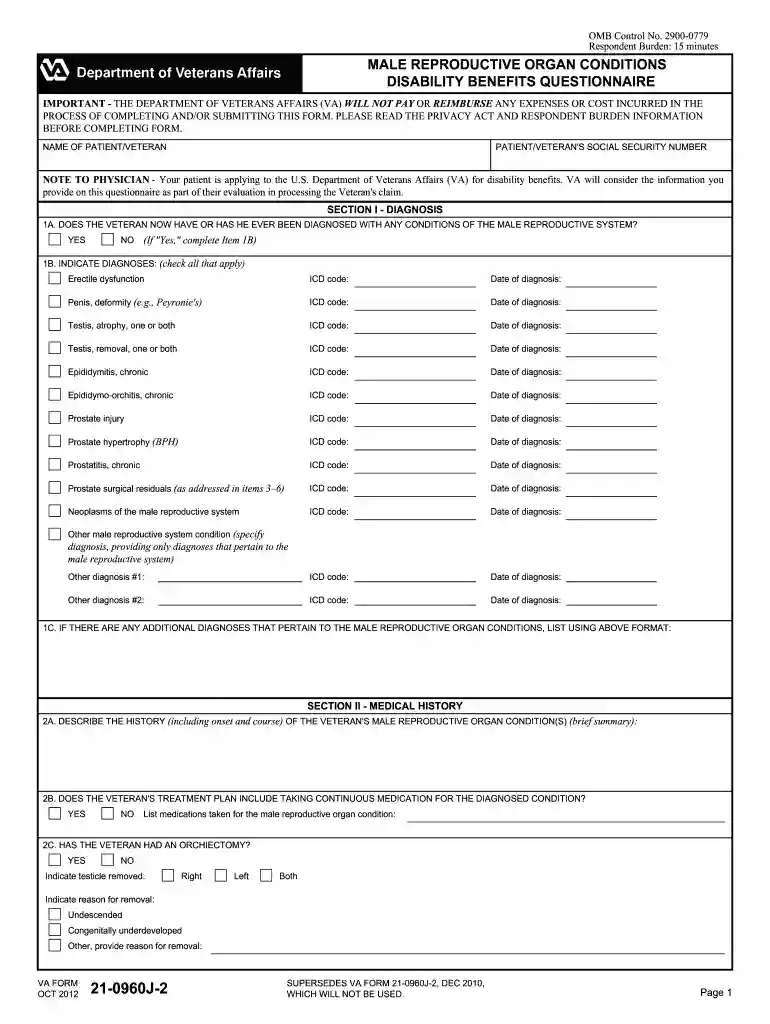
Definition and Purpose of VA Form 21-0960J-2
VA Form 21-0960J-2, also known as the Disability Benefits Questionnaire (DBQ) for male reproductive organ conditions, is a document used by the U.S. Department of Veterans Affairs. This form facilitates the evaluation of veterans' eligibility for disability benefits specifically related to male reproductive health issues. It provides a framework for documenting medical findings, conditions, and symptoms experienced by veterans. The information gathered helps the VA to make informed decisions regarding disability claims.

Key Elements of the Form
- Diagnosis: The form requires detailed documentation of any diagnosed conditions affecting the male reproductive organs.
- Medical History: Physicians must provide a comprehensive medical history related to the conditions in question, including previous treatments and outcomes.
- Voiding Dysfunction: This section documents any difficulties with urination, including frequency, urgency, and control issues.
- Urinary Tract Infections: Physicians must report on any recurrent urinary tract infections, noting their frequency and associated complications.
- Erectile Dysfunction: Information on erectile dysfunction, including its severity and impact on the veteran's life, is required.
- Retrograde Ejaculation: This section covers the presence of retrograde ejaculation and related symptoms.
- Neoplasms: The form includes a section for documenting any tumors or cancerous growths in the reproductive organs.
Steps to Complete VA Form 21-0960J-2
- Gather Necessary Information: Collect all relevant medical records, previous diagnosis reports, and treatment histories.
- Consult with a Physician: Schedule an appointment with a healthcare provider who can assess and document your conditions accurately.
- Complete Personal Information: Fill in personal details, including full name, Social Security number, and contact information.
- Provide Medical Details: Work with your physician to complete the sections on diagnosis, medical history, and current symptoms related to the reproductive organ conditions.
- Review and Sign: Ensure all information is accurate, then review and sign the form along with your physician's certification.
- Submit to the VA: Send the completed form to the appropriate VA office, either by mail or online, as specified by the VA's submission guidelines.
Practical Examples
- Example 1: A veteran experiencing chronic issues such as frequent urinary tract infections should have these documented under the relevant section, including frequency and impact on daily activities.
- Example 2: In cases where a veteran has been diagnosed with prostate cancer, the neoplasms section should include details of the diagnosis, treatment plan, and recovery status.
Obtaining VA Form 21-0960J-2
Ways to Obtain the Form
- Online: Visit the U.S. Department of Veterans Affairs website to download a digital copy of the form.
- VA Office: Contact your local VA office to request a physical copy.
- Healthcare Provider: Physicians who frequently work with veterans may have copies of the form available in their offices.
Accessibility and Support
- Support: If you require assistance in obtaining or completing the form, VA representatives are available to provide guidance. Local veteran service organizations can also offer support.
- Compatibility: Ensure you're using compatible software if filling out the form digitally, as some PDF editors may be required.
Legal Use and Compliance
Legal Framework
- ESIGN Act Compliance: Any electronic signatures or submissions must comply with the Electronic Signatures in Global and National Commerce Act.
- Privacy Notices: The form includes privacy notices to protect the personal information of veterans, which are crucial when handling sensitive medical data.
Penalties for Non-Compliance
- Inaccurate Information: Providing false or incomplete information can result in delays or denial of benefits.
- Submission Deadlines: Missing submission deadlines may affect eligibility for disability claims. Always check for and adhere to any specified dates.
Who Typically Uses VA Form 21-0960J-2
- Veterans with Reproductive Health Issues: Primarily, veterans experiencing conditions such as erectile dysfunction, urinary issues, or cancer in the reproductive organs.
- Healthcare Providers: Physicians assessing these conditions for veterans, providing critical evaluations and medical information.
Eligibility Criteria
- Service Members: Generally, veterans who have served in the active military, naval, or air service and have conditions linked to their service.
- Disability Claims: Those seeking or currently receiving disability benefits for reproductive organ-related conditions.