Audio and Video Recording Notice Sample ClausesLaw Insider 2026

Get Form
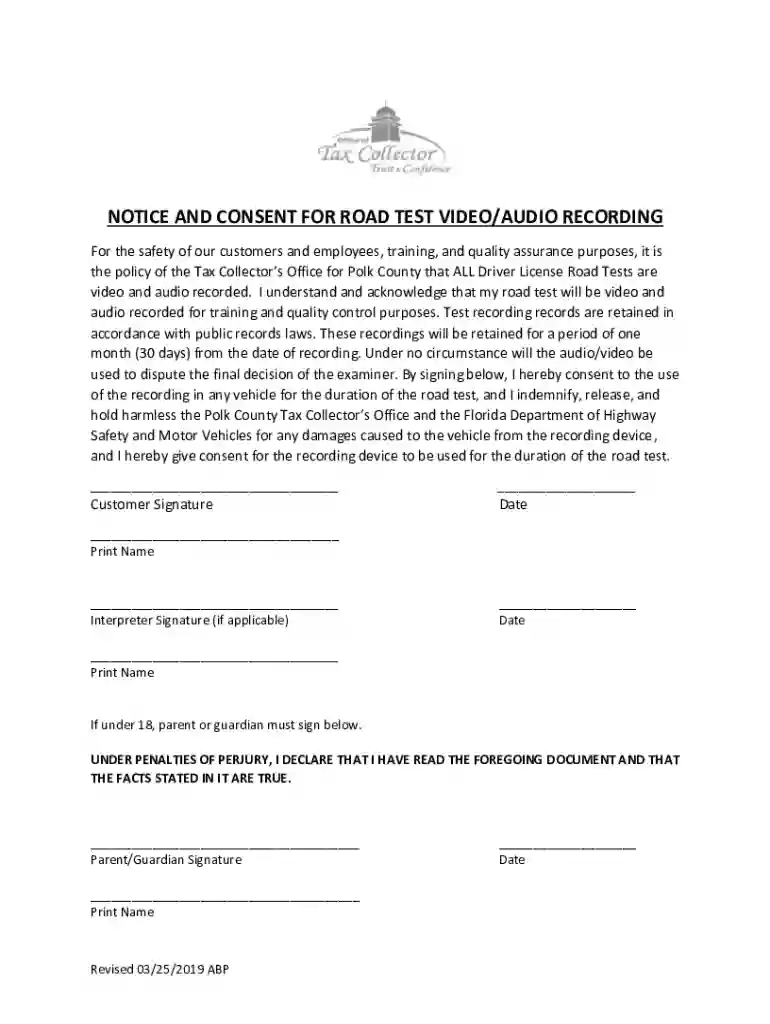
notice and consent for road test video audio recording Preview on Page 1

Here's how it works

01. Edit your notice and consent for road test video audio recording online
Type text, add images, blackout confidential details, add comments, highlights and more.

02. Sign it in a few clicks
Draw your signature, type it, upload its image, or use your mobile device as a signature pad.

03. Share your form with others
Send notice and consent for road test video audio recording via email, link, or fax. You can also download it, export it or print it out.

Definition & Meaning

The "Audio and Video Recording Notice Sample ClausesLaw Insider" is essentially a legal document that outlines the conditions under which audio and video recordings can be made, distributed, or stored by a business or organization. This document aims to ensure all parties involved are informed and give their consent regarding recordings, helping protect both the entity conducting the recording and the individuals being recorded. Such clauses typically focus on transparency and consent to uphold privacy and legal standards.

Key Elements of the Audio and Video Recording Notice

The essential components of an audio and video recording notice include:

  • Consent Clause: Clear acknowledgment that all parties involved agree to the recording.
  • Purpose Specification: A detailed explanation of why the recording is occurring, such as for safety, training, or quality assurance.
  • Storage and Retention Policy: Information on how long recordings will be kept and the methods used for storage.
  • Confidentiality Assurance: Guarantees that the recordings will not be used beyond the stated purposes without further consent.
  • Indemnity Clause: Participants agree not to hold the recording entity liable for any potential damages caused by the recording process.

Who Typically Uses the Audio and Video Recording Notice

This document is commonly used by various organizations and businesses that need to record interactions for legitimate purposes. This includes:


  • Educational Institutions: For evaluating instructional methods or classroom interactions.
  • Corporate Offices: During meetings, presentations, or trainings to ensure accountability and quality improvement.
  • Law Enforcement Agencies: For transparency and evidence in legal proceedings.
  • Healthcare Providers: To enhance patient care and ensure accurate records of consultations or procedures.
decoration image ratings of Dochub

How to Obtain the Audio and Video Recording Notice

To acquire a sample of the audio and video recording notice, individuals or organizations can:

  1. Visit Legal Documentation Websites: Websites specializing in legal documents like DocHub or Law Insider.
  2. Consult with Legal Counsel: Work with an attorney who can draft a notice specific to their jurisdiction and needs.
  3. Utilize Online Templates: Modify available online templates to fit the specific requirements of their operations.

Steps to Complete the Audio and Video Recording Notice

  1. Identify Parties: Clearly state who is being recorded and who will perform the recording.
  2. Outline All Purposes: Specify all the reasons and situations in which recordings can occur.
  3. Detail Storage Practices: Clearly define how and where recordings will be stored and for how long.
  4. Obtain Signatures: Ensure all parties involved sign the document, signifying their consent.

Legal Use of the Audio and Video Recording Notice

The legal standing of this notice varies by state but generally requires:

  • Explicit Consent: Obtaining clear permission from all parties before recording.
  • Adherence to Privacy Laws: Ensuring compliance with federal and state privacy regulations, such as the wiretap act.
  • Proper Notification: Informing involved parties that a recording will occur to maintain transparency.

Important Terms Related to the Notice

Understanding key terms associated with the notice can improve comprehension:

  • Consent: Agreement from all parties to participate in the recording.
  • Indemnification: Protection from claims or lawsuits arising from the recording process.
  • Retention Policy: The timeframe for which the recordings will be stored and the method of disposal thereafter.
  • Confidentiality: Ensuring the recording is not disclosed beyond the intended use.

Examples of Using the Audio and Video Recording Notice

Real-world scenarios include:

  • Corporate Training: An organization uses it to record training sessions and reviews them to improve content delivery.
  • School Safety: Schools implement this notice when installing cameras for monitoring student and staff safety.
  • Healthcare Consultations: Medical offices use it to record patient interactions to verify treatment plans and diagnose accurately.

State-Specific Rules for the Audio and Video Recording Notice

Each state may have distinct regulations, such as:

  • Two-Party Consent States: States like California and Florida require consent from all parties involved for recordings to be lawful.
  • Professional Licensing Requirements: Some professions may have additional rules governing the use of recordings.
  • Data Protection Laws: Compliance with state regulations regarding data privacy and protection must be ensured.

By understanding and applying these aspects of the audio and video recording notice, organizations can ensure they meet legal requirements and maintain the trust and cooperation of all involved parties.

See more Audio and Video Recording Notice Sample ClausesLaw Insider versions

We've got more versions of the Audio and Video Recording Notice Sample ClausesLaw Insider form. Select the right Audio and Video Recording Notice Sample ClausesLaw Insider version from the list and start editing it straight away!
Versions Form popularity Fillable & printable
2019 4.9 Satisfied (51 Votes)
2016 4.2 Satisfied (54 Votes)
be ready to get more

Complete this form in 5 minutes or less

Get form

Got questions?

We have answers to the most popular questions from our customers. If you can't find an answer to your question, please contact us.
Contact us
Recording audio in California workplaces generally can be done only with consent from both parties. Is Audio Surveillance Legal in California Workplaces? Kingsley Kingsley Lawyers is-audio-surveillan Kingsley Kingsley Lawyers is-audio-surveillan
The recording must have been preserved in a manner that is shown to the court. The speakers must be identified. The conversation elicited was made voluntarily and in good faith, without any kind of inducement.
Video Surveillance Employers can videotape anybody that is in a public space, for example, at the employees desk or in a public conference room. But it is illegal to record an employee anywhere he or she may have a reasonable expectation of privacyfor example, bathrooms, or sometimes, private offices. Video and Audio Recording in the Workplace: Is it Legal? Costanzo Law Firm, APC video-and-audio-recor Costanzo Law Firm, APC video-and-audio-recor
California is a Two-Party State Therefore, employers cannot record audio conversations without the consent of employees. It is important to note that the only way an employer can legally record audio in the workplace is with the knowledge and consent of all parties who are being recorded.

Security and compliance

At DocHub, your data security is our priority. We follow HIPAA, SOC2, GDPR, and other standards, so you can work on your documents with confidence.

Learn more
ccpa2
pci-dss
gdpr-compliance
hipaa
soc-compliance