







Definition and Meaning
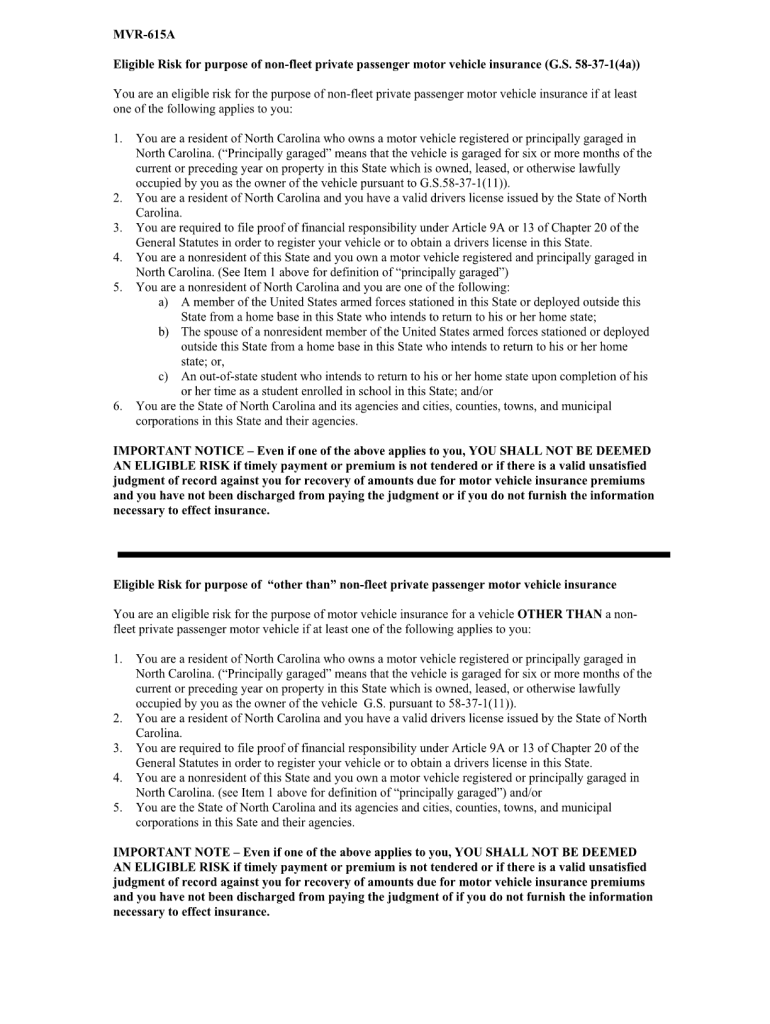
The "NC MVR form" is an official document used by individuals and businesses operating vehicles in North Carolina. This form plays a crucial role in the vehicle registration and record-keeping processes. Specifically, it serves to update the North Carolina Department of Motor Vehicles (DMV) with accurate and current information related to vehicle ownership and operation. The form is instrumental in ensuring compliance with state regulations and helps in maintaining comprehensive records within the DMV's database.
How to Use the NC MVR Form
To use the NC MVR form effectively, follow these steps:
-
Identify the Purpose: Determine the exact purpose for which you need the form, such as updating vehicle owner information or correcting errors in the DMV database.
-
Gather Information: Collect all necessary details required for the form, including vehicle identification number (VIN), current registration details, and the owner's personal or business information.
-
Complete the Form: Fill out the form thoroughly and accurately. Ensure that all sections are completed to avoid processing delays.
-
Submit the Form: Depending on the submission methods available, you can either mail the completed form to the DMV office, submit it in person, or use the DMV's online portal, if such an option is available.
-
Retain a Copy: Always keep a copy of the completed form for your records. This can be useful for future reference or if any issues arise during processing.
Obtaining the NC MVR Form
Obtaining the form is straightforward. Here are the ways you can acquire it:
-
Visit the DMV Office: The form is available at any DMV office in North Carolina. You can request a copy directly from a representative.
-
Online Download: Some DMV websites provide downloadable versions of the form, allowing you to print and fill it out at your convenience.
-
Mail Request: If you prefer, you can request the form to be sent to you via mail by calling the DMV office.
Steps to Complete the NC MVR Form
Filling out the NC MVR form requires attention to detail. Here are the specific steps involved:
-
Personal Information Section: Enter the full name, address, and contact details of the vehicle owner. Ensure that this matches the DMV records.
-
Vehicle Details: Accurately record the vehicle's make, model, year, and VIN. Double-check these details to avoid errors.
-
Reason for Submission: Clearly specify the purpose of the form. This could include correcting registration details or updating ownership information.
-
Signature and Date: The form must be signed and dated by the vehicle owner to verify authenticity. Signatures certify that the information provided is true and accurate.
-
Additional Documentation: Attach any required supporting documents, such as identification proofs or corroborating statements, as specified in the form's instructions.
Typical Users of the NC MVR Form
The NC MVR form is primarily used by:
-
Vehicle Owners: Individuals or businesses who need to update or correct vehicle registration details.
-
Dealerships: Car dealerships often use this form to manage the transfer of vehicle ownership to customers.
-
Fleet Managers: Organizations with a fleet of vehicles use the form to ensure all vehicles are properly documented with the DMV.
Key Elements of the Form
The NC MVR form contains several critical sections that must be completed:
-
Owner Information: Captures the contact and identification details of the vehicle owner.
-
Vehicle Identification: Section dedicated to the VIN and other specific vehicle details.
-
Declaration of Purpose: Allows the owner to declare the reason for the form submission.
State-Specific Rules for the Form
In North Carolina, specific rules apply to the use of the NC MVR form:
-
Accuracy Requirements: Information must be accurate and current as per state-mandated requirements.
-
Timeliness: Submissions must be timely, especially when updating ownership details following a vehicle sale.
-
Compliance: Adhering to these rules is crucial to avoid penalties or legal complications.
Legal Use of the NC MVR Form
Understanding the legal implications of using the form is important:
-
Verification: The form is used to verify and update legal ownership and details within the DMV's official records.
-
Transparency: Ensures transparency and legal standing in the case of disputes or vehicle-related legal matters.




