







Definition and Purpose of the Vehicle Registration Application
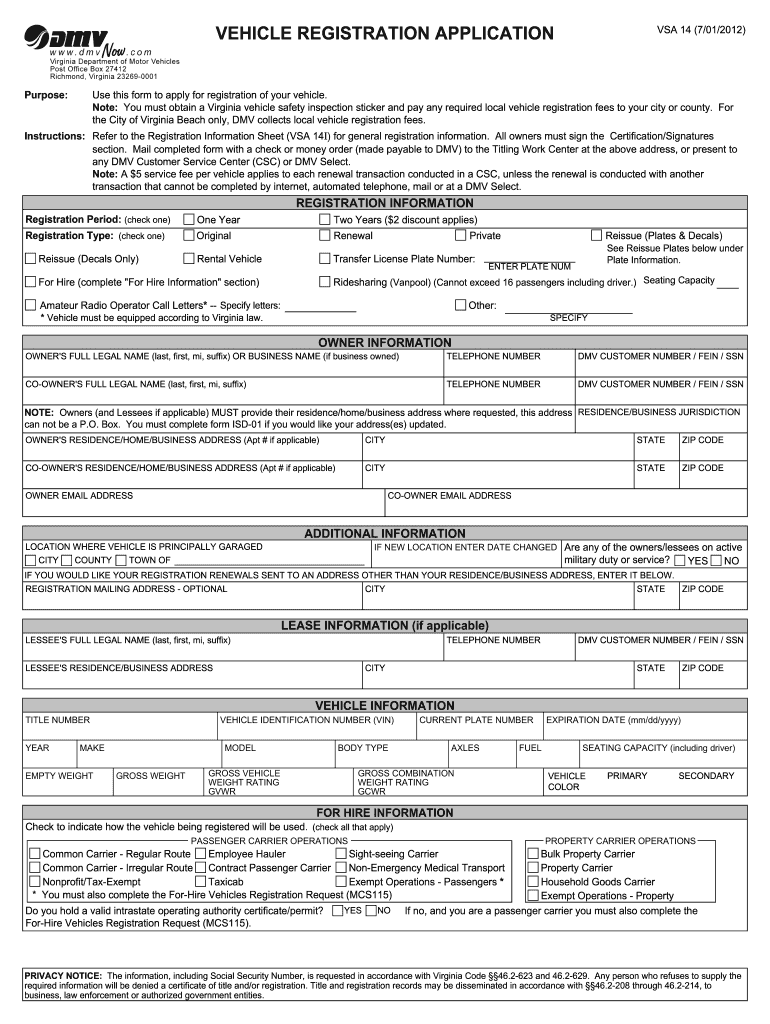
The Vehicle Registration Application, also known as the VSA 14 form, is a mandatory document that individuals must complete to register a vehicle in Virginia. This form serves not only as a request for the registration of a vehicle but also collects essential information about the vehicle and its owner. It helps ensure that all vehicles on Virginia roads are correctly documented and meet local regulations. The application includes sections where applicants must provide personal details, vehicle specifications, insurance certification, and select their preferred registration type and duration.
Obtaining the Vehicle Registration Application in Virginia
Securing the VSA 14 form is a straightforward process. It is available for download from the Virginia Department of Motor Vehicles (DMV) website, allowing applicants to complete it electronically or print it for manual completion. Additionally, physical copies can be obtained at local DMV offices across Virginia. This dual availability allows for flexibility based on individual preferences, whether someone is tech-savvy or prefers traditional paper forms.
Steps to Complete the Vehicle Registration Application
Filling out the VSA 14 form involves several critical steps:
- Personal Information: Enter full name, address, and contact details.
- Vehicle Details: Provide the make, model, year, and Vehicle Identification Number (VIN).
- Registration Type and Duration: Choose between different registration periods, typically one or two years.
- Insurance Certification: Certify that the vehicle has the mandatory insurance coverage.
- Signature: The applicant must sign the form to validate the details provided.
Each of these steps ensures that the vehicle is appropriately registered and complies with state safety and environmental regulations.
Importance of the Vehicle Registration Application
Registering a vehicle using the VSA 14 form is crucial for several reasons:
- Legal Requirement: It is legally required for any vehicle operated on Virginia roads.
- Verification: It serves to confirm that a vehicle meets safety standards and the owner has necessary insurance coverage.
- Tax Compliance: Registration contributes to state funds used for road maintenance and safety programs.
Using this form not only ensures compliance with legal norms but also enhances road safety for all motorists.
Typical Users of the Vehicle Registration Application
The VSA 14 form is widely used by:
- Individuals Purchasing a New or Used Vehicle: They must register their vehicle to legally drive it.
- New Residents: Individuals moving to Virginia need to update their vehicle registration according to state laws.
- Dealerships and Car Importers: These entities often handle the initial registration for new vehicles on behalf of their customers.
This diverse user base highlights the form’s significance in maintaining an organized vehicle management system within Virginia.
Key Elements Required for Completion
Several key elements are necessary to complete the VSA 14 form accurately:
- Identification: A valid driver's license or state ID.
- Vehicle Title: Proof of ownership, such as the vehicle’s title.
- Inspection Certificate: Proof of a passed safety inspection if required by local jurisdiction.
- Insurance Information: Policy details proving coverage that meets state requirements.
Ensuring these elements are provided is vital for a successful application process.
Legal Use and Compliance
Using the VSA 14 form correctly helps ensure legal compliance. Applicants must:
- Certify Information Accuracy: False information can lead to penalties under the penalty of perjury laws.
- Meet Insurance Requirements: Applicants must have the legally required insurance before registration.
- Adhere to Deadlines: Timely submission is necessary to avoid fines and legal issues.
Comprehensive legal compliance protects both the vehicle owner and other road users.
Form Submission Methods
There are several convenient ways to submit the VSA 14 form:
- Online: Using the Virginia DMV's online services.
- Mail: Sending the completed form to the DMV office.
- In-Person: Visiting a local DMV branch to submit the form personally and receive assistance if needed.
The availability of multiple submission methods aids in accommodating various user preferences and circumstances.




