
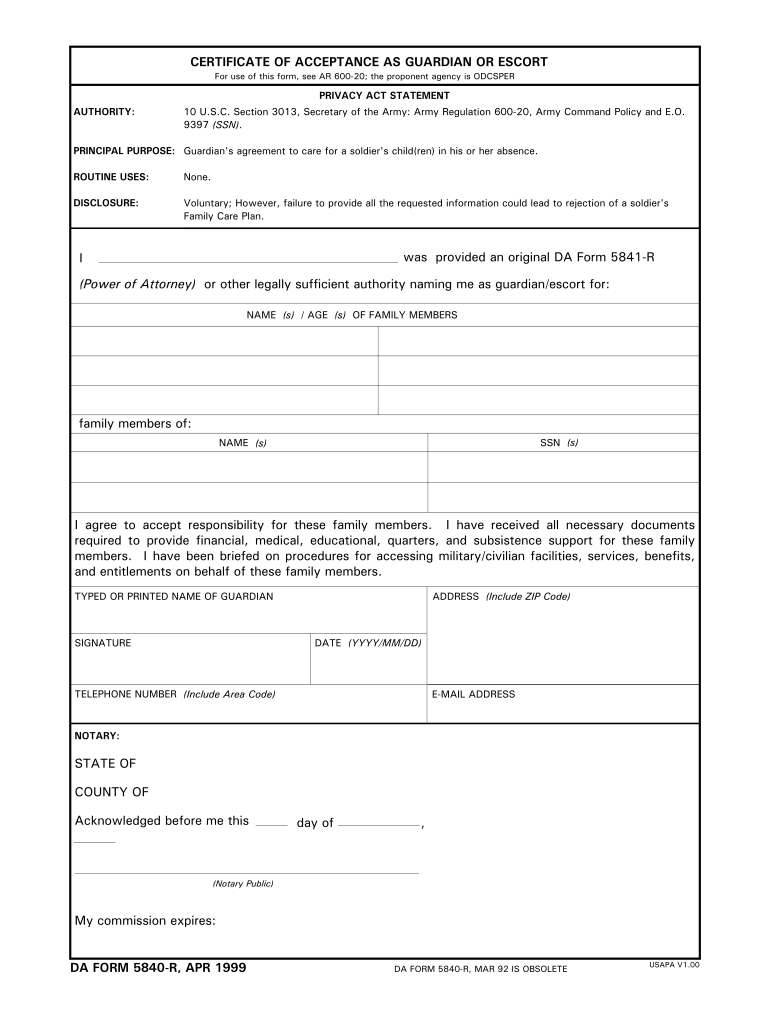







Definition and Meaning of the Certificate of Acceptance as Guardian
The "Certificate of Acceptance as Guardian" serves as an essential legal document within the United States. This certificate outlines the responsibilities and obligations of an individual who has agreed to become a guardian for a soldier's child or children in the soldier's absence. The document typically includes detailed information about the guardian's duties, privacy act statements, and relevant legal authority references. By signing this certificate, the guardian acknowledges an agreement to provide necessary support and access to services for the family members listed. This agreement becomes a binding contract, ensuring that the guardian understands their critical role and responsibilities to the dependents involved.
Key Elements Included in the Certificate
-
Guardian's Responsibilities: The certificate delineates the guardian's primary duties, such as providing a safe living environment, ensuring the child's educational requirements are met, and maintaining general welfare.
-
Legal Authority References: Specific legal statutes and regulations are cited, providing the legal framework within which the guardian operates.
-
Privacy Act Statements: These statements assure that the privacy of both the guardian and the child is protected under applicable laws.
-
Acknowledgment of Support Obligations: The guardian must agree to provide necessary emotional and financial support, access to healthcare, and other essential services.
-
Signature and Date: The document typically requires the signature of the guardian along with the date, solidifying their acceptance of these responsibilities.
Steps to Complete the Certificate of Acceptance as Guardian
Completing the Certificate of Acceptance as Guardian involves several crucial steps to ensure all legal requirements are met and the document is properly executed.
-
Review the Document Thoroughly: Before completing the certificate, it's vital that the guardian thoroughly reviews all sections to understand their responsibilities and the legal implications.
-
Gather Required Information: This typically includes personal information about the guardian, such as full name, address, contact details, and possibly identification numbers or social security numbers.
-
Enter Personal and Dependent Information: Provide complete details about the dependent children, including their names, ages, and any special care requirements.
-
Sign and Date the Certificate: Once all fields are completed, the guardian must sign and date the document. Depending on jurisdiction, a notary public may need to witness the signature to validate the document.
-
Submit the Certificate: Follow specific instructions for submitting the completed certificate, which may involve handing it over to the appropriate military office or legal representative.
Additional Considerations
-
Legal Consultation: Seek advice from a legal professional if any sections of the document are unclear or if there is uncertainty about the responsibilities outlined.
-
State Regulations: Be aware that specific states may have additional requirements or steps for completing and validating this form.
How to Use the Certificate of Acceptance as Guardian
The Certificate of Acceptance as Guardian is utilized primarily in military contexts where a soldier must ensure the welfare of their dependents while deployed or otherwise unable to provide direct care.
Practical Uses and Cases
-
Military Deployment: When a soldier is deployed, the appointed guardian uses this certificate to legally assume responsibility for the soldier’s children, enabling access to healthcare, education, and other necessary services.
-
Temporary Assignments: This form is also utilized during temporary assignments where soldiers are temporarily relocated and cannot bring their dependents.
-
Custody Arrangements: In some cases, this certificate may work in conjunction with existing custody arrangements, offering a legal backup to ensure dependents are cared for.
Benefits
-
Clarity and Legal Standing: This document provides clear legal standing and helps safeguard the interests of the children by ensuring a responsible adult is accountable for their well-being.
-
Access to Services: It facilitates access to various military and civilian services needed by the children during the guardian’s period of care.
Legal Use of the Certificate of Acceptance as Guardian
The legal implications of the Certificate of Acceptance as Guardian are significant, highlighting its importance as a formal agreement within the legal system.
Jurisdictional Validity
-
Federal and State Laws: Complying with both federal regulations and state laws is essential. The certificate often references specific legal codes that authorize the arrangement and guide the guardian's duties.
-
Recognition Across Military Installations: The certificate is recognized across U.S. military installations, ensuring consistent application of guardian responsibilities.
Compliance and Penalties
-
Ensuring Compliance: Guardians must adhere strictly to the outlined responsibilities, failing which there could be legal repercussions including loss of guardianship and potential penalties for neglect or misconduct.
-
Legal Rights: The certificate confers certain legal rights to the guardian, allowing them to make decisions typically reserved for parents.
Case Studies and Examples
-
Deployment Scenarios: For instance, during a recent military deployment, a family used the certificate to appoint a trusted relative as the guardian, ensuring seamless care for the children.
-
Temporary Assignments: Another example involved a soldier stationed temporarily at a non-family posting, using the certificate to assign a guardian who could oversee educational transitions and healthcare management.
Each of these elements and examples highlights the critical nature of the Certificate of Acceptance as Guardian as a legal document that ensures the welfare of dependents in military families.




