
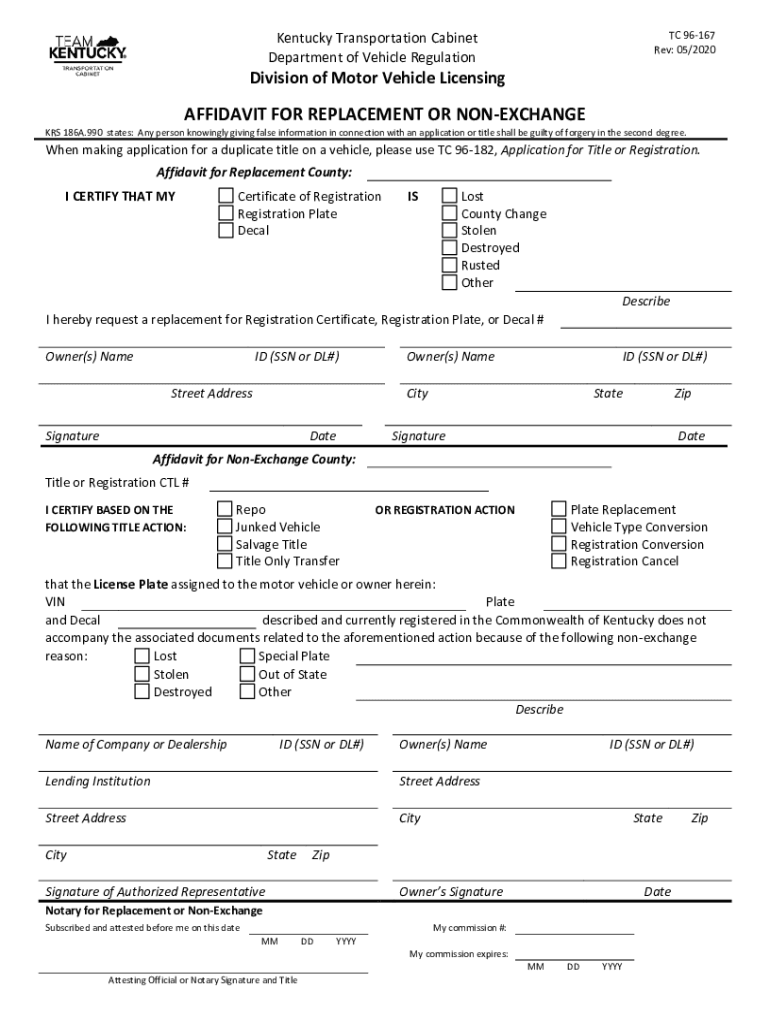







Definition & Meaning
The "Affidavit for Non-Exchange-County" is primarily used to handle cases related to the non-exchange of vehicle registration items in specific scenarios. It involves providing a sworn statement to verify conditions under which registration items like certificates, plates, or decals are not exchanged between counties. The affidavit ensures that all necessary details are documented for compliance with legal requirements.
Steps to Complete the Affidavit for Non-Exchange-County
- Gather Necessary Information: Collect all relevant information, including personal identification details, vehicle specifics, and current registration documentation.
- Complete Personal Details: Fill in the personal information section, including name, address, and contact information.
- Describe Circumstances: Clearly outline the reasons for the non-exchange, such as loss, theft, or destruction of the registration materials.
- Sign and Notarize: The affidavit must be signed in the presence of a notary public, who will verify the authenticity of the signature and administer the oath.
- Attach Supporting Documents: Include any supporting evidence, such as police reports if applicable, to substantiate the affidavit's claims.
Who Typically Uses the Affidavit for Non-Exchange-County
- Vehicle Owners: Primarily individuals who need to document the need for a non-exchange of vehicle registration items.
- Dealerships: Businesses that handle multiple registrations and may encounter instances requiring affidavits.
- Legal Representatives: Attorneys might assist clients in filling out and filing the form to ensure legal compliance.


Key Elements of the Affidavit for Non-Exchange-County
- Personal Information: Section for personal or business details of the applicant.
- Declaration of Circumstances: A detailed account of the reason for non-exchange, supported by applicable documentation.
- Signatures and Notarization: Requires the signature of the declarant, witnessed and notarized, to validate the affidavit legally.
State-Specific Rules for the Affidavit for Non-Exchange-County
Each state may have specific regulations governing the use of this affidavit. These can include:
- Differing Forms and Filing Processes: Specific forms unique to each state's requirements.
- Varying Notarization Requirements: Different states may have unique rules on how notarization is handled.
- Document Submission Deadlines: Each state might impose specific timelines within which the affidavit must be submitted.
Examples of Using the Affidavit for Non-Exchange-County
- Loss of Registration Certifications: Used to declare that registration certifications were lost and not exchanged, preventing penalties.
- Transfer Between Counties: Situations where a registered vehicle is moved between counties without the need to exchange registration documents.
- Registration Errors: Correct previous errors in registration between counties without requiring an exchange.
Filing Deadlines / Important Dates
While the affidavit does not have a uniform filing deadline, ensuring timely submission is crucial to avoid penalties. Some states may enforce strict timelines post-incident (e.g., within 30 days of loss), and applicants should adhere to their specific county's or state's regulations.
Penalties for Non-Compliance
Failing to submit the affidavit as required can result in penalties, including fines, legal repercussions, and the voiding of vehicle registration. Maintaining compliance with state regulations and deadlines is essential to avoid incurring such penalties.
Digital vs. Paper Version
Applicants may choose between submitting a paper version or completing it digitally, depending on state and local provisions:
- Digital Submission: Offers convenience and speed, allowing for electronic notarization where accepted.
- Paper Forms: Preferred in states requiring physical documentation at the time of notarization and filing.
Understanding the requirements and options available for submission could streamline the completion process, ensuring efficiency and legal compliance.




