Written Respiratory Protection Program Template - LandI 2026

Get Form
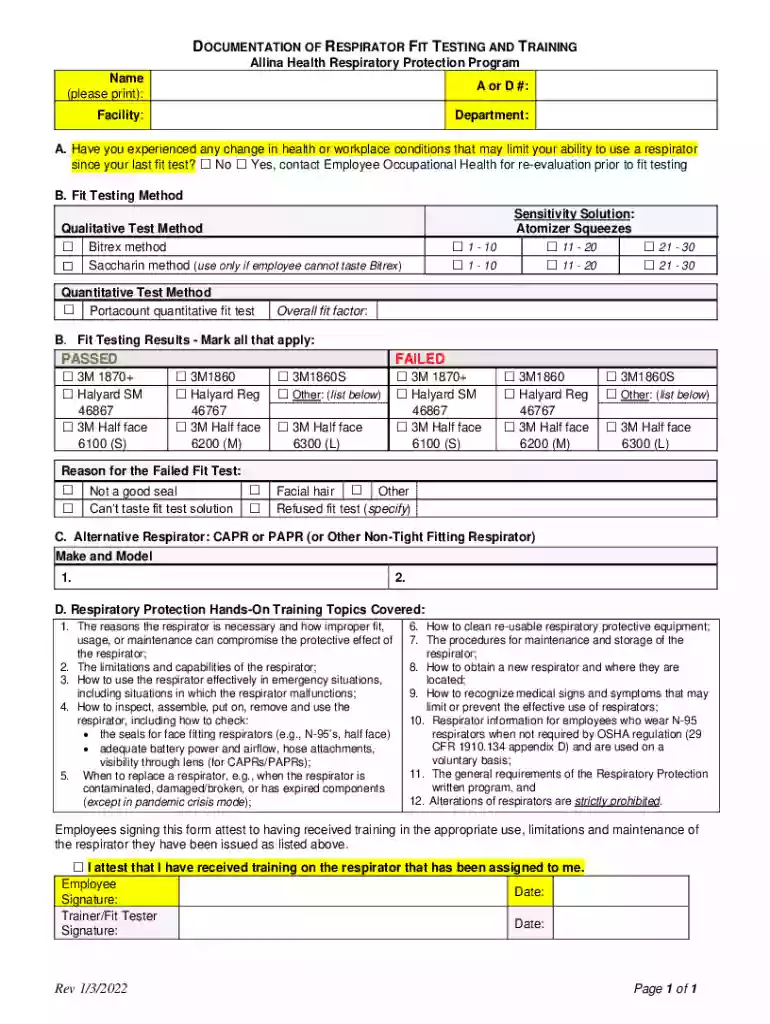
Written Respiratory Protection Program Template - LandI Preview on Page 1

Here's how it works

01. Edit your form online
Type text, add images, blackout confidential details, add comments, highlights and more.

02. Sign it in a few clicks
Draw your signature, type it, upload its image, or use your mobile device as a signature pad.

03. Share your form with others
Send it via email, link, or fax. You can also download it, export it or print it out.

Definition & Purpose of the Written Respiratory Protection Program Template - LandI

The Written Respiratory Protection Program Template - LandI serves as a comprehensive framework designed to support organizations in developing and maintaining effective respiratory protection protocols. This template is critical for ensuring the health and safety of employees who may be exposed to airborne contaminants in the workplace. By providing a structured approach to respirator use, it helps organizations comply with occupational safety regulations, particularly those outlined by the Occupational Safety and Health Administration (OSHA) in the United States.

  • Objective: To help businesses create detailed respiratory protection programs that meet regulatory standards.
  • Elements Covered: Includes guidelines for health assessments, selecting appropriate respirators, and conducting fit testing.
  • Regulatory Compliance: Assists in aligning company protocols with OSHA's Respiratory Protection Standard (29 CFR 1910.134).

How to Use the Template

Using the Written Respiratory Protection Program Template - LandI involves several key steps to ensure it is tailored to the specific needs and risks of your organization:

  1. Assessment of Workplace Hazards: Identify potential respiratory hazards through workplace evaluations.
  2. Selection of Respiratory Protection: Choose appropriate respirators based on identified hazards and exposure levels.
  3. Implementation of Health Evaluations: Ensure employees undergo medical evaluations to ascertain their ability to use respirators safely.
  4. Fit Testing Procedures: Conduct qualitative and quantitative fit tests to ensure proper respirator fit for all employees.
  5. Employee Training and Education: Provide comprehensive training on respirator use, maintenance, and limitations.

Steps to Complete the Template

Completing the Written Respiratory Protection Program Template involves a series of methodical steps:

  1. Download the Template: Obtain the template from a trusted source or directly from the regulatory body if applicable.
  2. Gather Relevant Data: Collect information on present hazards, employee health data, and existing safety measures.
  3. Fill in the Organizational Details: Input company-specific information, such as name, location, and contact details.
  4. Customize Sections: Modify sections to reflect company policies, workforce size, and specific respiratory hazards identified.
  5. Review and Edit: Ensure the document is free from errors and aligns with the current regulatory standards.

Key Elements of the Template

The template consists of several critical elements designed to guide organizations in creating an effective respiratory protection program:

  • Health Evaluations: Screening methods to determine employee capability for respirator use.
  • Fit Testing Protocols: Both qualitative and quantitative methods to ensure proper seal and effectiveness.
  • Training and Certification: Guidelines for mandatory employee training sessions.
  • Program Evaluation: Baseline evaluations and periodic reviews to maintain program effectiveness.

Important Terms Related to the Template

Understanding the terminology within the Written Respiratory Protection Program Template is essential:

  • Fit Factor: A numerical rating used during fit testing to quantify respirator seal effectiveness.
  • Air-Purifying Respirator (APR): A type of respirator that filters contaminants from the air.
  • Powered Air-Purifying Respirator (PAPR): Uses a battery-powered blower to push air through filters.
  • N95 Respirator: A common filtering facepiece respirator with specific filtration efficiency.

Legal Use and Compliance

Compliance with legal standards is paramount when implementing respiratory protection protocols. The Written Respiratory Protection Program Template helps ensure that:

  • OSHA Requirements: Organizations adhere to OSHA's Respiratory Protection Standard.
  • Documentation: Detailed records are maintained for fit tests, employee trainings, and incident reports.
  • Employee Rights: Workers' rights to access respirator protection when exposed to hazards are upheld.

Who Typically Uses the Template

The template is primarily used by businesses and organizations across various industries where respiratory hazards are prevalent:


  • Healthcare Facilities: For protecting health staff from airborne pathogens.
  • Construction Companies: To safeguard workers from dust and chemical vapors.
  • Manufacturing Plants: Ensures safe handling of hazardous substances.
decoration image ratings of Dochub

State-Specific Regulations

While federal laws provide a baseline, some states may have additional requirements for respiratory protection programs:

  • California: Enforces stringent Airborne Contaminant Health Standards.
  • Washington State: Requires additional reporting on safety measures and compliance.
  • Texas: Focuses more on industrial environments and specific chemical exposure protections.
be ready to get more

Complete this form in 5 minutes or less

Get form

Got questions?

We have answers to the most popular questions from our customers. If you can't find an answer to your question, please contact us.
Contact us
General steps to set up a respiratory protection program Exposure Assessment. Written Program. Respirator Selection. Medical Evaluation. Fit Testing. Training Maintenance.
If employees must wear respirators at work, the Occupational Safety and Health Administration (OSHA) requires employers to have a written respiratory protection program, as outlined in OSHAs respiratory protection standard 1910.134 under the PPE Subpart.
Major Requirements of OSHAs Respiratory Protection Standard 29 CFR 1910.134 Respirator-Use Requirements Flow Chart 29 CFR 1910.134(c) Must establish and implement a written respirator program with worksite-specific procedures. Does the employer permit voluntary use of respirators? | V7 more rows
Implementing a Respiratory Protection Program Employers that require workers to use a respirator must implement an RPP. This is a written set of policies and procedures aligned with the OSHA respiratory protection standard (29 CFR 1910.134).
If you require employees to be exposed to harmful airborne contaminants that cannot be controlled and you require employees to use respirators, you must implement a written RPP documenting how employees are protected from hazards.

Security and compliance

At DocHub, your data security is our priority. We follow HIPAA, SOC2, GDPR, and other standards, so you can work on your documents with confidence.

Learn more
ccpa2
pci-dss
gdpr-compliance
hipaa
soc-compliance

People also ask

If employees are not to enter and work in permit spaces, employers must take effective measures to prevent them from entering these spaces. If employees are expected to enter permit spaces, the employer must develop a written permit space program and make it available to employees or their representatives.
In addition, the employer must establish and implement those elements of a written respiratory protection program necessary to ensure that any employee using a respirator voluntarily is medically able to use that respirator, and that the respirator is cleaned, stored, and maintained so that its use does not present a

Related links