




01. Edit your north dakota substance use disorder voucher online
Type text, add images, blackout confidential details, add comments, highlights and more.

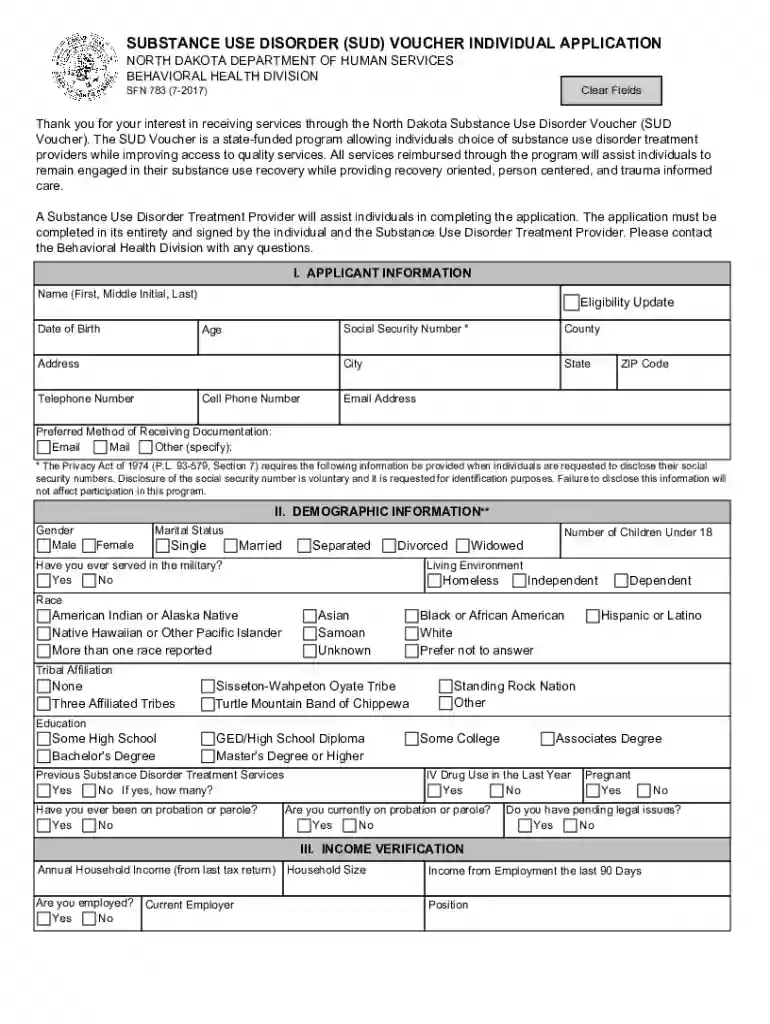
Type text, add images, blackout confidential details, add comments, highlights and more.

Draw your signature, type it, upload its image, or use your mobile device as a signature pad.

Send substance use disorder voucher via email, link, or fax. You can also download it, export it or print it out.
The "Nearby States Welcomed into North Dakota Substance Use" involves incorporating surrounding states into schemes designed to support substance use disorder treatment in the state of North Dakota. This concept aims to facilitate regional cooperation and broaden access to necessary resources, underscoring a collaborative approach to addressing substance use challenges. By integrating nearby states, the program expands its reach, potentially drawing on shared resources and insights to enhance treatment efficacy.
The process begins with understanding the specific criteria and guidelines that nearby states must follow to participate in this initiative. Those engaged need to:
Participants can leverage the unified system to enhance treatment delivery and ensure the comprehensive collection of data that aligns with North Dakota's standards. This collaborative framework enhances treatment accessibility and improves care coordination across state lines.
Initial Application:
Review Process:
Verification and Integration:
Monitoring and Evaluation:
Eligible participants typically include governmental health departments, treatment facilities, and other authorized entities from nearby states. Fundamental prerequisites often are:
Entities should demonstrate both willingness and capability to integrate existing structures into the broader cooperative framework being established.


Cross-State Collaboration:
Unified Treatment Protocols:
Data Sharing Mechanisms:
Resource Allocation:
Participation requires strict adherence to legal guidelines set forth by the North Dakota Behavioral Health Division. Legal compliance entails:
Substance Use Disorder (SUD): A condition characterized by an individual's impaired control over substance use, leading to significant health challenges.
Behavioral Health Division: The regulatory body overseeing mental health and substance use treatment initiatives in North Dakota.
Cross-State Integration: The process of coordinating systems between states to streamline service delivery and data sharing.
The program is primarily utilized by:
Substance Use Disorder Treatment Providers: Providers looking to adopt a regional approach to treatment delivery.
State Health Departments: Seeking collaborative ways to tackle substance use challenges more effectively.
Policy Makers: Interested in optimizing resources and strategies across state lines to enhance public health outcomes.

We've got more versions of the north dakota substance use disorder voucher form. Select the right north dakota substance use disorder voucher version from the list and start editing it straight away!
At DocHub, your data security is our priority. We follow HIPAA, SOC2, GDPR, and other standards, so you can work on your documents with confidence.
We offer help and connection through the entire state of North Dakota and in Moorhead, MN. Phone: (701) 210.2491. Phone: (701) 328-2310
Several state and local initiatives to raise awareness of substance use issues are currently underway. Notably, these initiatives have focused more on substanceRead more


